Designing the loading pattern in a ceramic tunnel kiln is a crucial aspect of the ceramic manufacturing process. As a supplier of ceramic tunnel kilns, I understand the significance of an optimized loading pattern in achieving efficient production, high-quality products, and cost savings. In this blog post, I will share some insights and practical tips on how to design an effective loading pattern for a ceramic tunnel kiln. Ceramic Tunnel Kiln
Understanding the Basics of Ceramic Tunnel Kilns
Before delving into the loading pattern design, it is essential to have a basic understanding of ceramic tunnel kilns. A ceramic tunnel kiln is a continuous kiln that operates on a conveyor system. The kiln is divided into different zones, including the preheating zone, firing zone, and cooling zone. The ceramic products are loaded onto the conveyor and pass through these zones at a controlled speed, undergoing various thermal processes.
The design of the loading pattern directly affects the heat transfer, airflow, and product quality within the kiln. A well-designed loading pattern ensures uniform heating, proper ventilation, and efficient use of the kiln space.
Factors to Consider in Loading Pattern Design
Product Characteristics
The first step in designing the loading pattern is to consider the characteristics of the ceramic products. This includes the size, shape, density, and thermal properties of the products. Different products may require different loading arrangements to ensure uniform heating and prevent damage.
For example, large and heavy products may need to be placed on the lower levels of the kiln to prevent crushing. Products with complex shapes may require special fixtures or supports to maintain their position during firing. Additionally, products with different thermal expansion coefficients may need to be separated to avoid cracking or warping.
Kiln Dimensions and Configuration
The dimensions and configuration of the ceramic tunnel kiln also play a significant role in the loading pattern design. The width, height, and length of the kiln determine the available space for loading the products. The number and arrangement of the conveyor belts, as well as the location of the burners and ventilation systems, also need to be considered.
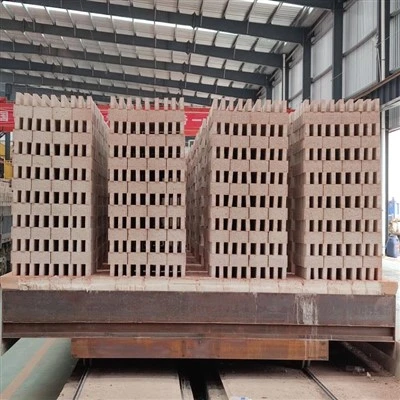
It is important to ensure that the loading pattern allows for proper airflow and heat transfer within the kiln. The products should be arranged in a way that does not obstruct the movement of the hot gases and air. This can be achieved by leaving sufficient gaps between the products and ensuring that the loading density is uniform throughout the kiln.
Firing Requirements
The firing requirements of the ceramic products, such as the firing temperature, firing time, and atmosphere, also influence the loading pattern design. Different products may require different firing conditions, and the loading pattern should be designed to accommodate these requirements.
For example, products that require a high firing temperature may need to be placed closer to the burners or in the center of the kiln. Products that require a reducing atmosphere may need to be loaded in a way that allows for the proper circulation of the reducing gases. Additionally, the firing time may affect the loading density and the arrangement of the products within the kiln.
Practical Tips for Designing the Loading Pattern
Conduct a Product Analysis
Before designing the loading pattern, it is important to conduct a detailed analysis of the ceramic products. This includes measuring the size and shape of the products, determining their density and thermal properties, and understanding their firing requirements. This information will help you to determine the most suitable loading arrangement for the products.
Use Computer Modeling
Computer modeling can be a valuable tool in designing the loading pattern. By using software that simulates the heat transfer and airflow within the kiln, you can test different loading arrangements and evaluate their performance. This can help you to optimize the loading pattern and ensure that it meets the requirements of the ceramic products.
Consider the Conveyor System
The conveyor system is an important part of the ceramic tunnel kiln, and the loading pattern should be designed to work in harmony with it. The products should be loaded onto the conveyor in a way that allows for smooth and continuous movement. This can be achieved by using proper fixtures and supports to hold the products in place and by ensuring that the loading density is not too high.
Optimize the Loading Density
The loading density refers to the amount of ceramic products that are loaded into the kiln per unit volume. A high loading density can increase the production efficiency, but it can also affect the heat transfer and airflow within the kiln. It is important to find the right balance between the loading density and the product quality.
To optimize the loading density, you can consider using different loading arrangements, such as stacking the products vertically or horizontally. You can also use spacers or dividers to create gaps between the products and improve the airflow.
Ensure Uniform Heating
Uniform heating is essential for achieving high-quality ceramic products. To ensure uniform heating, the loading pattern should be designed to distribute the heat evenly throughout the kiln. This can be achieved by placing the products in a way that allows for proper heat transfer and by avoiding areas of the kiln that are prone to overheating or underheating.
Monitor and Adjust the Loading Pattern
Once the loading pattern has been designed and implemented, it is important to monitor its performance and make adjustments as needed. This can be done by measuring the temperature and airflow within the kiln, inspecting the products after firing, and collecting feedback from the production team.
Based on the monitoring results, you can make adjustments to the loading pattern to improve its performance and ensure that it continues to meet the requirements of the ceramic products.
Conclusion
Designing the loading pattern in a ceramic tunnel kiln is a complex process that requires careful consideration of various factors. By understanding the product characteristics, kiln dimensions, firing requirements, and using practical tips, you can design an effective loading pattern that ensures efficient production, high-quality products, and cost savings.
Ceramic Tunnel Kiln As a supplier of ceramic tunnel kilns, I am committed to providing our customers with the best possible solutions for their ceramic manufacturing needs. If you are interested in learning more about our ceramic tunnel kilns or need assistance in designing the loading pattern, please feel free to contact us. We will be happy to discuss your requirements and provide you with the necessary support and guidance.
References
- "Ceramic Kiln Technology" by John B. Zimmerman
- "Handbook of Ceramic Science and Technology" edited by Janice E. Ritter
- "Thermal Processing of Ceramics" by David W. Green
Henan Yaxin Kiln Co., Ltd.
Henan Yaxin Kiln Co., Ltd. is one of the most professional ceramic tunnel kiln manufacturers and suppliers in China. With abundant experience, we warmly welcome you to buy high quality ceramic tunnel kiln with the latest design from our factory. Good service and punctual delivery are available.
Address: Jixian Industrial Zone, Shangqiu City, Henan Province
E-mail: 1543563178@qq.com
WebSite: https://www.hnyxkiln.com/
