When you’re sourcing PU oil seals for your equipment, quality isn’t just a buzzword—it’s the difference between 100 hours of reliable performance and 1,000+ dollars in unplanned downtime. As someone who’s supplied PU oil seals to manufacturers, construction crews, and agricultural operations for over a decade, I’ve seen first-hand how a subpar seal can derail projects. That’s why testing the quality of a PU oil seal isn’t a step you skip—it’s a must before you place an order. Let’s break down exactly how to do it, from quick in-house checks to lab-grade assessments, tailored to what a supplier like me would actually test before a seal leaves our warehouse. PU Oil Seal

First, let’s start with the basics: what makes a good PU oil seal different from a bad one? PU (polyurethane) isn’t a single material—it’s a polymer blend, and the exact formula (hardness, molecular weight, additives) dictates its durability. A low-quality seal might use cheap, fillers-laced PU that crumbles after a few thousand cycles, while a high-grade blend balances elasticity, tear resistance, and oil compatibility. So your tests need to target those properties.
1. Visual & Dimensional Checks (5-Minute In-House Test)
The first stop for any PU oil seal is a close look, no fancy equipment needed. Grab a sample and inspect it under bright light. A high-quality PU seal should have a uniform color—no splotches, streaks, or visible bubbles. Bubbles are a red flag: they form when air gets trapped during molding, and they create weak points where the seal can crack under pressure. I once had a customer reject a batch because half the seals had tiny surface bubbles; we traced it to a small issue in our mixing process, fixed it immediately, and that’s why visual checks are non-negotiable for us.
Next, dimensions matter. Even a 0.01mm variance in the inner diameter or sealing lip can lead to leaks. Use a digital caliper to measure the inner bore, outer diameter, and lip thickness. Cross-reference these with the spec sheet your supplier provided. For example, if you ordered a 2-inch inner diameter seal and your caliper shows 1.99 inches, it won’t fit snugly onto your shaft—meaning it’ll spin, wear out fast, and let oil seep through. We run 100% dimensional checks on every batch before it ships; cutting corners here would cost us (and our customers) later.
2. Hardness Testing (Handle for Flexibility)
PU oil seals need just the right hardness: too soft, and they deform under pressure; too hard, and they crack when the shaft moves. The standard for PU seals is Shore A hardness, usually between 70 and 90 Shore A. To test this, you can use a Shore A durometer, which is a small, handheld device that presses a pin into the seal and measures the indentation. Press the durometer firmly against the flat part of the seal (not the lip, which is tapered) and take a reading. A consistent reading across multiple points on the seal means uniform material; if readings vary by more than 5 points, the PU blend isn’t mixed properly.
If you don’t have a durometer, do a simple feel test. Stretch a small section of the seal’s body gently—high-quality PU will snap back to its original shape immediately, no creases left. Cheap, filler-heavy PU will stretch slowly and stay misshapen. I’ve had a supplier send samples that felt overly soft; they turned out to use low-grade PU that couldn’t handle high-pressure hydraulic systems, so we refused the shipment. That’s the kind of call you have to make for the sake of your customers.
3. Tear Resistance (The "Bend & Pull" Test)
Tear resistance is what keeps a seal’s lip from tearing when it’s installed over a sharp shaft edge or during continuous operation. To test this, take a small, thin strip cut from the seal’s body (avoid the sealing lip, which is designed to flex). Bend it back and forth sharply a few times, then pull gently on the bend. If it tears easily, it’s a low-quality seal. High-grade PU will resist tearing even when bent aggressively. We test tear resistance in our lab with a tensile tester, but for a quick check, the bend test works for preliminary screening.
Another angle: grip the edge of the sealing lip and tug it away from the body. A good seal will have a strong bond between the lip and the body—no separation. If the lip pulls away easily, that’s a sign of poor manufacturing; the bond will fail under pressure, leading to leaks.
4. Oil Compatibility Testing (Critical for Hydraulic & Industrial Seals)
PU is resistant to many oils, but not all—using a seal that swells or breaks down in your specific oil is a recipe for failure. This is one test you can’t skip, especially if you’re using hydraulic oils, gear oils, or synthetic lubricants. To test oil compatibility, cut a 1×1 inch square from your PU seal sample, weigh it, and submerge it in the type of oil you use in your equipment. Let it sit for 72 hours at the operating temperature your machine runs (usually 40–60°C). After 3 days, take it out, wipe it dry, and weigh it again.
A high-quality PU seal will have a weight change of less than 5%: that means it didn’t absorb too much oil (which would make it swell and lose its seal) or leach additives (which would make it shrink and crack). If the weight changes by more than 10%, it’s incompatible. For example, we once had a customer use a generic PU seal in synthetic oil; the seal swelled 18% and failed in 2 weeks. We switched them to a synthetic-grade PU blend, and they’ve been a repeat customer ever since.
5. Pressure & Leak Testing (The Real-World Simulation)
The ultimate test for a PU oil seal is how it performs under actual operating conditions, and that means pressure testing. You can set up a simple test rig if you don’t have a lab: mount the seal onto a shaft, put it in a housing, and pressurize the system with water or oil to the pressure your equipment sees (usually 100–500 PSI for industrial seals). Let it run for 24 hours, and check for leaks. A good seal will have zero visible leaks; if you see even a tiny drop, it’s not up to par.
We use a more precise test: a rotating shaft test rig that mimics the movement of shafts in construction equipment, farm machinery, or industrial pumps. We run seals at 1,000 RPM for 100 hours, monitor pressure retention, and measure wear on the sealing lip. Over the years, we’ve refined our rig to catch even minor defects that would slip through basic tests. For example, a seal that looks perfect visually might have a slightly uneven lip, which causes it to wear fast under rotation—our test rig picks that up before the seal reaches a customer.
Common Red Flags to Watch For
Beyond these tests, there are a few things that signal a low-quality PU oil seal:
- Off-gassing: If the seal has a strong chemical smell, it means the PU used cheap, unprocessed raw materials that will break down quickly.
- Chalking: Rub the seal with your finger—if white powder comes off, it’s a sign of surface degradation, probably from fillers or improper curing.
- Wear marks: Even new seals shouldn’t have scratch marks or uneven wear on the sealing lip. That’s a manufacturing defect.
Why Testing Matters (For Your Bottom Line)
I know adding tests takes time, but it’s worth it. A friend in the construction industry once told me he saved $500 on cheap PU seals, only to spend $3,000 on repairs when they failed on a job site. PU oil seals aren’t a one-size-fits-all product, and the quality difference between a good supplier and a bad one is in the details.
When you’re evaluating suppliers, don’t be afraid to ask for test results—any reputable supplier should be able to provide hardness values, oil compatibility data, and pressure test results. At our facility, every batch comes with a COA (Certificate of Analysis) that includes all these metrics, so our customers can see exactly what they’re getting.
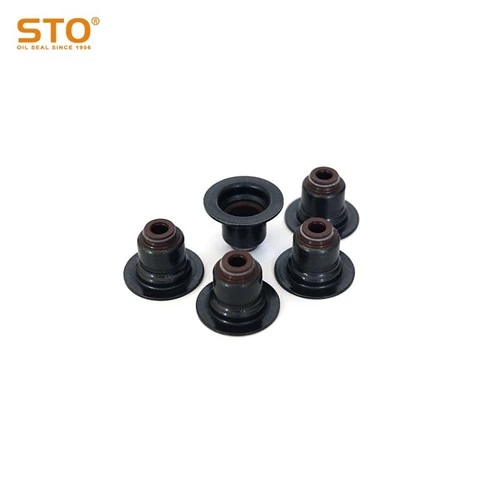
If you’re currently dealing with frequent seal failures or want to switch to a reliable PU oil seal supplier, reach out to our team. We work with a range of industries to customize PU seals for specific applications, and we back every product with rigorous quality testing.
Cogged V Belt References:
- O’Hara, P. (2018). Polyurethane Elastomers for Sealing Applications. Smithers Rapra Publishing.
- ASTM D412-16, Standard Test Methods for Vulcanized Rubber and Thermoplastic Elastomers—Tension. ASTM International.
- ISO 6194-1:2019, Rubber Seals for Fluid Power Systems—Method for Test of Rotary Shaft Lip Seals. International Organization for Standardization.
Xingtai Boshuo Auto Technology Co., Ltd.
Xingtai Boshuo Auto Technology Co., Ltd. is one of the most professional pu oil seal manufacturers and suppliers in China, featured by quality products and low price. Please rest assured to wholesale bulk customized pu oil seal made in China here from our factory. Welcome to contact us for pricelist and free sample.
Address: No. 58 Quannan East Street, Xiangdu District, Xingtai City, Hebei Province
E-mail: sherry1@bs-belt.com
WebSite: https://www.bsbelts.com/
