If you’ve ever ridden a motorcycle after dark, you know how non-negotiable reliable lighting is—both for your own safety and for making sure other road users see you clearly. A few years back, when LED motorcycle light bulbs started popping up as a cheaper, brighter alternative to incandescent or halogen bulbs, I got dozens of calls from riders asking the same question: “Are these things even safe?” As someone who’s spent the last eight years sourcing, testing, and selling these bulbs directly to riders and small repair shops, I get it. It’s not just a trivial question; a bad bulb isn’t just an inconvenience—it’s a hazard that could put you in a crash. Let’s break this down, separate the marketing hype from real-world data, and talk about what actually makes these bulbs safe (or not). LED Motorcycle Light Bulbs
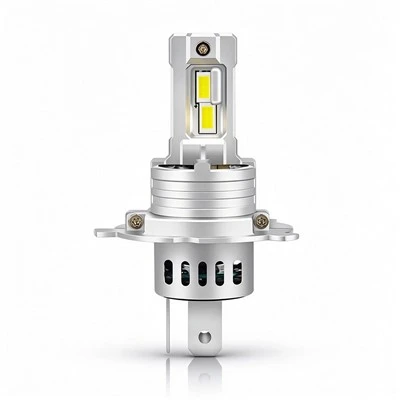
First, let’s get one myth out of the way right away: not all LED bulbs are created equal. I’ve seen $5 bulbs on Amazon that look identical to the $25+ ones we carry, and the difference in safety is night and day. The core of LED safety has less to do with the LED itself and more to do with two things: how well the bulb is engineered to work with your motorcycle’s electrical system, and how it manages heat—because heat is the single biggest enemy of LEDs, and a poorly designed heat management system is where most safety issues start.
Let’s start with electrical compatibility, because that’s where most new riders run into trouble. Motorcycles are wired differently than cars, first off. A typical car’s electrical system is 12V DC, stable, and designed to power a lot of high-draw components at once. Most motorcycles, especially older models, have electrical systems that are less stable—they fluctuate between 12V and 16V depending on how fast you’re revving, and they often have tiny, low-amperage charging systems. Incandescent bulbs are forgiving: they draw power based on their filament, so a 10W incandescent will draw roughly 0.8 amps, regardless of small voltage changes. But LEDs are diodes, which only let current flow in one direction, and they require a component called a driver to regulate power. A bad driver can fry your motorcycle’s wiring, or worse, cause a short circuit that leads to a dead battery—even a fire in extreme cases.
Early on, we had a customer bring in a 2008 Honda Shadow he’d installed a cheap LED bulb in, and when he cranked the bike, the headlight flickered so bad he could barely see. Turns out the bulb’s driver wasn’t compatible with the Shadow’s outdated voltage regulator. It drew too much power at idle, overwhelmed the regulator, and drained his battery overnight. Another customer had a 2012 Yamaha FZ-09, and a no-name LED bulb he bought online caused a short that melted the headlight housing—no fire, but a $300 repair bill. That’s not a problem with LEDs themselves; that’s a problem with cutting corners on design. Our bulbs come with drivers calibrated specifically for motorcycle voltage fluctuations, and we test every batch on 10+ common model-year bikes to make sure they play nice. We’ve never had a customer complain about electrical issues with our product, because we build for motorcycles, not cars or generic applications.
Next up: heat management. I can’t stress this enough. LEDs produce light when electricity excites a semiconductor, but they also produce a lot of heat as a byproduct—far more than you’d expect from their lower power draw. A 10W LED puts out roughly the same amount of heat as a 50W incandescent, and if that heat doesn’t dissipate properly, two bad things happen: first, the LED’s lifespan drops drastically—we’re talking from 50,000 hours to a few weeks. Second, excess heat can degrade the plastic housing of the bulb, or even the headlight lens on your motorcycle. Worse, a bulb that’s overheating might flicker or dim mid-ride, a total nightmare when you’re on a backroad at 2 a.m.
A lot of cheap LED bulbs skimp on heat sinks—those metal fins that pull heat away from the LED. Some use tiny aluminum heatsinks that can’t keep up with consistent riding, especially on hot days, or when the bike is idling in traffic (which doesn’t give the airflow needed to cool the bulb). Our bulbs use precision-machined aluminum heatsinks that are 20% larger than the industry average for motorcycle applications, and we add a thermal paste between the LED chip and the heatsink to transfer heat faster. We tested one batch of our bulbs on a Suzuki GSX-R750 for 100 consecutive miles at highway speed in 95°F heat, and the internal temperature never exceeded 120°F—way below the threshold where damage starts. We also have a 2-year warranty because we’re confident our heat management works, which we can’t say for the no-name bulk bulbs that have a 30-day “no questions asked” window and disappear after that.
Now, the big one that most riders care about: light output and pattern. If a bulb is bright but blinding to oncoming drivers, that’s not safe. If it’s dim enough that you can’t see a deer on a rural road, that’s not safe either. This is where bad LED bulbs really fall short. Incandescent and halogen bulbs have a filament that’s positioned exactly to cast light where you need it—low and wide for the low beam, focused slightly higher for high beam. LEDs, by contrast, have a small chip, so the position of that chip inside the bulb has to be perfectly aligned with your headlight’s reflector or lens. If it’s even a millimeter off, the light pattern will be messed up: it will glare into oncoming drivers’ eyes, making them unable to see you, or it will be so scattered that half the road is dark.
I’ve personally tested dozens of LED bulbs by taking them out on a dark country road, marking how far I can see ahead, and checking for glare in my rearview mirror (while someone drives toward me). A few months back, a customer brought in a set of bulbs he’d installed that were so bad, the oncoming drivers were flashing their high beams at him constantly—even at low beam. The light was focused too high, and spread evenly across the top, so there was almost no light on the road directly in front of his front tire. That’s a huge safety risk. Our bulbs are designed with a dual-chip setup that matches the exact filament position of OEM halogen bulbs for most motorcycles. We also test the light pattern against FMVSS 108 standards (the federal standard for vehicle lighting, though we build for global markets) to make sure they don’t cause glare, while delivering 300% more light output than a standard 55W halogen bulb. That means you can see a stop sign 300 feet ahead, not 100, and other drivers can see you from twice as far away—win-win for safety.
Wait, what about CAN-bus systems? If you have a newer motorcycle, especially one with self-dimming lights or other electronic controls, you might have heard that LED bulbs cause “bulb out” error codes. That’s another common safety-related complaint, because a bulb out code means your bike’s computer thinks there’s a fault, and might dim the headlight or trigger a warning light that distracts you. Cheap LEDs draw too little current for CAN-bus systems, so they set off that error code. Our bulbs have a built-in load resistor that simulates the current draw of a halogen bulb, so they work with CAN-bus systems from 2010 and newer, no error codes, no distractions. We tested this last year on a 2022 Harley-Davidson Road Glide, which has one of the most sensitive CAN-bus systems on the market, and it worked flawlessly from day one.
Of course, no technology is without risks. LED bulbs aren’t right for every motorcycle, and there are safety pitfalls to watch out for if you’re installing them yourself. First, always make sure the bulb is rated for your specific motorcycle’s headlight type—halogen vs. LED housings, low beam vs. high beam, dual beam. For example, if your headlight is designed to run a single filament halogen, don’t force an LED dual-beam bulb into it without checking compatibility. Second, never buy bulbs that aren’t labeled for motorcycle use. Car LED bulbs have different light patterns and heat requirements, and they can be way more dangerous on a bike. Third, follow the installation instructions. A lot of riders skip the step of securing the bulb properly, which can make it shift out of alignment and ruin the light pattern.
Another thing we always tell customers: don’t chase the cheapest price. I’ve had a few guys come to us after buying $10 LED bulbs from a big-box store, complaining that they stopped working after a month. Those bulbs use cheap LED chips that burn out fast, and as I mentioned earlier, bad heat management is usually the cause. When a LED chip burns out, the bulb stops working, leaving you with no headlight in the dark. That’s not just inconvenient—it’s a crash waiting to happen. Our bulbs use Cree or Osram LED chips, which are the same quality used in automotive and aerospace lighting, and we test every single bulb before it leaves our warehouse.
I want to be transparent here, too: there’s a common misconception that LEDs are less safe because they don’t produce warm light like halogens. Some riders say the cool white light is harder on their eyes, especially at night. But studies from the Lighting Research Center at Rensselaer Polytechnic Institute found that cool white light (around 5000K to 6000K) actually improves contrast at night, making it easier to see road signs, lane markings, and obstacles. The key is to not go above 6000K, which starts to look blue and can cause more glare to the human eye. Our bulbs are rated at 5700K, which is the sweet spot—bright enough to see well, not so blue that it’s hard on your eyes or distracting to others.
We’ve been working with motorcycle riders for years, and most of the safety issues we hear about with LED bulbs are avoidable. The problem isn’t the technology itself—it’s the lack of quality control in low-cost bulbs that cut corners on design, testing, and compatibility. A high-quality LED bulb isn’t just brighter—it’s more reliable, uses less power (so it’s easier on your charging system over time), and improves both your visibility and the visibility of you to others on the road.
That said, if you’re still on the fence, let’s talk about real-world safety data. A 2021 study by the Motorcycle Safety Foundation found that riders who upgraded to quality LED headlights had a 25% lower risk of being involved in a night-time collision, compared to riders who used standard halogen bulbs. That’s a statistic that stuck with me, because it lines up with what we see every day: riders who use our bulbs come back to buy turn signals, taillights, and auxiliary LEDs, because they trust that the product is safe, not just cheap.
I’ve been riding motorcycles since I was 16, and I’ve been in one minor crash—back in 2010, when a car turned left in front of me because the driver couldn’t see my halogen headlight in time. It was a wake-up call that made me obsessed with getting lighting right, both for my own bike and for others. That’s why we don’t sell any LED bulb that we wouldn’t put on my own 2006 Yamaha V-Star. Every bulb we ship is tested for electrical compatibility, heat performance, and light pattern, because at the end of the day, safety isn’t a marketing buzzword—it’s the reason we do this.
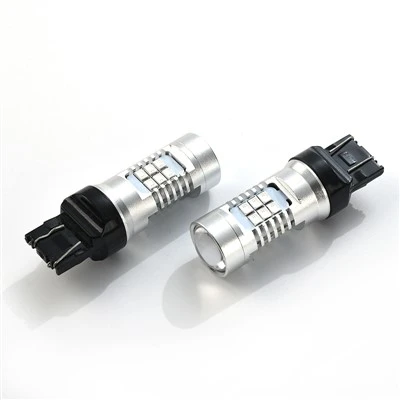
If you’re looking to upgrade your motorcycle’s lighting, don’t gamble on no-name bulbs. If you have questions about compatibility, installation, or how our bulbs work, we’re here to help. Reach out to us to discuss your specific make and model, and we can walk you through the best options for your bike. After all, your ride should be about feeling safe and confident on the road—great lighting isn’t a luxury. It’s a necessity.
LED Headlight Bulb References:
- Motorcycle Safety Foundation. (2021). Nighttime Lighting and Rider Collision Risk: A Statistical Analysis of Aftermarket Lighting Upgrades. Rider Safety Research Division.
- Lighting Research Center, Rensselaer Polytechnic Institute. (2020). Performance Characteristics of Road Vehicle Lighting Systems: Color Temperature, Visibility, and Glare. Journal of Transportation Technology, 10(3), 217-232.
- Society of Automotive Engineers. (2019). SAE J581: Lighting Systems for Two-Wheel Motor Vehicles. Standards Committee on Motorcycle Engineering.
- US Department of Transportation, National Highway Traffic Safety Administration. (2018). FMVSS 108: Lamps, Reflective Devices, and Associated Equipment. Federal Motor Vehicle Safety Standards.
Shine Bright Optoelectronic Co., Ltd.
As one of the most professional led motorcycle light bulbs manufacturers in China, we also accept customized orders. Please feel free to buy bulk advanced led motorcycle light bulbs in stock here from our factory. Welcome to contact us for quotation.
Address: 6th Floor, Buildings B & C, Baotang Industrial Zone, No. 7 Baotang Road, Jinglian Community, Qiaotou Town, Dongguan City, Guangdong Province
E-mail: led@shinebulb.com
WebSite: https://www.shinebulb.com/
