Tolerance is a critical parameter when it comes to high voltage dividers, and as a high voltage divider supplier, I’m here to shed light on what it means, why it matters, and how it impacts the performance of these essential electrical components. High Voltage Divider

Understanding Tolerance in High Voltage Dividers
Tolerance in the context of a high voltage divider refers to the allowable deviation from the nominal ratio of the divider. A high voltage divider is designed to reduce a high input voltage to a lower, measurable output voltage in a known ratio. For example, a divider with a ratio of 1000:1 will take an input voltage of 10,000 volts and output 10 volts. However, due to various factors such as component manufacturing variations, temperature effects, and aging, the actual ratio may deviate from the nominal value.
The tolerance is typically expressed as a percentage. For instance, a high voltage divider with a tolerance of ±1% means that the actual ratio of the divider can vary by up to 1% from the nominal ratio. So, if the nominal ratio is 1000:1, the actual ratio could be anywhere between 990:1 and 1010:1.
Why Tolerance Matters
Accuracy in Voltage Measurement
One of the primary applications of high voltage dividers is in voltage measurement. In electrical systems, accurate voltage measurement is crucial for safety, performance monitoring, and compliance with regulatory standards. A high tolerance can lead to significant errors in voltage measurement. For example, in a power grid, an inaccurate voltage measurement due to a high-tolerance divider could result in over- or under-voltage conditions, which can damage equipment and pose safety risks.
System Performance
High voltage dividers are often used in feedback control systems to regulate voltage levels. A high tolerance can cause instability in these systems. If the divider ratio deviates significantly from the nominal value, the control system may not be able to maintain the desired voltage level accurately, leading to poor system performance.
Compatibility with Other Components
In many electrical setups, high voltage dividers need to be compatible with other components such as meters, sensors, and control circuits. A high tolerance can make it difficult to ensure proper compatibility, as the output voltage may not be within the expected range for these components.
Factors Affecting Tolerance
Component Quality
The quality of the resistors and other components used in the high voltage divider plays a significant role in determining the tolerance. High-quality components with tight manufacturing tolerances will result in a divider with a lower overall tolerance. For example, precision resistors with a tolerance of ±0.1% can be used to achieve a high-precision high voltage divider.
Temperature
Temperature can have a significant impact on the resistance of the components in a high voltage divider. As the temperature changes, the resistance of the resistors may change, leading to a change in the divider ratio. This is known as the temperature coefficient of resistance (TCR). A high TCR can result in a high tolerance, especially if the divider is used in an environment with significant temperature variations.
Aging
Over time, the components in a high voltage divider can age, which can cause changes in their electrical properties. For example, the resistance of a resistor may increase or decrease due to aging, leading to a change in the divider ratio. This can result in an increase in the tolerance of the divider over its lifespan.
Measuring and Specifying Tolerance
Measurement Techniques
There are several techniques for measuring the tolerance of a high voltage divider. One common method is to use a calibrated high voltage source and a precision voltmeter to measure the input and output voltages of the divider. The actual ratio can then be calculated, and the deviation from the nominal ratio can be determined. Another method is to use a comparison technique, where the divider is compared to a reference divider with a known ratio.
Specification
When specifying a high voltage divider, it is important to consider the tolerance requirements of the application. For applications that require high accuracy, such as in laboratory testing or calibration, a low tolerance divider may be required. On the other hand, for applications where a certain degree of error is acceptable, such as in some industrial control systems, a higher tolerance divider may be sufficient.
Our Offerings as a High Voltage Divider Supplier
As a high voltage divider supplier, we understand the importance of tolerance in high voltage dividers. We offer a wide range of high voltage dividers with different tolerance levels to meet the diverse needs of our customers.
Our high-precision high voltage dividers are designed using high-quality components with tight manufacturing tolerances. These dividers are suitable for applications that require high accuracy, such as in research laboratories, calibration facilities, and high-voltage testing equipment.
For applications where cost is a major consideration, we also offer standard high voltage dividers with a slightly higher tolerance. These dividers are still reliable and suitable for many industrial and commercial applications.
We also provide customization services to meet the specific requirements of our customers. If you have a unique application that requires a high voltage divider with a specific tolerance, we can work with you to design and manufacture a custom solution.
Conclusion
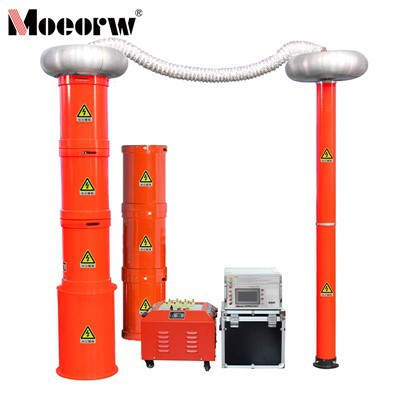
Tolerance is a crucial parameter in high voltage dividers, and it can have a significant impact on the performance and accuracy of electrical systems. As a high voltage divider supplier, we are committed to providing our customers with high-quality dividers with tight tolerances. Whether you need a high-precision divider for a critical application or a standard divider for a more cost-effective solution, we have the expertise and resources to meet your needs.
AC Resonant Test System If you are interested in learning more about our high voltage dividers or have specific requirements for your application, please contact us. Our team of experts is ready to assist you in selecting the right divider for your needs and providing you with the support and guidance you need throughout the purchasing process.
References
- Grover, P. K. (2007). Electrical Measurements and Instrumentation. New Age International.
- Dorf, R. C., & Bishop, R. H. (2017). Modern Control Systems. Pearson.
- Hayt, W. H., Jr., Kemmerly, J. E., & Durbin, S. M. (2012). Engineering Circuit Analysis. McGraw-Hill.
Wuhan Moen Intelligent Electric Co., Ltd.
As one of the most professional high voltage divider manufacturers in China, we’re featured by quality products and good price. Please rest assured to buy high quality high voltage divider in stock here and get quotation from our factory. Customized orders are welcome.
Address: Building A, No.1, Fenghuangyuan 2nd Road, Donghu New Technology Development Zone, Wuhan, Hubei, China
E-mail: info@hvhipotsystem.com
WebSite: https://www.hvhipotsystem.com/
