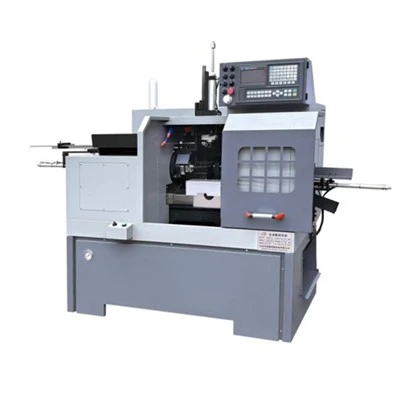
The cutting speed is a crucial parameter in the operation of a vertical machining center. It significantly influences the machining efficiency, surface quality of the workpiece, and tool life. Different materials require different cutting speed ranges to achieve optimal machining results. As a supplier of vertical machining centers, I have gained valuable insights into the cutting speed requirements for various materials. In this blog, I will share the cutting speed ranges for different materials commonly processed on a vertical machining center. Vertical Machining Center
Aluminum and Its Alloys
Aluminum is one of the most widely used materials in the manufacturing industry due to its low density, high corrosion resistance, and good machinability. When machining aluminum and its alloys on a vertical machining center, relatively high cutting speeds can be employed.
For pure aluminum and soft aluminum alloys (such as 1xxx and 3xxx series), the cutting speed can range from 500 to 2000 m/min. These materials are relatively easy to cut, and higher cutting speeds can improve the machining efficiency without causing excessive tool wear. For example, when using carbide end mills, a cutting speed of around 1500 m/min can be used for roughing operations, while a slightly lower speed of about 1000 m/min can be selected for finishing to ensure a better surface finish.
Harder aluminum alloys, such as the 2xxx, 6xxx, and 7xxx series, require a slightly lower cutting speed. The cutting speed range for these alloys is typically between 300 and 1500 m/min. The higher strength of these alloys means that higher cutting speeds may lead to increased tool wear and poor surface quality. Therefore, a more conservative approach is needed when determining the cutting speed. For instance, when machining 7075 – T6 aluminum alloy, a cutting speed of around 800 m/min is often a good choice for both roughing and finishing operations.
Steel
Steel is another commonly machined material on vertical machining centers. The cutting speed for steel depends on the type of steel, its hardness, and the machining operation.
Carbon steels, which are relatively soft and easy to machine, have a cutting speed range of 100 – 300 m/min for roughing and 150 – 400 m/min for finishing. For example, when machining AISI 1018 steel, a roughing cutting speed of 200 m/min can be used, while a finishing speed of 300 m/min can improve the surface finish.
Alloy steels are stronger and harder than carbon steels, and they require lower cutting speeds. The cutting speed range for alloy steels is typically 50 – 200 m/min for roughing and 100 – 250 m/min for finishing. For instance, when machining AISI 4140 steel, a roughing speed of 150 m/min and a finishing speed of 200 m/min are commonly used.
Stainless steels are known for their high corrosion resistance but are also more difficult to machine. The cutting speed for stainless steels is generally in the range of 30 – 150 m/min for roughing and 50 – 200 m/min for finishing. Due to the work – hardening tendency of stainless steels, lower cutting speeds are necessary to prevent excessive tool wear and maintain good surface quality. For example, when machining 304 stainless steel, a roughing speed of 80 m/min and a finishing speed of 120 m/min can be effective.
Cast Iron
Cast iron is a popular material in the manufacturing of machine parts due to its good castability and damping capacity. The cutting speed for cast iron depends on its type, such as gray cast iron, ductile cast iron, and white cast iron.
Gray cast iron is relatively easy to machine, and the cutting speed range is between 100 – 300 m/min for roughing and 150 – 400 m/min for finishing. For example, when using carbide cutting tools, a roughing speed of 200 m/min and a finishing speed of 300 m/min can be used for gray cast iron with a hardness of around 150 – 200 HB.
Ductile cast iron is stronger and more ductile than gray cast iron, and it requires a lower cutting speed. The cutting speed range for ductile cast iron is typically 50 – 200 m/min for roughing and 100 – 250 m/min for finishing. For instance, when machining ductile cast iron with a hardness of around 200 – 250 HB, a roughing speed of 150 m/min and a finishing speed of 200 m/min are appropriate.
White cast iron is extremely hard and difficult to machine. The cutting speed for white cast iron is very low, usually in the range of 10 – 50 m/min for both roughing and finishing operations.
Titanium and Its Alloys
Titanium and its alloys are known for their high strength – to – weight ratio, excellent corrosion resistance, and biocompatibility. However, they are also very difficult to machine due to their low thermal conductivity, high chemical reactivity with tool materials, and high strength at elevated temperatures.
The cutting speed for titanium and its alloys is relatively low. For roughing operations, the cutting speed range is typically 10 – 50 m/min, and for finishing operations, it is 20 – 60 m/min. For example, when machining Ti – 6Al – 4V, a commonly used titanium alloy, a roughing speed of 30 m/min and a finishing speed of 40 m/min can be used. Specialized tool materials, such as coated carbide or ceramic tools, are often required for machining titanium alloys to withstand the high temperatures and stresses generated during the cutting process.
Plastics
Plastics are widely used in various industries due to their low cost, light weight, and ease of processing. The cutting speed for plastics depends on the type of plastic, such as thermoplastics and thermosetting plastics.
For thermoplastics, such as polyethylene, polypropylene, and polycarbonate, the cutting speed can range from 200 to 1000 m/min. These plastics are relatively easy to cut, and higher cutting speeds can be used to improve the machining efficiency. For example, when machining polycarbonate, a cutting speed of around 800 m/min can be used for both roughing and finishing operations.
Thermosetting plastics, such as epoxy and phenolic resins, are more brittle and require a lower cutting speed. The cutting speed range for thermosetting plastics is typically 100 – 500 m/min. A lower cutting speed helps to prevent cracking and chipping of the plastic during the machining process.
Factors Affecting Cutting Speed
In addition to the material type, several other factors can affect the cutting speed on a vertical machining center. These factors include the type and geometry of the cutting tool, the machining operation (roughing or finishing), the rigidity of the machine tool, and the coolant used.
The cutting tool material plays a crucial role in determining the cutting speed. Carbide tools can generally withstand higher cutting speeds than high – speed steel tools. Coated carbide tools can further increase the cutting speed and tool life. The geometry of the cutting tool, such as the rake angle, clearance angle, and helix angle, also affects the cutting performance and the recommended cutting speed.
The machining operation also influences the cutting speed. Roughing operations are typically performed at higher cutting speeds to remove a large amount of material quickly, while finishing operations require lower cutting speeds to achieve a better surface finish.
The rigidity of the machine tool is essential for maintaining stable cutting conditions at high cutting speeds. A rigid machine tool can minimize vibrations and ensure accurate machining. Coolants can also improve the cutting performance by reducing the temperature at the cutting zone, flushing away the chips, and providing lubrication.
Conclusion

Selecting the appropriate cutting speed for different materials on a vertical machining center is crucial for achieving high – quality machining results, improving productivity, and extending tool life. As a supplier of vertical machining centers, I understand the importance of providing our customers with the necessary information and support to optimize their machining processes.
Vertical Machining Center If you are in the market for a vertical machining center or need assistance in determining the best cutting parameters for your specific application, please feel free to contact us for a detailed discussion. Our team of experts is ready to help you make the right choice and ensure the success of your machining operations.
References
- Kalpakjian, S., & Schmid, S. R. (2009). Manufacturing Engineering and Technology. Pearson Prentice Hall.
- Trent, E. M., & Wright, P. K. (2000). Metal Cutting. Butterworth – Heinemann.
- ASM Handbook Committee. (1990). ASM Handbook Volume 16: Machining. ASM International.
Taizhou Qiyang Trading Co., Ltd.
As one of the most professional vertical machining center manufacturers and suppliers in China, we’re featured by quality products and good price. Please rest assured to buy bulk vertical machining center for sale here and get quotation from our factory. Customized orders are welcome.
Address: Zhenhai Village, Binhai Town, Wenling City, Taizhou City, Zhejiang Province
E-mail: qycncmachine@outlook.com
WebSite: https://www.qycncmachine.com/
