Hey there, Monopole Transmission Tower
If you’re here asking about monopole transmission tower maintenance frequency, chances are you’re either a utility pro, a project manager working on a new line, or maybe even someone who’s had to deal with an unexpected tower outage—and let’s be real, those are never fun. As a monopole transmission tower supplier, I get so many questions about this: how often do our guys need to climb these things? What’s non-negotiable vs. just extra work? And honestly, I’ve learned over the years that the answer isn’t one-size-fits-all. It depends on way more than just the tower itself. Let me break this down like I’d talk to a fellow contractor over a coffee, no stuffy industry jargon.
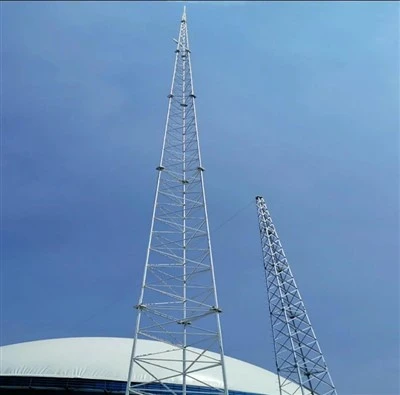
First off, let’s get on the same page about what a monopole transmission tower is, quick (even if you already know). Unlike those lattice towers you see crisscrossing rural highways, monopoles are that single, sleek steel pole—sometimes 50 feet tall, sometimes 200—used for everything from power lines to cell towers, railway signals, even streetlights with high-voltage gear bolted on. We supply ’em for all kinds of environments: coastal areas where salt air eats metal, plains with high wind, wooded regions with falling branches, even urban spots where space is tight. That environment is the biggest driver of maintenance frequency, hands down.
Let’s start with the baseline. For most monopoles installed in moderate, low-stress areas—think a suburban neighborhood with mild weather, no extreme wind, no salt, and no major debris risk—the standard is a full inspection every 5 years. Wait, “full inspection” doesn’t mean just walking by and squinting, either. It means a certified lineman or engineer climbing the tower (or using a bucket truck if it’s too tall) to check every nook: the foundation, the steel itself, the bolts holding everything on, the insulators, the connections for the power lines. Some guys I work with do a quick visual drive-by every year, just to spot something obvious like a leaning pole or a broken wire, but that’s not enough for actual maintenance. The real deep stuff is every 5 years for mild areas.
But if your monopole is in a harsh environment? You double that frequency, no question. I’ve got clients in Florida, right on the Gulf Coast, where salt spray is nonstop. Corrosion is the enemy here—salt eats through steel like nothing. Those guys don’t wait 5 years; they do full inspections every 2 years. And sometimes even more often if a hurricane season was bad, because high winds can loosen bolts or crack sections we might not have seen. Same goes for mountain areas with heavy snow and ice—ice loading adds extra stress to the tower, so inspections need to be annual there too, especially after winter storms. Urban areas get their own unique stress: construction debris, car crashes (yes, I’ve seen a few towers hit by delivery trucks), even vandalism. A monopole next to a busy highway? Full inspection every 3 years, minimum, because there’s more risk of something going wrong fast.
Now, what kind of maintenance are we actually talking about here? It’s not all climbing. A lot of it is proactive stuff that prevents big problems. For example, cleaning insulators—dirt, bird droppings, and pollution can build up on those, causing power leaks. In dry, dusty areas, that might need a touch-up every 6 months, no climbing even required (you can spray them from the ground). Bolts? They work loose over time, thanks to vibration from wind or power lines. So part of the inspection is torquing bolts back to the manufacturer’s specs—we actually give our clients a detailed torque chart when we deliver the tower, so they don’t guess. Corrosion protection is huge too. We coat our monopoles with a hot-dip galvanized finish, but that’s not permanent. In coastal areas, we recommend a touch-up paint every 10 years, but if you’re in a super salty spot, maybe every 5. Foundation checks are also non-negotiable every inspection—if the concrete around the base is cracking, or the soil around it is eroding, that can make the whole tower lean over time. I had a client in Texas a few years ago who waited 7 years to check their foundation, and by then the monopole was leaning 3 degrees—we had to send a crew to straighten it, which cost way more than a proactive inspection would have.
Wait, I should mention that there’s a difference between routine maintenance and emergency maintenance, right? Routine is the planned stuff—inspections, bolt tightening, touch-ups. Emergency is when a storm knocks a line loose, or a pole gets hit, and you have to fix it immediately. That doesn’t count towards the regular frequency, obviously, but it’s something to keep in mind: all our clients need to have an emergency response plan, especially in high-risk areas.
Now, as a supplier, I don’t just sell towers and disappear. We work with every client to customize a maintenance schedule. Because that’s the thing—what works for one tower won’t work for another. Last year, we did a project in rural Iowa where the monopoles are in farm fields, so they get hit by falling corn stalks and hay baler debris all the time. We told the client to do full inspections every 3 years, plus a mid-year check after harvest to make sure no debris is leaning against the tower. Another project I did was in downtown Chicago, where space is tight and the monopoles are right next to skyscrapers and sidewalks. There, inspections are every 2 years because of foot traffic—if something fails, it could hurt someone.
I get it, some clients think, “Hey, why not stretch maintenance out as long as possible to save money?” But let’s be real—cutting corners here costs way more in the long run. A small bolt that’s loose now can lead to a section of the tower shifting, which can damage power lines, cause an outage, and maybe even force you to replace the whole tower early. We’ve seen that happen. A client in Arizona tried to skip a 2-year inspection for a coastal tower, and by year 4, the steel had corroded so bad that a support bracket broke. The outage lasted 3 days, cost them $120k in lost revenue, and they had to repair the tower instead of doing a cheap bolt tightening. That’s way worse than the few thousand bucks a maintenance inspection costs.
Another thing to consider: newer monopoles are built with better tech that reduces maintenance. We’ve started including sensors in our towers now—small ones that track vibration, tilt, and temperature. Those sensors send real-time data to your phone, so you don’t have to wait 5 years to find out there’s a problem. For example, if the sensor picks up unusual vibration after a storm, you can send a crew out right away, instead of waiting for the next scheduled inspection. That’s a game-changer for maintenance frequency, because it lets you adjust the schedule based on actual data, not just guesswork. I always recommend our clients invest in those sensors if they can—they pay for themselves in avoided downtime.
Wait, also, regulatory stuff. A lot of countries and regions have specific rules for power transmission infrastructure. In the US, the Department of Energy has guidelines for transmission tower maintenance, and in Europe, EN standards. We make sure all our towers meet those standards, and we help our clients stay compliant with local regulations. So if you’re in an area with strict rules, you can’t just make up your own maintenance schedule—you have to follow the required frequency.
Let me recap to make this clear, no confusing stats. For most areas:
- Low-stress (suburban, mild weather, no salt/ice): Full inspection and major maintenance every 5 years
- Moderate-stress (urban, highway, light snow): Every 3 years
- High-stress (coastal, mountain, hurricane zones): Every 2 years
Plus annual quick visual checks, and proactive small tasks like insulator cleaning every 6 months in dusty/polluted areas.
And remember, that’s the baseline. Every tower is unique, so if you’ve got a specific project—whether it’s a new line or replacing an old tower—reach out and we can walk through your location, environment, and needs to build a custom maintenance plan. We don’t just sell you a pole; we’re here to help you keep it running for decades.
At the end of the day, monopole transmission tower maintenance isn’t something to put on the back burner. It’s proactive work that saves you money, prevents outages, and keeps everyone safe. I’ve been supplying these towers for 12 years now, and the clients who stick to a consistent schedule are the ones who have zero big issues. The ones who skip? They’re the ones calling me at 2 a.m. when a storm takes down a line, asking for emergency replacements. Don’t be that guy.
If you’re looking to get a new monopole transmission tower, or you need tips on optimizing your current maintenance schedule, we’re here to help. Shoot us a message and let’s chat about what works for your project.
Power Transmission Tower References
- North American Electric Reliability Corporation (NERC). (2022). Transmission Structure Maintenance Guidelines.
- International Electrotechnical Commission (IEC). (2021). IEC 61936-1: Power Installations Exceeding 1 kV A.C. – Part 1: Common Rules.
- American Galvanizers Association. (2020). Maintenance of Galvanized Steel Structures in Harsh Environments.
- Federal Energy Regulatory Commission (FERC). (2021). Infrastructure Reliability Standards for Transmission Towers.
Hunan Zhubang Hongsheng Construction Technology Co., Ltd.
As one of the most professional monopole transmission tower manufacturers and suppliers in China, we’re featured by quality products and good price. Welcome to buy high-grade monopole transmission tower made in China here and get quotation from our factory. Customized orders are welcome.
Address: Lutang Village, Yong’an Town, Liuyang City, Changsha City, Hunan Province, Hunan Zhubang Hongsheng Construction Technology Co., Ltd.
E-mail: 19898838989@163.com
WebSite: https://www.chinaenerto.com/
