Let me start by saying this: when customers first reach out to us as a metal stamping parts supplier, one of the most common questions I hear is not about material selection, part complexity, or lead times—it’s about yield. They’re looking for a hard number, a percentage they can plug into their production budgets, their supply chain forecasts, or their project timelines. For years, I’ve given the same answer, but it’s never just a single number. It’s a conversation tied to context, to the parts you’re making, the equipment you’re using, and the standards you’re holding to. Today, I want to pull back the curtain on what a “typical yield” actually means for metal stamping, break down the factors that shift that number, and give you the real-world data our team relies on every day. Metal Stamping Parts
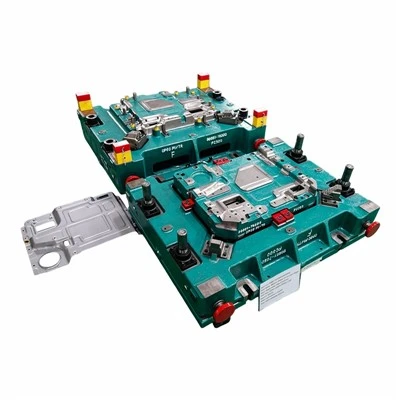
First, let’s define what we’re talking about here. For metal stamping, yield isn’t just the percentage of parts that come off the press good. It’s the ratio of usable, defect-free parts that meet every specification—dimensional accuracy, surface finish, material integrity, and functional requirements—compared to the total number of blanks fed into the press. A lot of suppliers will quote a general 90% or 95% yield, but that’s misleading. I’ve seen yields as high as 98% for simple, repeatable parts, and as low as 70% for complex, low-run prototypes. The difference comes down to three core variables: part design, equipment capability, and process control.
Let’s start with part design, because that’s the foundation of everything. The simplest metal stamping parts—think flat steel brackets, washers, or basic circuit board connectors with minimal bends or cuts—have the highest yields. For these, our standard yield ranges from 94% to 98%. Why? There’s less chance of material tearing, distortion, or dimensional shift because the forming is predictable. For example, a 1-inch steel washer stamped from 0.02-inch cold-rolled steel (CRS) uses a single punch and die to cut a round hole and a round outer edge. The material flows evenly, there are no tight radii, and the only defects are rare burrs or off-center holes from minor die wear. On a 100,000-run of these, we might only have 2,000 to 6,000 bad parts—most of which are caught during in-line inspection before they leave the facility. But when the part gets more complex, yield drops fast. Parts with tight bend radii (less than 1.5x the material thickness), deep draws (more than 2x the diameter of the blank), or intricate embosses and holes that align within 0.001 inches of each other push yields down to 85% to 92%. Last quarter, we ran a custom automotive seat bracket that required three 90-degree bends, a 0.5-inch deep draw for a mounting tab, and four precision holes that had to align with a mating plastic component. Our yield on that run was 88%. We had a few parts tear at the bend radius because we used a slightly harder grade of stainless steel than we initially tested for, and another small batch had minor dimensional shift in the draw because of die temperature fluctuation overnight. That’s not a failure—that’s the reality of complex stamping.
Next, equipment capability plays a huge role. A 40-year-old mechanical press that’s never been calibrated will have a lower yield than a state-of-the-art servo-driven press with real-time process monitoring. Servo presses let us adjust speed, pressure, and stroke on the fly, which is critical for parts that involve deep drawing or material that’s prone to springback. For example, when stamping aluminum— a soft, highly formable material but one that’s prone to wrinkling if not controlled— servo presses can adjust pressure mid-stroke to smooth the draw wall, cutting defect rates by 3 to 5 percentage points compared to old mechanical presses. We also use in-line vision inspection systems on 70% of our production lines. These cameras check every part for dimensional accuracy, surface scratches, burrs, and material defects before it even leaves the press. Before we installed those systems five years ago, our average yield was 3 percentage points lower than it is now, because we were catching defects only after parts were batch-processed. Older presses, on the other hand, often have more mechanical play, leading to inconsistent stroke length, which causes parts to be over-formed or under-formed. That’s why we invest in regular press calibration—monthly for high-volume lines, quarterly for lower-run specialty work. I’ve seen a customer switch suppliers and see their yield drop 12 percentage points just because the new supplier ran their production on outdated, uncalibrated equipment. It’s not that the new team was cutting corners—it’s that they didn’t understand how equipment impacts yield.
The third and most variable factor is process control, which covers everything from material handling to operator training to quality checks. This is where a lot of suppliers either nail it or fall short. For example, the quality of the raw material matters a lot. If a customer supplies us with sheet metal that has hidden scratches, inclusions, or inconsistent thickness, that will wreck yield before we even hit the press. We once had a customer send us a batch of 304 stainless steel that was off-thickness by 0.002 inches across the sheet. Halfway through the run, parts started tearing at the bends, and our yield dropped from 90% to 72% until we could rework the material selection with the customer. On the flip side, our team does material testing on every incoming batch: we check thickness, hardness, surface finish, and grain direction. Grain direction is another big one—metal flows more easily along its grain, so we orient blanks to run with the grain for bends and draws. If we run a part against the grain, the risk of tearing jumps significantly, lowering yield.
Operator training is also huge. Stamping is not a set-it-and-forget-it process. A skilled operator will notice a minor die wear, adjust the feed speed, or check a sample part every 100 strokes, catching issues before they turn into a 10,000-part defect batch. We have a full training program that requires every operator to complete 40 hours of on-the-job training, plus annual refreshers on new equipment and quality standards. Last year, a new operator on a low-run prototype line caught that the die was slightly misaligned after 50 parts, preventing a 5,000-part run of bad parts. Without that eye for detail, our yield on that project would have been 70% instead of 92%.
Now, let’s talk about the numbers that actually matter for most customers, because I know you don’t just want a list of factors. For high-volume, simple stamping parts (100,000+ parts per run, basic shape, no tight tolerances), the typical yield is 94% to 98%. For mid-volume, moderately complex parts (10,000 to 100,000 parts, tight bend radii, small draws), yield ranges from 88% to 94%. For low-volume, high-complexity parts (less than 10,000 parts, precision requirements, multiple forming steps), yield drops to 75% to 88%. And for prototype runs, which are often first-time designs with untested parameters, yields can be as low as 60% to 75%—but that’s expected, and it’s why prototypes are so valuable for refining part designs before full production.
I want to be clear: these are not arbitrary numbers. They’re based on over 15 years of stamping experience, thousands of runs, and data we track on every single production line. When a customer asks us for a quote, we don’t just pull a number out of thin air. We do a pre-production trial run with a sample of their design, test different material grades, adjust die parameters, and give them a realistic yield number that we can guarantee. For example, a medical device customer last year needed 50,000 titanium stamping parts with tolerances of ±0.0005 inches. We did a 500-part trial run, adjusted the die clearance for titanium (which is much harder than steel), and locked in a yield of 85%. We quoted that number upfront, and on the full run, we hit 86% yield—slightly higher than our estimate, because the trial helped us nail the process. That’s the kind of transparency we offer, and it’s what sets us apart from suppliers that will promise a 95% yield no matter what, only to have it drop 10 points once production starts.
There’s another common misconception I want to clear up: lower yield doesn’t mean lower quality. A lot of customers think if yield is 85% instead of 95%, the parts are worse. That’s not true. The defective parts are not scrap—they’re parts that don’t meet specification, but they can often be reworked, or in some cases, used for secondary testing. For example, a part that’s slightly out of dimensional tolerance might be sent back to the die for a quick adjustment, bringing it back to spec. Or parts that have minor surface burrs can be deburred and reused. Only about 10% of defective parts end up as actual scrap metal. The rest are either reworked or recycled, so the real cost impact is not just the number of bad parts, but the time it takes to rework them, and the lead time impact of having to run extra parts to hit the customer’s order quantity.
Speaking of cost, yield directly impacts pricing, which is why it’s so important to get right. If a supplier quotes a low yield, they might be offering a lower up-front price, but you’ll end up paying for extra parts to make up for defects, or for rework. That’s why we structure our quotes with realistic yield numbers: we quote based on the number of good parts you need, and we build the expected defective parts into the quote so you don’t have to pay for extra. For example, if you need 100,000 good parts, and our yield is 90%, we’ll run 111,111 total parts, and you only pay for the 100,000 good ones. That way, you don’t get hit with unexpected costs for scrap or extra production runs.
Now, I know some of you are reading this and thinking, “But I need a concrete number for my budget.” The answer is that there is no universal typical yield—it depends on your specific part. But as a metal stamping parts supplier that works with automotive, medical, aerospace, and consumer electronics customers, here’s the rule of thumb we use: if your part is simple, high-volume, and uses common materials, you can expect a yield of 93% or higher. If it’s complex, low-volume, or requires tight tolerances, plan for a yield between 80% and 90%. And if it’s a prototype, build in a buffer for lower yield—usually 10 to 15 percentage points below what you’d expect for full production.
At the end of the day, yield is a balance between design, equipment, and process. It’s not about chasing the highest percentage possible—it’s about getting a percentage that’s realistic for your part, your volume, and your quality standards. Too many suppliers treat yield as a marketing tool, quoting a number that works for their sales pitch, but not their actual capabilities. Our team tracks yield on every run, shares the data with our customers upfront, and works with them to adjust designs or processes if yield is lower than expected. Whether you’re a startup needing a custom prototype, a manufacturer ordering 1 million parts for a new product line, or someone who’s been burned by a stamping supplier in the past, we can give you the transparent, data-backed yield numbers you need to plan your project.
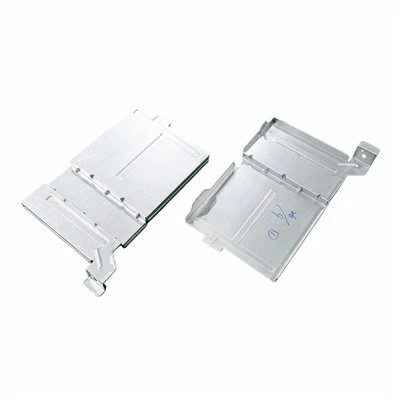
If you have a metal stamping project in the works, or you’re looking to replace a supplier that’s been giving you unreliable yield numbers, reach out to our team to discuss your specific needs. We’ll walk you through our process, share real yield data from similar projects, and give you a quote that’s transparent and tailored to your requirements. No generic numbers, no fine print, just honest stamping expertise.
Transfer Dies & Tandem Dies References:
- Davis, J.R. (Editor). Metals Handbook: Forming and Forging, 10th Edition. ASM International, 1990.
- Groover, M.P. Fundamentals of Modern Manufacturing: Materials, Processes, and Systems, 7th Edition. Wiley, 2020.
- European Metal Stamping Association (EMSA). 2023 Industry Benchmark Report for Precision Stamping Yields. EMSA, 2023.
- Törngren, M. “Process Control and Quality Assurance in High-Volume Metal Stamping.” Journal of Manufacturing Science and Engineering, vol. 138, no. 12, 2016, p. 121006.
Dongguan Changdong Tool & Die Co., Ltd.
With abundant experience, we are one of the most reliable metal stamping parts manufacturers and suppliers in China. Please feel free to buy advanced metal stamping parts made in China here from our factory. Good service and quality products are available.
Address: No.56-B, Fumin South Road, Dalang Town, Dongguan City, Guangdong Province, China
E-mail: sales@cdstamping.com
WebSite: https://www.metalstampingdie.com/
