What’s up, everyone – if you’re here, you’re probably knee-deep in ordering tape jumbo rolls, or you’re just curious how the hell those big, unwieldy spools even get made. I’m [your name, just keep it casual], and I’ve been supplying tape jumbo rolls out of my workshop for 12 years now, so I’ve fielded way too many questions like “how many layers are actually on one of these things?” Most of the time, people guess 10, 50, maybe 100 – but it’s way more specific than that, and it depends on way more than just “how big is the roll.” Let’s break this down, no stuffy textbook jargon, just real talk from someone who’s handled way too many roll cores in his day. Tape Jumbo Roll
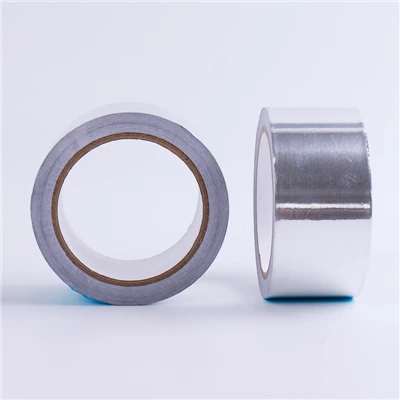
First off, let’s get one thing straight: a tape jumbo roll isn’t just a single layer of adhesive tape wound tight around a core. That’d be a disaster – it’d stretch unevenly, get wrinkles, and you’d have to replace it every five minutes. The number of layers isn’t some random number we pick out of thin air, either. It’s tied to three main stuff: the width of the roll, the thickness of the tape itself, and what you’re using the tape for. Let’s start with the most common scenario: standard office packing tape, the kind you use to seal boxes for shipping. That tape is usually 2.0 to 2.4 mils thick – for reference, a mil is a thousandth of an inch, so that’s basically a thin plastic film with acrylic adhesive on one side. A standard jumbo roll for that might be 12 inches wide, right? We wind that with around 1,200 to 1,500 layers. Wait, hold on – don’t worry, that sounds like a lot, but think about it: each layer is 2 mils, so 1,500 layers only adds up to 3 inches of tape thickness, which is about right for a spool that fits on a standard dispenser later on.
But here’s where it gets tricky – if you’re dealing with industrial-grade tape, not the cheap stuff from the dollar store. Industrial packaging tape might be thicker, like 2.8 to 3.5 mils, because it needs to hold heavy pallets or survive warehouse humidity. For that same 12-inch width jumbo roll, the layers drop a little – to 900 to 1,100. Why? Because thicker tape means each layer takes up more space on the core, so you can’t cram as many in there without making the roll too wide, which won’t fit on most production lines. If we crammed 1,500 layers of thick industrial tape, the roll would be like 5 inches thick – too big to work with for most automated packing machines. That’s not a “we don’t want to make it” thing, that’s a “it won’t fit” thing.
Now, what about narrower or wider rolls? Let’s say you’re a craft shop, ordering jumbo rolls for custom washi tape – that’s way thinner, like 0.5 to 1.0 mils, because it’s for decorating, not sealing boxes. A ½-inch wide jumbo roll for washi? We can wind up to 3,000 layers on that. Because each layer is super thin, so even 3,000 layers only adds up to 3 inches, and since it’s narrow, the roll is small enough for craft dispensers. But flip that to a super-wide roll – like 48 inches, which is common for industrial masking tape used on car paint jobs. That masking tape is usually 2.2 mils thick, so a 48-inch jumbo roll only has 2,000 to 2,200 layers. Why fewer? Because when you have a super-wide roll, the inner layers have to stretch a little more when you wind them tight – if you crammed too many layers, the tension would be off, and the roll would develop gaps or wrinkles when you unspool it. We call that “coning” in the biz, and it’s the worst – you spend hours winding a perfect roll, and it cones, meaning one side is taller than the other, so it jams on your machine. No one wants that, so we adjust the layer count for wide rolls to keep tension even.
Wait, let’s talk about core size too, because that’s a huge factor I almost forgot. Most jumbo rolls use a 3-inch core, right? But some industrial customers use 6-inch cores because their dispensers are bigger. A 6-inch core means more space to wind layers, so for the same thickness and width tape, you can have 10% to 15% more layers. Let’s test that: 12-inch wide, 2.0 mil office tape, 3-inch core = 1,200 layers. Same tape, same width, 6-inch core = 1,350 layers. That’s not a random bump – the wider core lets us distribute the tension more evenly, so we can add a few more layers without causing coning or stretching the tape. If you use a tiny 1.5-inch core, though, you can only have 1,000 layers max, because the small core means the tape bends more around the inner layers, which makes them prone to breaking or peeling. We get so many people asking for small-core jumbo rolls, and I always have to explain that you can’t cram as many layers on a smaller core – it’s just physics.
Now, let’s clear up a myth I hear all the time: “more layers = better tape.” That’s total BS. More layers just means a longer roll, right? If you have two identical 12-inch wide jumbo rolls, same tape thickness, one with 1,200 layers and one with 1,500, the 1,500 is longer, that’s it. But if you take a thicker industrial tape with 1,000 layers, that might be the same length as a 1,200 layer standard office tape, but the industrial one is way stronger. So layer count isn’t a measure of quality – it’s a measure of length and fit. I’ve had customers come to me saying “I need 2,000 layers, that’s the best” and I have to explain that they’re confusing layer count with tape thickness. We can make a 1,500 layer roll that’s stronger than a 2,000 layer one if the tape is thicker.
Another thing to consider: what you’re using the roll for. If you’re a small business packing light products like t-shirts, you don’t need a roll with 1,500 layers – a 1,000 layer roll is more than enough, and it’s cheaper. But if you’re a big e-commerce brand packing 50-pound appliances, you need a roll with thicker tape, maybe 3 mils, and while the layer count is lower (around 900), each layer is stronger, so the whole roll can hold way more weight. We’ve had a few customers who tried to skimp on layer count and tape thickness, and they ended up with rolls that snapped mid-pack, which cost them way more in shipping fees than if they’d just ordered the right roll to begin with.
Let’s talk about how we actually count layers, too, because it’s not like we sit there and count each one with a ruler. We use a tension-controlled winder – that’s a machine that winds the tape at a steady tension, so we can calculate the layer count based on the core diameter, the roll diameter, and the tape thickness. For example, if a roll is 12 inches in diameter, core is 3 inches, the total tape thickness is (12 – 3)/2 = 4.5 inches. Then we divide that by the tape thickness to get layers: 4.5 / 0.002 = 2,250? Wait, hold on, that’s a quick math, but real life is a little different – we have to account for the adhesive layer being a little thinner when wound, and the fact that the outer layers are slightly stretched, so we adjust that number down to 1,200-1,500. That’s the secret formula, basically – we’ve been tweaking that math for years, so it’s not just guesswork.
I’ve seen some bad jumbo rolls out there, too – the ones that have uneven layers, so when you unspool them, they twist or stick to themselves. That’s usually because the layer count was off for the width or core size. For example, if you have a 48-inch wide roll, and you try to wind it with the same layer count as a 12-inch, the outer layers will be loose, and the inner ones tight, leading to a huge mess. We fix that by reducing the layer count on wide rolls, and adjusting tension as we wind, so every layer is evenly spaced. That’s the difference between a roll that works on your production line, and a roll that you throw in the trash after 10 minutes.
Now, let’s get to the part you probably care about: if you’re ordering a tape jumbo roll, how do you know how many layers you need? First, figure out what you’re using it for. If it’s light duty (sealing envelopes, small boxes, crafts): go for 0.5-1.5 mil tape, 1,000-1,800 layers, depending on width and core. If it’s medium duty (shipping average boxes, palletizing small goods): 2.0-2.5 mil tape, 900-1,500 layers. If it’s heavy duty (industrial shipping, heavy pallets, outdoor use): 2.8-3.5 mil tape, 700-1,200 layers. That’s a rough guide, but it works 9 times out of 10.
Wait, but what if you’re a printer or a label company, ordering jumbo rolls for label stock? Those are even thinner, like 0.3-0.8 mils, so a 10-inch wide roll can have up to 2,500 layers. Label rolls are also wound with more tension, so the layers are tighter, which keeps the labels from peeling off the roll when you run it through a printer. That’s a whole other beast – label jumbo rolls are way different than packing tape, so their layer count is way higher, and the math is a little different because we don’t have adhesive, just a paper or plastic film.
I’ve had some regular customers over the years who know exactly what they want – they come back every month, order 12-inch wide, 2.2 mil, 1,200 layers, 3-inch core, because that’s what works for their automated packing line. But I’ve also had new customers who come in saying “I need a jumbo roll with a million layers” – and I have to laugh, because a million layers would be a roll like 50 inches thick, which is impossible and totally unnecessary. The layer count is there to give you the right length and fit, not to be a gimmick.
Another thing: humidity affects layer count a little, too. If you’re in a super humid area, the tape can absorb a little moisture, which makes it expand, so we might wind a few fewer layers to account for that, so the roll doesn’t get too tight and break. If you’re in a super dry area, the tape might shrink a little, so we can add a few layers, no problem. That’s the kind of small adjustment that comes from 12 years in the business, not just reading a manual.
Let me wrap this up, because I know you’re here for practical stuff, not just a lesson in tape layers. The next time you’re shopping for a tape jumbo roll, don’t just ask “how many layers does it have?” – ask about the tape thickness, the core size, the width, and what it’s used for. That’s way more important than a random layer number. And if you’re not sure, just reach out – I’ve helped hundreds of customers pick the right roll, no hard sell, just straight up what works for their needs. If you’re sick of rolls that jam, snap, or are the wrong length, let’s chat, I’ll hook you up with something that fits exactly what you’re doing. No fine print, no weird hidden fees, just good tape and good service.
Oh, and one last note – I’ve seen a lot of suppliers advertise “extra layers” as a selling point, but that’s often just marketing. “Extra layers” might mean they cut a few corners on tape thickness, so you end up with a roll that has more layers but is weaker than a cheaper one with fewer layers. Always check the tape thickness, not just the layer count. That’s the real secret to a good jumbo roll.
Now, if you’re ready to stop dealing with bad tape jumbo rolls and get something that works for your business, hit me up to connect and chat about your needs. Whether you need 10 rolls or 10,000, I can get you the right specs, no hassle. Don’t waste another minute on rolls that don’t fit or break mid-use – let’s make this easy for you.
Nano Tape References
- Adhesive Tapes: Technology, Applications, and Performance (3rd Edition), CRC Press
- Industrial Packaging Tapes: A Guide to Selection and Use, Packaging Association of America
- Web Processing and Converting Technology, Converters Association of North America
- Jumbo Roll Winding Fundamentals, Tape and Label Manufacturers Association
Yiwu Yubang Adhesive Products Co., Ltd.
As one of the most professional tape jumbo roll manufacturers and suppliers in China, we also support custom service. We warmly welcome you to wholesale high quality tape jumbo roll made in China here from our factory. If you have any enquiry about cooperation, please feel free to email us.
Address: 4th Floor, No. 17 Gantang West Road, Yiting Town, Yiwu City, Jinhua City
E-mail: salesmanager@yubangtape.com
WebSite: https://www.yubang-tape.com/
