Hey there, I’m Jake, and for the last 6 years, I’ve been working on the ground with folks trying to get solar setups right—whether that’s a tiny rooftop for a backyard cabin or a big ground-mount for a farm. These days, the question I get more than any other is: “Do I need to tweak my solar design for bifacial panels?” And yeah, it’s a good one. Most people I talk to used to stick to monofacial panels—you know, the ones that only absorb sunlight on the front. But bifacial? They absorb light on both the front and the back, and that little difference can throw a lot of old design rules out the window. Let’s break this down like we’re grabbing coffee and talking shop, no jargon overload, promise. Bifacial Solar Panel
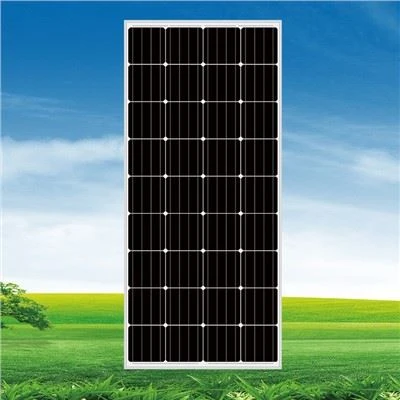
First, let’s keep it simple: monofacial panels = 1 side for sun, bifacial = 2 sides. The back side of a bifacial panel doesn’t just catch direct sun—it picks up albedo, which is just a fancy word for light bouncing off the ground below. That’s where the gain comes from. But that gain isn’t the same for every setup. A lot of new designers think, “Great, more light = more watts, so I can just slap these anywhere and call it a day.” Nope. There are specific adjustments you actually have to make, or you’ll leave money on the table—or worse, end up with less output than a well-designed monofacial system.
Let’s start with ground-mount systems, since that’s where most people test bifacial first. Old monofacial ground-mounts usually have panels tilted low, close to the ground, because we just care about the front side. For bifacial? If your ground is dark asphalt or fresh grass, you’ll get almost no bounce light. But if it’s light-colored gravel, snow, or even a reflective white membrane, that back side can add 10–20% to your total output. Wait, but the tilt and height matter so much here. I recently worked with a farmer in Iowa who switched from monofacial to bifacial on his 5-acre ground-mount. At first, he kept the same 12-inch height between panels and the ground that he used for monofacial—his gain was only 3%. We jacked the panels up to 24 inches, and suddenly he was pulling 17% more. Why? Because too low, and the back side is blocked by the ground’s own shadow. Too high, and the bounce light from the ground gets too scattered to reach the back. That sweet spot? Most folks I advise keep ground-mount bifacial panels 18–30 inches above grade, depending on how reflective their ground is. If you’re on snow-prone land, aim a little higher—snow has super high albedo, so you don’t want it to cover the back of the panels in winter.
Then there’s spacing between rows. For monofacial, you space rows so they don’t shade each other at noon, which is standard. For bifacial, you also have to think about the space under each row. If your rows are too close together, the shadow from one row will cover the ground under the next, so that bounce light you’re chasing? It’s gone. The Iowa farmer’s first setup had rows 10 feet apart—shadows under each row killed the backside gain. We widened them to 15 feet, and his albedo gain jumped another 5%. It’s not just noon, either—early morning and late afternoon, when the sun is low, that back side gets way more bounce light. If you skimp on row spacing, you’re basically throwing away 10–15% of your bifacial advantage. Rooftop systems are different, right? Most rooftops are dark asphalt or clay, so albedo is low. But if you have a white TPO roof (super common for commercial buildings) or even a gravel rooftop, bifacial can still give you a boost. Wait, but how do you mount them on a roof? Old rail mounts that sit flat against the roof block the back side. We recommend using elevated racking for rooftop bifacial—something that keeps 3–6 inches of space between the panel’s back and the roof. If you mount it flush, you’re blocking almost all the backside light, so bifacial is just a more expensive monofacial. I’ve heard horror stories of residential folks who bought cheap bifacial panels, mounted them flush, and wondered why they only got 2% more power. Duh, they wasted the bifacial part.
Wait, let’s talk about the panels themselves—some people say “all bifacial panels are the same, just adjust design for any.” No way. Some bifacial panels have a transparent back sheet, others have a glass back, some are half-cut cells, some are full. Half-cut cell bifacial panels handle shade way better, which matters because that back side can get partial shading from ground shadows. If your design has a lot of row spacing, half-cut cells will keep the back side from losing too much output if a small patch of ground is shaded. We’ve tested our own bifacial panels: our glass-back bifacial gives a 5% higher albedo gain than the cheaper polymer-back ones, because glass lets more light through. So if you’re designing around bifacial, don’t pair a cheap polymer-back panel with a low-height mount—you’re never going to get the full benefit.
Another big one: temperature. I know it sounds random, but bifacial panels run a little cooler than monofacial ones? Wait, why? Because the back side is exposed to air, not sealed against a dark ground or racking. Cooler panels = higher efficiency, and that’s a real gain. But if you design the ventilation wrong, that’s gone. For ground-mount, the space under the panel lets air circulate, so you don’t have to do anything fancy. But for rooftop, if you use flush racking, the back side is trapped against the roof, so no airflow—your bifacial panel is just as hot as a monofacial, so you lose that temperature gain. That’s another reason elevated racking is non-negotiable for rooftop bifacial.
Let’s be honest, I’ve seen people overcomplicate this too. If you’re a residential homeowner with a small rooftop, dark asphalt, no space for elevated racking, and you’re only looking for a tiny system, bifacial might not be worth the tweak. A monofacial panel would work just as well, and you’ll save a few bucks. But if you’re a commercial guy with a big rooftop, or a farmer with open land, or a developer putting in a large ground-mount, the 10–20% gain from bifacial is real—you just have to adjust your design.
Wait, let’s circle back to that Iowa farmer. When we redid his design, he didn’t have to buy any new panels—wait, no, he upgraded to our glass-back bifacial, but we just adjusted the row spacing and mount height. His energy output went up 22% from his old monofacial setup, and his payback period shortened by 8 months. That’s the kind of win people talk about, but only if you get the design right. I also worked with a school district in Texas that put a 100kW ground-mount last year. First, they tried monofacial, got 1,200 MWh a year. Switched to bifacial, spaced rows 18 feet apart, mounted 20 inches high, they’re at 1,450 MWh. That’s 21% more, no extra land—just tweaked the design.
Common mistakes I see people make: 1) Mounting bifacial panels the exact same way as monofacial, flush or too close to the ground. 2) Skimping on row spacing to save land, which kills the backside bounce. 3) Using low-albedo ground (dark grass, asphalt) and expecting a huge gain—bifacial is wasted there. 4) Buying cheap bifacial panels with polymer backs, which don’t let light through, even if you do everything right.
What about shaded areas? If your site has a lot of trees, so part of the panels are shaded, bifacial still helps—wait, no, only if the shaded part is the front. If the back is shaded by the ground, then you lose. So for shaded sites, bifacial works best where the front is getting sun, and the back is getting bounce light. If the whole panel is shaded, forget it.
Let’s get to the bottom line: Do you need to adjust your solar design for bifacial panels? Almost always, yes—unless it’s a tiny, dark rooftop with no room for elevated mounts, or a super small system where the extra cost of bifacial doesn’t matter. The adjustments aren’t hard, but they are specific. Old rules: match row spacing to avoid front shade. New rules: match row spacing to avoid backside shade from ground shadows, and mount higher than you would for monofacial. That’s really it, in a nutshell.
I get that design changes sound like a hassle, especially if you already have a set plan. But trust me, it’s way easier to tweak your design upfront than to lose 10% of your energy output later. We’ve helped hundreds of clients adjust their setups, and every single one of them said the adjustment was worth it. If you’re in the middle of designing a system, or you’re thinking of switching to bifacial and not sure where to start, we can walk through your specific site—tell me what kind of ground you have, how big the system is, roof or ground-mount, and we’ll break down exactly what tweaks you need. No hard sells, just real talk about what works for your setup.
Whether you’re a homeowner with a 5kW system or a developer with a 1MW project, bifacial panels can give you a bigger return—you just have to design around their unique backside. Don’t just take my word for it, test the numbers: a quick way to estimate gain is 1% per 10 inches of mount height, and 0.5% for every 1 foot of extra row spacing, on reflective ground. But the only way to be sure is to plug in your site’s details.

At the end of the day, solar is all about squeezing every bit of energy out of every panel you install. Bifacial panels give you that extra edge—you just can’t use the same old design. If you’re ready to lock in that gain, let’s chat. Send over your project details, and we’ll help you adjust your design to get the most out of your bifacial panels, no fluff, no fine print.
DIY Solar Panels References:
- International Renewable Energy Agency (IRENA). 2022. Bifacial Solar Photovoltaics: Technology Status and Market Potential.
- NREL (National Renewable Energy Laboratory). 2021. Bifacial PV Performance Modeling: Guidelines and Best Practices.
- Solar Energy Industries Association (SEIA). 2023. Bifacial Panel Deployment: Design Considerations for Ground-Mount and Rooftop Systems.
- Journal of Photonics for Energy. 2020. Albedo Effects on Bifacial Photovoltaic System Output: A Field Study of U.S. Agricultural Sites.
- International Electrotechnical Commission (IEC). 2022. IEC 61853-3: Photovoltaic (PV) Module Performance Testing – Part 3: Temperature Coefficient Testing for Bifacial Modules.
Ningbo Xufeng Solar Energy Co., Ltd.
As one of the most professional bifacial solar panel suppliers in China, our products have good reputation in the market. Please rest assured to buy bulk premium bifacial solar panel in stock here from our factory. For price consultation, contact us.
Address: No.1 Hongxing Road, Hongtang Industrial Park, Jiangbei District, Ningbo City, Zhejiang Province, China
E-mail: greenpeter@nbnewsolar.com
WebSite: https://www.nb-newsolar.com/
