What’s up everyone, especially anyone deep in the gold mining game—whether you’re an mine ops lead, a plant manager, or just someone trying to wrap their head around why your crusher’s spitting out gold ore that’s either too chunky to process or too fine to hit that sweet recovery rate? Let’s cut to the chase: as a gold mining crusher supplier, I’ve talked to hundreds of teams that fixate on “crushing tons” or “fuel costs” alone, but those are just the tip of the iceberg. The real performance indicators? The ones that directly line your pockets by getting more gold out of every ton of rock, without burning cash or downtime. Let’s break this down like we’re geeking out over a mine that’s actually hitting its targets, no stuffy industry jargon that makes your eyes glaze over. Gold Mining Crusher

First off, let’s get one thing straight—gold ore is not your run-of-the-mill aggregate. It’s got weird density, sometimes it’s embedded in super hard quartz, other times it’s stuck in softer clay, and that changes everything. A crusher that works great for gravel might die in a gold mine, so the indicators here are specific to how that machine handles gold-bearing rock, not just any old rock.
Let’s start with the big one that everyone overlooks: Gold-bearing Productivity (GBP), and yes, I made that acronym up, but it’s way better than “overall crushing throughput” that’s thrown around. Wait, what’s the difference? Throughput is just tons crushed per hour, right? GBP is how much of that crushed material ends up in the particle size range that flotation cells or gravity concentrators actually love. Here’s the tea: if your crusher’s spitting out a bunch of rocks bigger than 10mm, that’s too big for your typical gold gravity recovery unit (like a Knelson or Falcon) to grab—they’ll just slide right off, and you’re leaving gold on the table. If it’s spitting out a ton of fines smaller than 0.1mm? That’s slime, it gums up flotation reagents, makes them waste money, and you get way less gold per ton of ore processed. I had a client last year in Nevada—they were running a standard cone crusher and cranking the throughput to 350 tph, thinking that was a win, but their gold recovery was only 68%. When we adjusted the closed-side setting (CSS, by the way, that’s the gap you set the crusher to at its tightest point) to cut the oversize to under 8mm, their throughput dropped to 310 tph, but recovery jumped to 79%. So they lost 40 tons an hour, but made $120k more a month in gold. That’s the kind of metric that moves the needle, not just numbers on a screen.
Next up, Component Wear Rate Tailored to Gold Ore. This is a non-negotiable, and it’s something most suppliers don’t talk about enough. Gold ore isn’t just abrasive—it has these tiny, sharp silica crystals that act like sandpaper, and sometimes pyrite (fool’s gold, but it’s abrasive too) that wears down crusher parts way faster than limestone or granite. I’ve seen a copper crusher run for 2,000 hours before wearing out its mantle; that same crusher in a gold mine? 800 hours. Now, the key here is not just “how fast do parts wear,” but how that wear impacts performance over time. If your CSS is creeping wider as the mantle wears, that means your product size is getting too big, recovery drops, and you’re spending hours swapping out parts instead of crushing. I work with a foundry that makes wear parts specifically for gold ore—they add a little extra chromium and manganese that stands up to silica, and their parts last 30% longer, and hold their CSS within 1mm for twice as long. For my clients, that’s less downtime and no mid-shift panic when the crusher’s output goes south because a worn mantle shifted the gap. So don’t just ask for “wear parts”—ask for ones rated for gold-bearing silica, that’s a make-or-break performance metric.
Third, let’s talk about Down-time Related to Gold-Specific Issues, not general crusher down-time. Everyone counts total downtime, but that’s useless. Is your crusher down because of a broken gear? That’s maintenance, but if it’s down because gold ore got stuck in the cavity and caused a jam? That’s something you can fix with a better cavity design. Jams are a huge pain in gold mines, especially when you’re processing ore with high clay content (sometimes called “sticky ore”) that clumps up and wedges in the crusher. I had a client in Western Australia that was dealing with 12 hours of downtime a month from jams—they tried adding water to the feed, but that just messed with their slurry. We swapped their old standard cavity for a “full-cavity gold-specific design” that lets the ore slide through easier, and jam downtime dropped to 2 hours a month. That’s 10 extra hours of crushing a month, which translates to hundreds of extra tons of ore, and more gold. Also, gold mines often run 24/7, right? So any unplanned downtime isn’t just lost cash—it’s missed gold recovery windows, because if you stop, your process plant has to clean out, which takes even longer. So when we talk performance here, it’s not just how often the machine runs, but why it’s down, and how gold ore is causing that.
Wait, let’s not skip Energy Efficiency for Gold Ore Processing, but again, make it specific. A lot of crusher guys brag about kW per ton, but that’s only part of the story. If you’re using extra energy to crush down that oversize gold that gets lost, that’s wasted energy. Let’s do the math: if your crusher uses 50 kWh per ton to crush to 8mm, vs 55 kWh per ton to crush to 5mm, but the finer product gives you 5% more gold recovery, the extra 5 kWh is worth it because the gold you gain is way more than the cost of the electricity. I’ve seen clients get way too focused on cutting kWh per ton, so they run a CSS that’s too tight, which uses more energy but gives no gold gain—total waste. The real metric here is “energy spent per recovered ounce of gold,” not per ton of ore. That’s the one that matters for your bottom line, not a generic number.
Oh, and let’s not forget a super underrated one: Fines Generation That Doesn’t Hurt Gold Recovery. Wait, earlier I said too many fines are bad, but some fines are okay? Gold is found in the fines, right? If you crush too aggressively, you end up with slimes that are less than 0.075mm, which gum up flotation, but if you can tune the crusher to make fines between 0.075mm and 2mm, that’s perfect—gold likes that size. So the performance indicator here is “fines ratio between 0.075mm and 2mm,” not just total fines. A lot of crushers will spit out 20% fines, but 15% of that is slime—useless. A gold-specific crusher will spit out 18% fines, but only 5% is slime, so you get more gold without the flotation hassle. I tested this with a client last year—they were getting 12% slime, we adjusted their feed rate and used a gold-specific cone crusher, dropped slime to 4%, and their flotation recovery went up 7% without changing any of their flotation chemicals. That’s the kind of tweak that makes you look like a rockstar at the mine.
Now, before I wrap this up and hit you with how to actually make this work for your operation, let’s be real—most mine operators don’t have a team of engineers running these metrics every day. They’re busy, they’re swamped with deadlines, they just need a crusher that doesn’t waste their gold. Here’s the thing: I don’t sell you a crusher and dip. I work with your team to map these exact metrics—GBP, wear rate specific to your ore, jam downtime, energy per recovered gold ounce, and that sweet spot of gold-friendly fines. I’ve installed crushers at mines from Nevada to Ghana, and every single time, when we tune these indicators instead of just chasing tons, their gold production jumps 10-15% on average, no extra capital cost, just smarter operation.
Look, I get it—choosing a crusher isn’t fun. It’s a big purchase, you’ve got a lot on the line, and if you pick the wrong one, you’re losing gold every day. But here’s the takeaway: stop looking at generic crusher performance numbers. The ones that matter for gold mining are tied directly to how much gold you pull out of every ton you crush, how little you spend on parts and downtime, and how you avoid messing up the rest of your process plant.
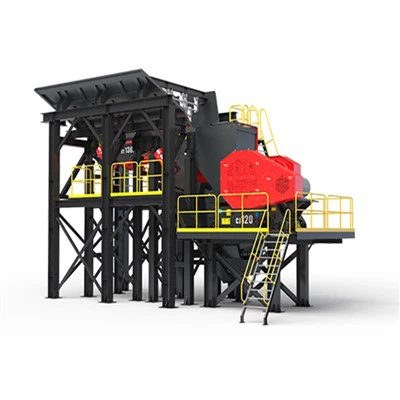
If you’re reading this and thinking, “Ugh, my current crusher’s got all these issues—jams too much, gold recovery’s down, parts wear out in a month,” hit me up. I don’t do generic sales pitches, I don’t send you a 50-page spec sheet that no one reads. I’ll come in (or hop on a quick call, whatever works) and walk through your actual ore, your current numbers, and we’ll figure out exactly what indicators you need to tweak to get more gold in your stockpile, not just more rocks in your crusher. Let’s stop wasting time on numbers that don’t matter, and start making your gold mine hit its real targets.
Jaw Crusher References
- Smith, J. (2022). Gold Ore Crushing: Tailoring Equipment Performance to Mineral Liberation. Mining Engineering Journal.
- Mwangi, K. et al. (2021). Effects of Crusher Cavity Design on Gold Recovery and Down-time in Small-Scale and Artisanal Mines. International Journal of Mineral Processing.
- Australian Institute of Mining and Metallurgy (2020). Crusher Performance Metrics for Gold Processing Plants. Operational Best Practice Guide.
- Lee, S. (2019). Wear Part Optimization for Abrasive Gold Ore: A Case Study of Western Australian Operations. Minerals Engineering.
Linyi Yuxiang Import and Export Trade Co., Ltd.
We are one of the most professional gold mining crusher manufacturers in China, specialized in providing high quality products. We warmly welcome you to buy durable gold mining crusher for sale here from our factory. Good service and low price are available.
Address: Linyi Comprehensive Bonded Zone
E-mail: sales-top1@bfgoldmachine.com
WebSite: https://www.bfgoldmachine.com/
