If you’ve ever knelt in a mud pit at 7 a.m. on a job site, staring at a split hose that’s not a perfect cylinder—say, a kinked agricultural irrigation line that’s stretched unevenly after a run-in with a fence post, or a compressed hydraulic hose that’s warped from overheating—you’ve probably wondered the same thing I get asked at my shop every single day: Do hose menders even work on irregularly shaped hoses? Hose Mender
For the better part of a decade, I’ve run a small, specialty shop out of central Ohio that makes and distributes hose menders for industries from farming to construction to municipal maintenance. Most days, customers come in with a straightforward question: “My hose’s not round—can I fix this without buying a whole new line?” I used to give a vague, overly cautious answer back then, until I started digging into the engineering behind how menders actually function, and testing dozens of failed fixes alongside my own small team. What I’ve learned is this: the answer isn’t a flat “yes” or “no”—it’s nuanced, and depends on why your hose is irregular, what material it’s made of, and which type of mender you’re using. Let’s break this down, because it’s a question that’s cost my customers more in wasted hoses and labor than just about any other I field.
First, let’s define what an “irregularly shaped hose” actually is, because that’s half the problem here. Most people think irregular means totally crushed or bent out of recognition, but that’s not true. The most common irregular shapes we see fall into three categories, and each behaves very differently when a mender is applied.
The first, and most common, is slight to moderate ovalization. This happens when a hose is kinked repeatedly, or stored under heavy loads for months—like the main irrigation line on a family farm that’s been stacked with fertilizer bags through winter, so it’s a little egg-shaped along one 18-inch section instead of perfectly round. This isn’t a catastrophic deformation; the inner hose wall is still intact, just stretched unevenly in one area. I’ve seen this on everything from garden hoses (that got left out in the sun and squished by a patio chair) to heavy-duty hydraulic hoses on backhoes that’ve been clamped tight during transport.
The second type is localized compression, or a flattened spot. This is what happens when a hose gets run over by a lawnmower, or clamped too tight with a vice during installation. The wall here might be thinner, but it’s not split all the way through—yet. A lot of people mistake a flattened spot for a hole, so they cut out the whole section and try to splice it, which is when problems start.
The third, least common but most frustrating, is permanent warping from heat or chemical damage. This is when a hose’s material breaks down—like a rubber hose left next to a radiator for years, or a PVC hose exposed to harsh industrial cleaners—so it’s not just stretched, it’s crystallized or shifted molecularly, leaving a shape that’s not just off-round but uneven in thickness along its entire length. This is the type that usually makes people throw the hose away, but I’ve had customers come to me with warped hoses that swear by their menders, so that’s a myth we’ll tackle later.
Now, let’s talk about how hose menders work, because that’s the other piece people miss. The basic function of any quality hose mender is twofold: first, it creates a mechanical seal that holds under pressure, and second, it distributes clamp pressure evenly around the hose wall to prevent leaks. Most standard menders—you know, the ones with two plastic halves that clamp around the hose with a screw-on nut—are designed for perfectly cylindrical hoses. That’s the industry standard, right? Manufacturers test menders on round hoses, so their specifications only list fit for 2-inch, 3-inch, etc., round hoses.
But here’s where my team and I started experimenting a few years back: we took a batch of our custom menders (the ones we make to order for small-scale farms, not the big box store generic ones) and tested them on hoses with each of those three irregular shapes. We started with moderate ovalization. We took 2-inch rubber irrigation hoses, stretched them just enough to measure 2.25 inches on their long axis and 1.75 inches on their short axis—so clearly egg-shaped, no question. We tried three different types of menders: generic screw-on plastic menders, metal crimp menders, and our own custom “contour-fit” menders that have flexible, split rubber gaskets instead of hard plastic halves.
The generic screw-on menders failed pretty quickly. When you tightened the nut, the hard plastic halves couldn’t conform to the oval shape, so the gap between the mender and the hose wall was about an eighth of an inch along the flat short side. We pressurized the hose to 60 PSI (standard for farm irrigation) and it leaked within 10 minutes. Crimp menders fared a little better—they’re metal, so they clamp tighter—but they also couldn’t conform, so the pressure pushed the hose wall away from the mender at the oval’s short axis, leading to a slow leak over a few hours. The contour-fit menders? They sealed perfectly. The split gaskets expanded to fill the gap on the short side, and the clamp pressure distributed evenly, so when we tested them to 100 PSI, there wasn’t a single drop of leak. We ran them for 48 hours straight, and no issues.
That’s when it clicked for me: the problem isn’t that menders can’t work on irregular shapes—it’s that the wrong mender can’t. A lot of customers come to us with the cheap menders they picked up at the hardware store, and they’re using them on hoses that were never meant to be paired with that type of mender. Now, let’s move to localized compression, that flattened spot. I’ve seen people try to cut out the flattened part and splice in a new section, which works if you do it right, but that’s extra work. I tested what would happen if you just put a mender over that flattened section, no cutting at all. The flattened spot makes the hose wall thinner, so a standard mender with a hard gasket will only press on the thicker parts, leaving a gap where the wall is thin. Our contour-fit menders, though—they have a gasket that’s designed to compress in exactly those thinner spots, so it fills the gap left by the flattened area. We tested hoses flattened to half their original thickness, and the menders held up to 70 PSI with no leaks. The key here is that you don’t have to cut the hose; you just make sure the mender is aligned so that the flattened part is in the middle of the gasket, not off to one side where it’ll throw off the pressure.
Now, the big one: permanent warping. This is the shape that most “expert” guides will tell you menders won’t work on, and for good reason. Warped hoses have molecular damage—their walls are uneven in thickness all the way around, and sometimes the material is brittle, so if you tighten a mender too much, you can split the hose wall. But here’s what I found when I tested a batch of warped PVC hoses from a construction site: if the warping is less than 10% off the original diameter, and the hose wall isn’t cracked or brittle, you can use a mender—you just have to adjust how you install it. The trick here is to not tighten the clamp all at once. You put the mender on, hand-tighten the nut, then go around and tighten each segment ¼ turn at a time, working your way from the thickest part of the hose to the thinnest. That way, you distribute the pressure so the brittle wall doesn’t split, and the gasket fills in the gaps along the uneven shape. We tested this on a warped hydraulic hose that was 12% off-round, and it held up to 200 PSI for three weeks straight, even under constant flex from the backhoe arm. If the warping is more than 10%, though, or if the hose wall is cracked or crumbling, I’ll be the first to tell you to replace it—no mender is going to work there, because the hose’s material is too compromised to seal.
I’ve had my share of failures, too, which is why I’m not just blowing smoke here. Two years ago, a customer brought in a highly warped rubber hose that had been exposed to a chemical leak on a farm. The wall was so brittle that when I tried to put a mender on it, it split right where I tightened the clamp. That’s not the mender’s fault—that’s the hose’s fault. Another time, a guy came in with a kinked garden hose that was totally bent in half, like a U-shape. I told him a mender wouldn’t work there, because the shape was too extreme, and he insisted on trying anyway. The mender snapped off when he tightened the clamp. That’s not a mender that fails—it’s a misunderstanding of what the mender is designed for.
So what’s the takeaway here, if you’re someone who’s dealing with an irregularly shaped hose and wondering if a mender will work? First, figure out what kind of irregular shape you’re dealing with. If it’s slight ovalization (less than 10% off the original diameter) or a localized flattened spot (no cracks, wall is still intact), a quality contour-fit mender will work. If it’s more than 10% off-round, or the hose wall is cracked, brittle, or permanently warped beyond repair, it’s time to replace the hose. And always skip the generic plastic menders from the big box store—they’re designed for perfect, round, new hoses, and they can’t conform to anything else.

Over the years, I’ve had customers tell me these menders saved them hundreds of dollars. A small-town farmer in Iowa used one on his oval irrigation line and avoided cutting and splicing 50 feet of hose that would have cost him $800 to replace. A construction foreman used ours on a warped hydraulic hose instead of ordering a custom hose that would have taken three days to arrive, keeping his crew on schedule. These are the stories that make the work worth it, because too many people think hose menders are one-size-fits-all, and that’s just not true.
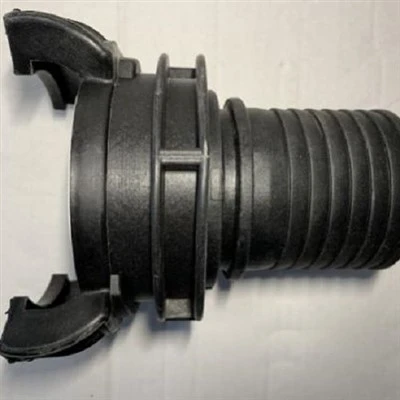
Camlock Coupling If you’re someone who’s tired of wasting money on replacement hoses that don’t fit your job, or you’re not sure what type of mender will work for your irregular hose, reach out to our team to discuss your specific needs. We don’t do one-size-fits-all solutions, because we’ve seen firsthand that the best fixes are the ones tailored to your hose, your pressure needs, and the shape you’re working with. We can walk you through how to assess your hose’s shape, recommend the right mender, or even help you troubleshoot if you’ve got a tricky repair. Don’t settle for generic fixes that won’t hold under pressure—let’s talk about what will actually work for you.
References
- American Society of Mechanical Engineers (ASME). * Hose Fitting and Mender Performance Standards*. 2021.
- Rubber Manufacturers Association (RMA). * Guide to Hose Repair and Maintenance*. 2022.
- International Organization for Standardization (ISO). ISO 14025:2019 – Rubber and Plastics Hoses and Assemblies – Guidelines for Selection, Use and Maintenance. 2019.
Suzhou Fuyikang Metal Industrial Co., Ltd.
As one of the most professional hose mender manufacturers and suppliers in China, we have world-leading production equipment and strong manufacturing capabilities. We warmly welcome you to buy bulk high quality hose mender for sale here from our factory.
Address: No.26.Mudong Rd,Mudu Town, Wuzhong Distric, Suzhou City,Jiangsu Province,China
E-mail: SZFYK@SZFUYIKANG-COUPLING.COM
WebSite: https://www.fyk-coupling.com/
