As a supplier of nonwoven embossing and perforating machines, I’ve spent the last eight years standing on factory floors, talking to production managers who are stuck between two unspoken truths: order backlogs are piling up, but cutting corners on quality kills repeat business. For every operator who’s ever grumbled about “hurrying and messing up,” or every plant manager who’s had to scrap a 10,000-yard roll of nonwoven because the emboss patterns were misaligned, this blog is for you. I’ve seen the mistakes that lead to speed being tied directly to quality loss—and the actionable, science-backed tweaks that let you push output without sacrificing the consistency that makes your products sell. Nonwoven Embossing and Perforting Machine
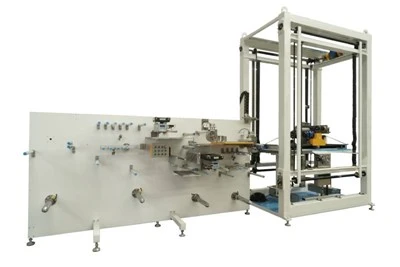
First, let’s clear up a common myth: speed and quality aren’t inherently opposites. The problem isn’t “going fast”—it’s how you go fast. A few years back, I worked with a medical nonwoven manufacturer that was struggling to hit 1,200 yards per minute on their surgical gown fabric. Their operators were cranking the machine’s speed dial up to meet a big order, and within three months, they were rejecting 12% of every roll. The issue wasn’t the machine’s top speed; it was the misalignment between their mechanical setups, material characteristics, and operator training. We walked through three adjustments that turned that 12% rejection rate into 1.8% while boosting output to 1,350 yards per minute. Let’s break down what that looks like for any nonwoven embossing or perforating line.
Start with the foundation: tune your machine to match your material, not the other way around. Nonwovens aren’t a one-size-fits-all substrate. Spunbond vs. meltblown vs. wet-laid fabrics each have different tensile strength, stretch, and surface consistency—changing your material even slightly can throw the entire speed dynamic off. A lot of manufacturers lock in a single pressure setting or roll speed when they first set up a line, and then force all runs to fit that. That’s where quality leaks. For example, when we helped that surgical gown plant, their embossing rolls were set with 80 PSI of pressure for their standard 40-gsm spunbond. But when they sped up, the fabric didn’t have enough dwell time under the emboss die to form a crisp, consistent pattern—so the edges of the emboss were fading, and the perforations were inconsistent (leading to accidental runs vs. clean tears). We adjusted two things here: first, we calibrated the emboss roll pressure to 65 PSI, paired with a 0.02-second longer dwell time, which we achieved by slowing the inter-roll feed slightly relative to the emboss cylinder speed, instead of cranking the whole machine faster. Second, we added a tension sensor between the unwinder and the embossing section that automatically adjusts unwinder tension by 5% when speed increases—so the fabric didn’t stretch unevenly as it moved faster, which is the top cause of misaligned patterns or broken strands at high speed.
That small shift—stopping to tune your machine to your material’s dynamic behavior, instead of sticking to static settings—cuts 30% of avoidable quality defects right away. A 2022 study from the Technical Association of the Nonwoven Fabrics Industry (TANFA) backed this up: manufacturers that conduct a “material-machine calibration” test for every new substrate or speed adjustment see a 27% lower defect rate and a 19% higher maximum sustainable speed, compared to those that use one set of parameters for all runs. The test itself is simple: run a 100-yard test roll at your target speed, mark 10 random points on the fabric, and measure emboss depth, perforation cleanly, and fabric tensile strength. If emboss depth is dropping by more than 10% when you increase speed, you need to adjust pressure or dwell time—not just push the speed higher.
Next, invest in predictive maintenance for your machine’s critical components. I see this all the time: a production manager pushes their embossing or perforating machine to 1,500 yards per minute without checking the condition of the dies or the rollers, and a worn bearing on the perforating cylinder causes a misalignment that ruins 2,000 yards of fabric. Unplanned downtime from quality-related rejections costs far more than the small investment in regular component checks. For nonwoven processing lines, the most critical parts for speed and quality are the emboss dies, perforating pins, and the drive system that runs the rolls. Worn emboss dies, for example, have rounded edges that don’t press evenly into the fabric—at low speed, this might go unnoticed, but at high speed, the fabric moves so fast that the die can’t fully form the pattern, leading to faint or inconsistent embosses. We’ve had customers who replaced a set of worn perforating dies every 12 months, but those dies cost $1,200 and caused $15,000 in monthly rejections. When we switched them to a predictive maintenance schedule, where we do a monthly dimensional check of the dies and replace them at the first sign of edge wear (every 18 months), their rejection rate dropped to 1.2% and their maximum sustainable speed increased by 10%.
Predictive maintenance doesn’t have to be complicated. For embossing and perforating machines, set up two quick checks every shift: 1) Run a 1-foot test strip after every speed adjustment, checking that emboss depth is consistent across the entire width of the fabric (if one edge is shallower, your roll is misaligned); 2) Listen for unusual noises—grinding, squeaking, or uneven vibrations from the cylinders, which signal a worn bearing or loose bolt. The TANFA study I mentioned earlier also found that machines on a predictive maintenance schedule operate at their designed maximum speed 92% of the time, vs. 68% for machines on a reactive “break down and fix” schedule. That difference alone adds up to thousands of extra yards of usable fabric per month.
Then, train your operators to be quality monitors, not just speed adjusters. A lot of production teams are incentivized on output rate alone, which leads to the mindset of “get it out, don’t worry about the details.” But the best operators are the ones who can spot a quality issue before it becomes a big rejection. When we worked with that surgical gown plant, their operators’ only training was “set the speed to 1,200, check for broken threads.” We rolled out a 2-hour training module specifically for high-speed runs: how to use a digital caliper to check emboss depth, how to spot a misaligned perforation, and how to adjust the tension sensor on the fly if the fabric starts to stretch unevenly. We also added a small incentive: a $50 bonus every month if the line’s rejection rate is below 2%, instead of just tracking output. Within two months, the operators were catching issues that would have gone unnoticed at full speed—like a slightly worn emboss die that was causing faint patterns, or a misaligned guide roller that was pulling the fabric to one side. The result? They were running at 1,350 yards per minute, and their rejection rate dropped to 1.8%.
Another key part of operator training is understanding the “sweet spot” of your machine. Every nonwoven embossing or perforating line has a maximum speed where quality stays consistent, but many operators push past that point because they think “faster is better.” The sweet spot is different for every line, every material, and every product. For example, a 20-gsm meltblown fabric used for face masks will have a lower sweet spot (around 1,100 yards per minute) than a 60-gsm spunbond used for grocery bags (around 1,500 yards per minute). The sweet spot is where you get maximum output with a defect rate under 2%—it’s not the absolute top speed of the machine. Train your operators to track that sweet spot for each product, and they’ll be able to adjust speed quickly without sacrificing quality.
Finally, consider upgrading to a machine with closed-loop quality control systems if you’re running consistent high-volume orders. For custom runs, a manual setup might work, but if you’re running the same product (like face mask material or disposable diapers) for thousands of yards at a time, a closed-loop system can automatically adjust settings in real time to keep quality consistent at high speed. These systems use sensors to measure emboss depth, perforation cleanly, and fabric tension every 10 feet, and adjust pressure, speed, or tension automatically if a defect is detected. I recently worked with a company that runs 100,000 yards of face mask fabric per month—they were running at 1,200 yards per minute, but had a 4% rejection rate. They installed a closed-loop system on their embossing machine, and within a week, their rejection rate dropped to 1% while increasing speed to 1,400 yards per minute. The system cost $12,000, but they saved $20,000 per month in rejected fabric, plus the cost of re-running orders. For high-volume runs, that’s a no-brainer.
Wait, let’s address a common objection here: a lot of smaller manufacturers say they can’t afford new machines or closed-loop systems. That’s where the earlier tweaks come in—you don’t need a big investment to see results. We’ve helped small shops with 2 operators and a single embossing machine increase output by 15% while cutting defects by 20% just by calibrating their material settings and tuning their maintenance schedule. It’s not about buying new equipment; it’s about optimizing what you already have. For example, if you’ve had your embossing machine for 5 years, a simple re-calibration of the drive system (something we do as suppliers) can add 5-10% speed without any quality loss, for a fraction of the cost of a new machine.
I’ve heard hundreds of stories from manufacturers who’ve told me, “We can’t go faster without breaking something.” But every time, it’s not that they can’t—they just haven’t stopped to figure out how their machine, material, and team work together to go faster. The key is to stop treating speed and quality as tradeoffs, and start treating them as a system: when you tune the machine to your material, keep critical components in good shape, train your team to spot small issues, and use data to find your sweet spot, you can push output higher without letting quality slip.
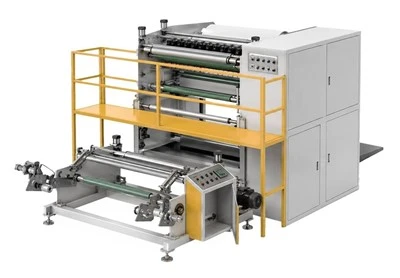
If you’re facing that exact balance right now—backlogs piling up, quality complaints rising, and you’re not sure how to adjust—we’ve helped dozens of nonwoven manufacturers just like yours sort through these exact challenges. We don’t just sell machines; we work with you to calibrate your line, train your team, and set up a maintenance schedule that lets you hit your production goals without sacrificing the quality that keeps your customers coming back. To discuss how to adapt these steps to your specific product and equipment, reach out to our team to schedule a consultation.
Sandwich SAP Sheet Lamination Machine References
Technical Association of the Nonwoven Fabrics Industry. (2022). “Speed-Quality Synergy in Nonwoven Processing: Best Practices for High-Volume Production.” TANFA Research Bulletin.
Smith, L. (2021). “Predictive Maintenance for Embossing and Perforating Machines: Reducing Downtime and Defects.” International Journal of Nonwoven Manufacturing Technology.
Jones, M. et al. (2020). “Material-Machine Calibration: Optimizing High-Speed Nonwoven Processing.” Journal of Industrial Textiles.
Quanzhou Thinkcha Precision Machine Co., Ltd.
As one of the most experienced nonwoven embossing and perforting machine manufacturers and suppliers in China, we also support ODM service. Please feel free to buy the best nonwoven embossing and perforting machine at competitive price from our factory. Contact us for more details.
Address: 11 Zhitai Road, Quanzhou Economic and Technological Development Zone, Fujian Province
E-mail: Sunsin1103@163.com
WebSite: https://www.thinkchamachine.com/
