If you’re like most people, you probably don’t think much about the thin, uniform wires that power so many of the devices, tools, and systems you use every day. But here’s a secret: those wires aren’t just random metal—they’re precision alloy wire, a specialized material engineered to solve problems that pure metals can’t. As a precision alloy supplier, I’ve spent over a decade working with engineers, manufacturers, and innovators across industries to understand exactly where these wires make the biggest difference. Today, I want to pull back the curtain on what precision alloy wire is, why it matters, and the real-world applications that wouldn’t exist without it. Let’s dive in. Precision Alloy

First, let’s clear up a common misconception: precision alloy wire isn’t just any metal wire. Unlike standard wire, which is often made of pure copper, aluminum, or even steel, precision alloys are custom-formulated blends of two or more metals (sometimes including non-metals like silicon or carbon) that are engineered to have specific, tightly controlled properties. Think about it: a pure copper wire might conduct electricity well, but it can lose strength at high temperatures, or expand and shrink too much when heated and cooled. A precision alloy, on the other hand, can be tuned to have near-zero thermal expansion, retain strength at temperatures over 1,000°F, or resist corrosion in harsh chemical environments. That customization is why these wires are irreplaceable for high-stakes applications.
Over the years, I’ve seen our customers use precision alloy wire in hundreds of projects, but there are four core industries where its impact is most visible—even if you don’t see the wire itself every day. Let’s break each down, starting with the one that’s most familiar to most people: electronics.
If you’ve ever charged a phone, turned on a laptop, or used a microwave, you’ve interacted with a device that relies on precision alloy wire. In electronics, two types of alloys are workhorses: copper-clad steel (CCS) and nickel-chromium (NiCr) alloys. CCS combines the conductivity of copper with the strength and cost-effectiveness of steel, making it ideal for the thin wires that connect circuit boards to components like LED screens, sensors, and battery packs. Too often, engineers try to cut costs by using pure copper, but that can lead to issues: copper is soft, so thin wires can break during assembly, and it expands more than surrounding plastic components, causing connections to loosen over time. Precision CCS wire eliminates that: it has 95% of copper’s conductivity, but 5x the tensile strength, so it survives the solder reflow process (where circuit boards are heated to 250°F to attach components) without stretching or breaking.
NiCr alloys, meanwhile, are the go-to for resistive heating elements in everything from toasters to industrial furnaces. A toaster’s heating wire, for example, isn’t just a hot metal—it’s a precision NiCr wire calibrated to produce exactly enough heat to toast bread without burning. If the alloy was off by even 10% in its resistivity, the toaster would either be too cool (toasting unevenly) or too hot (burning the bread, or even starting a fire). For industrial electronics like automotive sensors, precision alloy wire is even more critical: engine temperature sensors use iron-chromium-aluminum (FeCrAl) wire, which can withstand 2,000°F exhaust temperatures without degrading. In electric vehicles, we supply NiCr wire for battery management systems, where it monitors voltage and temperature 1,000 times per second to prevent overheating and ensure battery life. A lot of people don’t realize that EVs rely on precision alloy wire to keep millions of dollars of batteries safe—and that’s a responsibility I don’t take lightly as a supplier.
Next up, aerospace and defense—an industry where failure isn’t an option. If you’ve ever looked at a jet engine or a satellite, you might have noticed tiny, twisted wires inside. Those are precision alloy wires, and they’re designed to survive conditions that would destroy any standard metal. Jet engines, for example, operate at temperatures up to 1,800°F, and the wires inside them need to conduct data, power fuel injectors, and monitor temperature without melting or corroding. We supply nickel-base superalloys for these applications—alloys like Inconel, which have incredible high-temperature strength and resistance to oxidation. Inconel wire is so reliable, in fact, that it’s used in the wiring harnesses of commercial airliners and military fighter jets. If a wire fails on a plane, the consequences are catastrophic; precision alloy wire is engineered to last the entire lifespan of a jet engine (which is 20+ years) without degradation.
Satellites take this even further. In space, there’s no air, extreme temperature swings (from -250°F in the shadow of Earth to +250°F in direct sunlight), and high levels of radiation. Pure metal wires would expand and contract so much in these swings that they’d break in a few years. Precision alloys like Kovar solve this problem: Kovar has a coefficient of thermal expansion almost identical to glass and ceramic, so when it’s used to connect satellite components, there’s no stress from temperature changes. That’s why Kovar wire is used in the hermetic seals that protect satellite electronics from the vacuum of space. As someone who works with aerospace engineers, I can tell you that their standards are non-negotiable; a 0.001% variation in the alloy’s composition can make a wire unusable for space applications. That’s why we test every single batch of wire we ship to aerospace customers, down to the parts per million, to make sure it meets their exact specifications.
Third, medical devices—an industry where precision literally saves lives. When you get a pacemaker, a stent, or even a blood pressure monitor, the tiny wires inside are precision alloy wire. Let’s take stents, for example: those small, mesh tubes that are inserted into blocked arteries to keep them open. Stents are made from nitinol, a shape-memory alloy of nickel and titanium. Nitinol is one of the most unique precision alloys out there: it can be crumpled into a thin wire for insertion, then expand back to its original shape at body temperature. That’s why nitinol wire is used to make stent frameworks. If the alloy wasn’t perfectly calibrated, the stent wouldn’t expand properly, or it might break inside the artery.
Pacemakers also rely on precision alloy wire. The lead wires that connect the pacemaker to the heart’s muscle need to be biocompatible (meaning they don’t react with the body’s tissue), flexible, and durable. We supply platinum-iridium alloy wires for these leads, because platinum is inert (so it doesn’t cause an immune response) and iridium adds strength so the wire doesn’t break when the heart beats 100,000 times a day. For surgical tools, like electrocautery devices that cut tissue while stopping bleeding, precision NiCr wire is used as the heating element. It needs to heat quickly to 500°F without burning through the wire, and be sterile enough to use in operating rooms. I’ve worked with medical device manufacturers for years, and their quality control is some of the strictest in the world—every wire has to pass biocompatibility tests, and traceability is required back to the exact raw materials we used to make it. That level of accountability is what makes this industry so rewarding.
The fourth industry is energy and power generation, which is more relevant than ever as we shift to renewable energy. Wind turbines, solar panels, and power plants all use precision alloy wire in critical components. Wind turbines, for example, have pitch control systems that adjust the blades to capture the most wind, and those systems use FeCrAl wire for temperature sensors inside the gearbox. The gearbox operates at high speeds and temperatures, so the wire has to resist wear and corrosion. Solar inverters, which convert the DC power from solar panels to AC power for homes, use CCS wire for their internal connections because it’s lightweight, conductive, and resistant to the voltage fluctuations that come with solar power systems. Even nuclear power plants rely on precision alloy wire for control rods and monitoring sensors—alloys like Hastelloy, which resist corrosion in the high-pressure, high-temperature environment of a reactor core.
But wait—precision alloy wire isn’t just for big, industrial applications. It’s also used in small, everyday products that people don’t associate with metal wires. Think about a guitar string: high-quality electric guitar strings are made from precision alloys, not just pure steel. Nickel-plated steel strings, for example, have a balance of brightness (from the steel) and warmth (from the nickel) that pure steel can’t match. Even jewelry uses precision alloy wire: sterling silver wire is a precision alloy of 92.5% silver and 7.5% copper, calibrated to be hard enough for making rings and necklaces, but still workable for artisans. I’ve had customers come to me looking for wire for custom jewelry projects, and while that’s a small part of our business, it’s a reminder that precision alloys are everywhere, even in things we do for fun.
Now, let’s talk about what goes into making precision alloy wire, because that’s why it’s so reliable. It’s not just melting two metals together and pulling them through a die. The process starts with raw materials that are 99.99% pure—no impurities, because even a tiny amount of iron in a nickel alloy can change its properties. Then, the metals are melted in a vacuum furnace to avoid contamination from air, which can cause oxidation. Next, the molten alloy is cast into ingots, then hot-rolled into bars, and finally cold-drawn into wire. The cold-drawing step is critical: we pull the bar through a series of dies that get smaller and smaller, reducing the wire’s diameter by up to 99% without losing its uniform composition. Each step is tested for consistency, and we measure properties like tensile strength, resistivity, and thermal expansion after every process. That’s why a precision alloy wire from our facility has properties that are within ±1% of the target specification—something you can’t get from standard wire manufacturers.
Over the years, I’ve seen a lot of myths about precision alloy wire, and one of the biggest is that it’s too expensive. Sure, precision alloy wire costs more than pure copper or steel, but when you factor in reliability and performance, it’s a better investment. For example, a standard copper wire might break once a year in a jet engine, costing thousands of dollars in repairs and downtime. A precision Inconel wire might cost 10x more, but it lasts the entire 20-year lifespan of the engine, eliminating those repair costs. In medical devices, a faulty pure metal wire could lead to a life-threatening complication, whereas a precision alloy wire has a failure rate of less than 0.01%. So while the upfront cost is higher, the long-term value is unbeatable.
As a precision alloy supplier, our job isn’t just to sell wire—it’s to solve problems. We work with customers to develop custom alloys when off-the-shelf products don’t fit their needs, and we provide technical support every step of the way. If you’re an engineer designing a new device, a manufacturer scaling production, or a professional looking for a reliable wire for a critical application, I’d encourage you to reach out to discuss your project. Whether you need a small batch for a prototype or a large order for full production, we can provide precision alloy wire that meets your exact requirements.
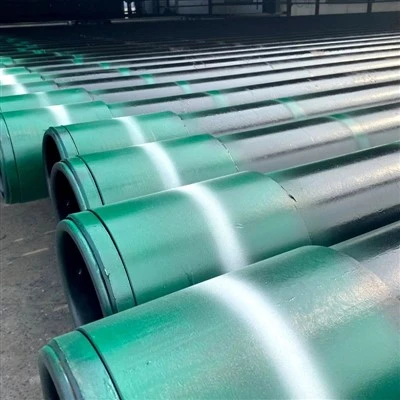
At the end of the day, precision alloy wire is the unsung hero of modern technology. It’s the reason your phone charges safely, your plane flies smoothly, your pacemaker works, and your solar panels generate power. Every time a new device, system, or structure is built, it relies on a tiny, uniform wire that was engineered to be perfect. That’s what makes this job so meaningful—knowing that the wire we make is part of something that matters. If you have a project where standard wire isn’t cutting it, let’s talk. We’re here to help you find the right precision alloy wire for your needs.
Monel Alloy References:
- Davis, J.R. (Ed.). (2001). Nickel, Cobalt, and Their Alloys. ASM International.
- Brady, G.S., & Clauser, H.R. (2002). Materials Handbook: An Encyclopedia for Materials, Manufacturing, and Construction. McGraw-Hill.
- Fraser, D.B. (2006). The Metallurgy of Nitinol for Medical Applications. Journal of Materials Science: Materials in Medicine, 17(12), 1295-1305.
- NASA. (2018). Materials Selection for Spacecraft Components. NASA Technical Publication.
- Medical Device and Diagnostic Industry. (2020). Biocompatible Materials for Implantable Medical Devices. MDPI Publishing.
Jiangsu Xurui Metal Group Co., Ltd.
With abundant experience, we are one of the most professional precision alloy manufacturers and suppliers in China. We are committed to providing high quality metal products for global clients. Please feel free to wholesale bulk high-grade precision alloy in stock here from our factory.
Address: 32-117, South Stainless Steel Market, Xinwu District, Wuxi, Jiangsu, China
E-mail: Mia@xuruimetal.com
WebSite: https://www.xurui-steel.com/
