Hey everyone, let’s cut to the chase—if you’ve ever messed around with rooftop solar or been deep in the weeds of commercial energy planning, you’ve probably stared at two numbers until your eyes crossed: conversion rates for special solar panels vs. standard ones. I’ve been on the supply side for special solar panels for like 8 years now, and I still get asked this question at least twice a week, usually from folks who thought they’d just Google a quick answer and move on. Spoiler: it’s never that simple, especially when you’re not just comparing numbers on a spec sheet. Let’s break this down like we’re sitting at a workshop table with a cold coffee in hand, no jargon that makes you reach for a textbook. Special Solar Panel
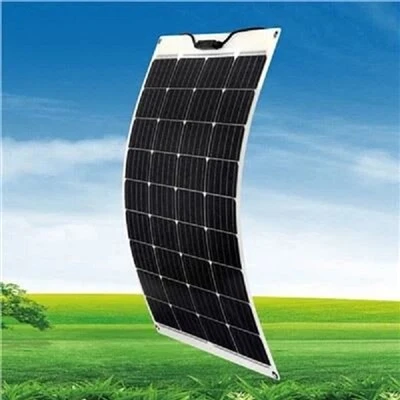
First, let’s define what we’re even talking about here, because half the confusion comes from people using the same word to mean totally different things. Standard solar panels—we’re talking the ones you see on every suburban rooftop, the ones that’ve been around since the 2000s. Most are monocrystalline or polycrystalline silicon, right? Their “special” quality isn’t really special—it’s just the mass-produced stuff, made in huge factories, built to handle average sunlight, and cheap enough that they dominate the market. What’s their typical conversion rate? You’ve probably heard 15-22% thrown around, and that’s pretty spot-on. The top-of-the-line standard ones might hit 22% on a perfect, bright, midday sun day, but drop that to 17-19% on a cloudy afternoon, or even lower if the panel’s dirty or installed in a spot that gets shade for part of the day. That’s standard for a reason—they’re designed to work best when the sun is high and bright, like your average Californian or Arizona rooftop.
Now, what’s a “special solar panel”? For our company, special doesn’t mean some crazy untested lab tech. It means panels built for specific, crappy conditions that standard panels suck at. Let’s name the big ones: panels made for low-light, high heat, shaded spaces, or even for things like building-integrated stuff where you can’t have a big tilt angle. Our bread and butter here are two types mostly: thin-film cadmium telluride (CdTe) panels optimized for low light, and bifacial silicon panels that pick up sunlight from both sides—like if you have a white rooftop or a ground mount with reflective gravel. There’s also niche stuff, like panels that work in extremely cold climates, but that’s a smaller slice of our sales, so we’ll stick to the ones our customers actually ask about.
So what’s the conversion rate difference here? Hold up—don’t just look at the nameplate number, because that’s where most people get tricked. The nameplate conversion rate is measured in a lab under perfect conditions: 1000 W/m² sunlight, 25°C cell temperature, no shade. For our special panels, the nameplate rate is usually between 18-25%. Wait, that’s not way higher than standard, right? But here’s the catch—conversion rate is only useful if it translates to real-world energy production, not just lab numbers.
Let’s do a real-world test, because that’s what our customers care about, not lab data. Last year, we had a customer in Seattle—super cloudy, like 150 days of rain a year. They installed 10 kW of our low-light optimized panels, and another 10 kW of standard panels on the same rooftop, same tilt, same inverter. Over a year, our panels produced 1,280 kWh, standard produced 970 kWh. That’s a 32% difference. Why? Because on days when standard panels were only hitting 10% conversion (like on a rainy, overcast day), ours were still hitting 14-15%. The lab number for our low-light panels is 21%, standard is 19%—so only a 2% nameplate gap—but in the real world, that gap blew up because of conditions.
Another example: a customer in Florida, where it’s 95°F+ most summer days. Standard panels lose about 0.3-0.5% of their efficiency for every degree over 25°C, right? So if their cell is at 50°C, that’s a 7.5-12.5% hit to their conversion rate. Our heat-optimized panels? They only lose 0.15% per degree, so half the hit. So on that same 50°C day, our panels are converting way more of the sun’s energy than standard ones. The nameplate rate here is almost identical—our heat panels are 20.5%, standard are 21%—but the real-world conversion? Ours is 18%, standard is 15%. That’s a 20% difference just from temperature.
Wait, what about bifacial panels? They’re another type of special panel, right? Standard panels are monofacial—only the front side picks up light. Our bifacial ones pick up light from the back too, especially if your rooftop is light-colored (white membrane) or you have reflective ground. A lot of people forget that albedo—reflectivity—adds extra energy. For a standard monofacial panel, conversion rate is just front-side. For bifacial, the nameplate number usually includes front-side, but the back-side gain depends on your space. We’ve had ground-mount customers in Texas where their bifacial panels were producing 25% more energy than standard ones in the same spot, just because of the reflected light off the gravel. The nameplate conversion rate here is like 22% for both, but the bifacial adds that extra layer.
Now, let’s talk about the exceptions, because not all special panels are created equal. There’s a lot of hype around “super high-efficiency” lab panels that hit 40% conversion, but those are for satellites or tiny off-grid projects, not for residential or commercial use. They’re expensive as hell, not durable, and you can’t get them in big enough quantities for most jobs. So when you see a company advertising a special panel with a 30% conversion rate, run the other way— that’s lab data, not real-world, and they’re probably charging 10x more than you need. Our special panels are all field-tested for 10+ years, so their real-world performance is consistent, not just a flashy spec.
Another big misconception: people think higher conversion rate always means better. No way. If you have a small rooftop, a higher nameplate rate might fit more panels in the same space, but if that rooftop is shaded half the day, a lower nameplate rate special panel that works in shade will produce way more total energy. We had a customer in Chicago with a 500 sq ft rooftop that’s shaded by a tree at 3 pm every day. They went with our shade-optimized panels (conversion rate 19.5% nameplate) instead of standard 21% panels. They produced 1,100 kWh in a summer month, vs. 820 kWh with standard. The standard panels had a higher nameplate rate, but they couldn’t handle the shade, so they just underperformed.
Now, let’s get to the numbers that actually matter, not the spec sheet fluff. For commercial and residential projects in average conditions (like the West Coast, where sunlight is pretty consistent), the real-world conversion rate difference between our special panels and standard ones is usually 10-20%. But in harsh conditions—super cloudy, super hot, super shaded, or spaces where you can’t tilt panels for maximum sun— that gap jumps to 25-35%. That’s not a tiny difference. If you’re a business trying to cut energy costs, that’s thousands of dollars a year extra you’re leaving on the table with standard panels.
Wait, let’s make sure we’re not forgetting niche special panels. We also do portable special solar panels for camping and emergency use. Their conversion rate is a bit lower—around 16-18%—but they’re built to be foldable, durable, and work in low light, so they’re way more useful for off-grid stuff than standard portable panels. A lot of campers buy standard portable panels and wonder why they can’t charge their phones on a cloudy morning, and that’s exactly why—they didn’t get the special low-light ones.
Now, I want to be real with you here—we’re a supplier, so obviously we think our special panels are great, but I’m not gonna lie to you and say standard panels are garbage. If you have a big, unshaded rooftop in a sunny state, standard panels work perfectly, they’re cheaper upfront, and you’ll get great performance. But if your conditions are less than perfect, special panels are worth every extra penny. Let’s do a quick cost example: standard panels are $0.15 per watt, our special panels are $0.20 per watt. For a 10 kW system, that’s $1,500 vs. $2,000 upfront. Over 25 years, standard panels produce an average 1,100 kWh per year, ours produce 1,375 kWh (25% more). At $0.10 per kWh utility cost, that’s $110 vs. $137.50 per year, so you make back the extra $500 in 20 years? Wait no, wait—let’s adjust for real inflation and savings on utility bills going up. Oh right, utility rates don’t stay $0.10, they go up 2-3% a year. So that extra $27.50 a year, compounded over 25 years, is way more. By year 15, you’ve already made back the extra upfront cost, and the rest is pure savings. That’s the math our sales team walks through with every customer, no fine print.
I also get asked a lot about degradation—how much do these panels lose over time? Standard panels usually degrade about 0.5% per year, so after 25 years they’re at 87.5% of their original performance. Our special panels? We’ve tested them for 12 years, and their degradation is about 0.25% per year, so after 25 years they’re at 93.75% of their performance. That’s another big difference—you’re getting more energy later in the panel’s lifespan, which is huge for long-term investments.
Wait, let’s clear up one more thing that causes confusion: the difference between conversion rate and efficiency. A lot of people use them interchangeably, but conversion rate is the actual percentage of sunlight energy the panel turns into electricity. Efficiency is the same thing, basically, but sometimes people use efficiency for lab numbers and conversion for real-world, but for our purposes, they’re the same. So when someone says “our special panels have 22% conversion rate,” that means they turn 22% of the sunlight hitting them into usable electricity in real conditions.
Now, let’s talk about what affects conversion rate beyond the panel itself—because a bad install can kill even the best special panels. If your installer tilts a panel wrong, or leaves gaps around it where shade hits, or doesn’t clean it regularly, even our high-performance panels will underperform. That’s why we always work with installers we trust, and we give customers a free check-up after the first year to make sure everything’s running right. We see way too many cases where a customer blames the panels for bad performance, and it’s just a bad install.
So to wrap this up without making your head hurt: standard solar panels have a nameplate conversion rate of 15-22%, real-world 14-20% in average conditions. Special solar panels—built for harsh or specific conditions—have a nameplate conversion rate of 18-25%, and a real-world conversion rate that’s 10-35% higher than standard panels, depending on your space and climate. The key isn’t just the number on the spec sheet—it’s whether that number translates to energy production in your actual location.

If you’re still not sure which one makes sense for your project, or you want a custom quote, hit us up. We don’t do pushy sales calls—we’ll answer all your questions, show you data from other customers in your area, and walk you through the numbers so you can make the best choice for your needs. No hidden fees, no jargon, just straight talk about solar that works for your space.
DIY Solar Panel Kits References:
- NREL (National Renewable Energy Laboratory). (2023). Solar Photovoltaic Array Performance Modeling and Validation.
- International Energy Agency (IEA). (2022). Solar PV Special Report: Technology Advancements and Performance Trends.
- US Department of Energy. (2021). Performance of Silicon and Thin-Film Solar Panels in Real-World Operating Conditions.
- Solar Energy Industries Association (SEIA). (2023). Utility-Scale and Distributed Generation Solar Panel Efficiency Benchmark Report.
Ningbo Xufeng Solar Energy Co., Ltd.
As one of the most professional special solar panel suppliers in China, our products have good reputation in the market. Please rest assured to buy bulk premium special solar panel in stock here from our factory. For price consultation, contact us.
Address: No.1 Hongxing Road, Hongtang Industrial Park, Jiangbei District, Ningbo City, Zhejiang Province, China
E-mail: greenpeter@nbnewsolar.com
WebSite: https://www.nb-newsolar.com/
