What is a textile complete production line? And why should anyone even care? Let’s break this down like we’re chatting over a coffee—no stuffy jargon, no confusing bullet points, just straight talk from someone who’s been in the game supplying these lines for years. Complete Production Lines
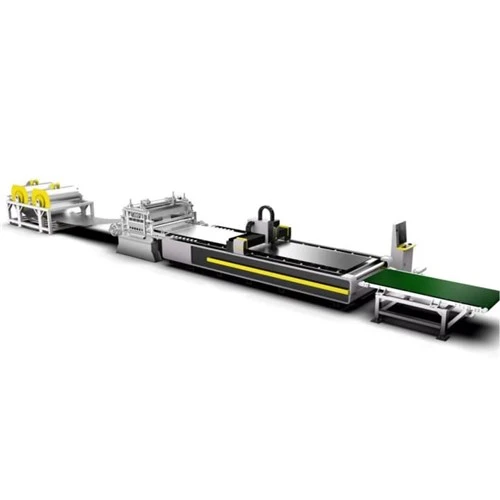
First off, if you’re a brand owner looking to scale up your apparel business, a small textile mill trying to stop outsourcing every step, or even a school just starting to make its own uniforms, you’re going to run into two big headaches without a complete production line: coordination and quality control. Let’s say you’re making a t-shirt. Back in the day, you’d buy raw yarn from one place, send it to a weaver to make fabric, send that fabric to a cutter, then a sewer, then a dyer, then to a finisher, and finally to a packer. That’s five separate vendors, a dozen emails back and forth, delays every time one side misses a deadline, and if the dye job is off? You’re stuck paying for fabric that’s useless. A complete production line fixes all that by grouping every single step into one seamless, connected system. No more chasing people, no more miscommunication between teams.
Wait, let’s get specific with how that actually works, not just the “it’s all in one” vague stuff. Let’s walk through a typical complete textile line, step by step, so you can see why it’s not just a fancy set of machines. First, you start with fiber. Some lines work with natural fibers like cotton, some with synthetics like polyester, some with a blend—most lines are adjustable to handle different inputs, which is a big plus. The first big machine here is the blowing and carding unit. Blowing cleans the raw bales of fiber, gets rid of dust and impurities, right? Then carding combs the fibers into a soft, uniform sliver—think of it like hair brushed out straight, all aligned the same way. That sliver goes next to the drawing and comber, which evens out the sliver’s thickness, so every thread you spin later is the same size, no lumps or thin spots. Then spinning: that’s where the sliver gets twisted into actual yarn. A lot of modern lines use ring spinning or open-end spinning, depending on what yarn you need—ring is for high-quality shirts, open-end is cheaper for workwear, so your line can swap those out if you need.
Once you’ve got yarn, the next step is usually weaving or knitting, depending on what kind of fabric you’re making. Weaving is interlacing two sets of yarn at right angles, that’s how denim or broadcloth gets made. Knitting is looping one yarn through itself, that’s the soft, stretchy fabric for t-shirts or leggings. A complete line will have either a weaving machine (like a rapier loom, which is popular for versatility) or a circular knitting machine for knits. After that, if you need colored fabric, it goes to dyeing and finishing. Wait, dyeing can be done a couple ways: you can dye the yarn first (yarn dyeing) which gives you patterns like plaid or stripes, or dye the whole fabric after it’s woven/knitted (piece dyeing) which is more common for solid colors. A good complete line has dedicated dyeing machines—like jet dyeing for knits, which is gentle so you don’t stretch or damage the fabric, or beam dyeing for woven fabrics. Then finishing steps: pre-treatment to get rid of any leftover chemicals from dyeing, adding softeners to make fabric feel nice, maybe anti-wrinkle treatments for dress shirts, or water-repellent coatings for outdoor gear. All of that is part of the line, so it’s all connected.
Once the fabric is finished, it moves to cutting and sewing. The complete line doesn’t just stop at fabric—this is a big mistake some people make when they think a line is only yarn to fabric. Modern lines have automated cutting tables, which use a pattern you upload to cut dozens of layers of fabric at once, way faster and more accurate than a human with scissors. Then sewing machines, usually computerized, so you can switch patterns for different sizes (like a small vs large t-shirt) without retooling every time. Then after sewing, you need quality checks—automated visual scanners that spot loose threads, missed stitches, or uneven fabric, which is way more consistent than a person checking every single piece. Finally, packaging: labeling, folding, bagging, all automated, so you can get finished, ready-to-ship products right off the end of the line.
Now, you might be thinking, “That sounds great, but do I really need every step in one line? Can’t I just buy a few machines and piece it together?” Yeah, you can do that, but here’s where a complete line saves you so much time and money. First, compatibility. If you buy a spinning machine from one brand, a loom from another, and a dyeing machine from a third, they might not work together. For example, your spinning machine makes a yarn that’s too thick for your loom, or your dyeing machine can’t handle the length of fabric your loom produces. A complete production line is built to work as a system—every machine is calibrated to match the output of the one before it, so there’s no bottlenecks. That’s a huge deal for efficiency. I’ve seen mills that tried to cobble together machines and end up with a line that only runs 50% of the time because one machine can’t keep up with the next, or it breaks down and no one knows how to fix it because they’re different brands.
Another big plus: data tracking. Modern complete lines are connected to software that lets you track every step of production. You can see how much yarn is being used, what the defect rate is, how long it takes to make a batch of fabric, even adjust settings on the fly if you need a softer fabric or a different color. That’s way harder to do when you’re juggling separate vendors’ systems. For example, if you notice that your defect rate jumps when you run 100% cotton yarn, you can adjust the carding machine settings right on your line’s software, instead of emailing the yarn supplier and waiting for them to send a new batch.
Now, let’s talk about who uses these lines. It’s not just giant factories making millions of t-shirts a year. Small and medium brands, uniform companies, even sustainable textile startups use them too. Wait, sustainable brands—complete lines are actually a big help for sustainability, because you can reduce waste. If every step is in one line, you don’t have to transport fabric between vendors, which cuts down on carbon emissions from shipping. Also, automated cutting reduces fabric waste by up to 20% compared to manual cutting, because the computer optimizes the pattern to fit as many pieces as possible on the fabric. That’s a win for your bottom line and the planet, which is a big deal right now.
But wait, not all complete lines are the same. That’s why picking the right one matters. Some lines are designed for high-volume, low-cost production—think big brands making basic underwear. Others are for small-batch, high-quality stuff, like luxury denim or custom apparel. A good supplier (that’s us, by the way) will work with you to figure out what you need, not just sell you a line that’s too big or too small. If you’re a startup making 1,000 shirts a month, you don’t need a line that makes 100,000 shirts a month—that’s a waste of money. A good line should be scalable too, so if your business grows, you can add machines to the line later, instead of buying a whole new one.
Let me share a quick example from a client of mine last year. They were a small brand making organic cotton t-shirts, and they were outsourcing all steps. They were paying 30% of their cost just in shipping between vendors, and they had a lead time of 6 weeks because every step was backed up. They bought a medium-sized complete line, tailored for small-batch organic production. Now their lead time is 2 weeks, their fabric waste is down 15%, and they’re making 20% more profit because they don’t have to pay middleman markups. That’s the difference a complete line makes.
Now, let’s bust some common myths. First myth: complete lines are only for big factories. Nope, as that example shows, small brands can use them too, there are lines for every production size. Second myth: they’re too expensive for new businesses. Yeah, they’re an investment, but they pay for themselves in a year or two with lower costs, faster lead times, and more consistent quality. Third myth: they’re hard to run and need a huge team. Modern lines are automated, so you only need a handful of people to run the whole line—most of the work is done by machines, with employees just monitoring and adjusting settings. That’s way different than old-school textile mills that needed hundreds of workers.
So, wrapping this up: a textile complete production line is an integrated, connected system of machines that handles every step of making fabric and finished garments—from raw fiber to ready-to-ship products. It eliminates the headaches of coordinating multiple vendors, improves efficiency and quality, reduces waste, and lets you control your whole production process in one place. Whether you’re just starting out or looking to scale, it’s a game-changer for anyone in the textile business.
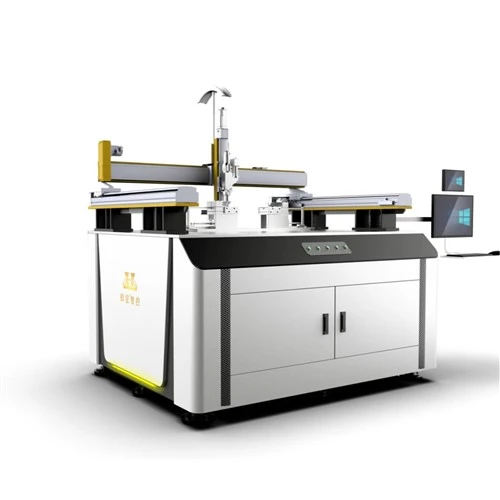
If you’re tired of outsourcing, dealing with inconsistent quality, or waiting weeks for orders, we can help you build a line that fits exactly what you need. No one-size-fits-all junk, no confusing jargon, just a line that works for your business. Reach out to us to talk through your goals, ask questions, and get a customized plan. We’re here to make the process simple, no hidden fees, no fine print.
Auxiliary Processing Equipment References
Textile Institute. (2022). Modern Textile Production Systems: A Guide to Integrated Manufacturing. Textile Institute Publications.
International Labour Organization. (2021). Small and Medium Scale Textile Enterprises: Benefits of Integrated Production Lines. ILO Working Paper 15.
Sustainable Apparel Coalition. (2023). Reducing Textile Waste Through Automated Production. SAC Environmental Report Series.
Yongkang City Bohong Intelligent Equipment Co., Ltd.
As one of the most reliable complete production lines manufacturers and suppliers in China, we also support customized service. With abundant experience, we warmly welcome you to buy advanced complete production lines from our factory. If you have any enquiry about quotation, please feel free to email us.
Address: No. 176 Yinggui North Road, Chengxi New Area, Yongkang City, Zhejiang Province
E-mail: bohonglasertech@Outlook.com
WebSite: https://www.bohonglasertech.com/
