When I first started out in the rapid fittings industry, one of the most common questions I got from new customers wasn’t about pressure ratings or material compatibility—it was simply, “What’s the difference between male and female rapid fittings?” At the time, I’ll admit I didn’t dig as deep as I should have; I just explained that one had external threads and the other had internal threads, and that was that. But over the past 12 years, working alongside our engineering team and sitting in on hundreds of client testing sessions, I’ve learned that this distinction is far more nuanced than it looks on the surface. It’s not just about threads, and if you get the choice wrong, it can lead to leaks, premature wear, or even safety hazards on the job site. Rapid Fittings
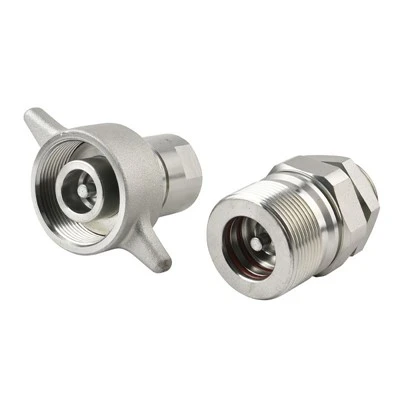
Let’s start with the basics, because that’s where most confusion begins. A quick primer: rapid fittings (also called quick disconnects or quick couplers) are designed to connect and disconnect fluid lines without tools, reducing downtime in everything from manufacturing automation to agricultural irrigation, automotive repair, and even medical equipment. Male rapid fittings, in their most basic form, have external threads on the end of the fitting. Female rapid fittings have internal threads, meaning the threads are recessed inside the fitting’s body. But that’s the physical end, and there’s a whole lot more that goes into how that design impacts performance.
Let’s talk about how they connect, because that’s where real-world use starts to matter. When you connect a male fitting to a female fitting, the male threads screw directly into the female threads. That sounds straightforward, but here’s the catch: male fittings typically have a slightly protruding valve stem at the end, while female fittings have a valve port that the stem slides into. When you twist them together, the stem pushes open the female valve, allowing fluid to flow. When you disconnect, both valves snap closed automatically, so you don’t have fluid spraying everywhere. But because of that protruding stem, male fittings can be more prone to damage if they’re handled roughly—if you drop a male fitting on a construction site, that stem can get bent, and even a tiny bend can prevent it from sealing properly when you connect it again. Female fittings, on the other hand, have their valves recessed, so they’re more protected from impacts. That’s why, in high-traffic, high-abuse environments like construction or mining, I often recommend female couplers for the end of your tool or hose, and male couplers for the fixed line side. That way, the more fragile male stem is inside the protected female port when you connect them, reducing the chance of damage.
Material choices also differ based on whether a fitting is male or female, and that’s not just a random design quirk. Because male fittings handle the connection point’s external threads, they need to be strong enough to withstand the torque from screwing into the female side. If a male fitting is made of a soft material like aluminum, it can strip its threads if you over-tighten, which is a common mistake among first-time users. Female fittings, with their internal threads, are often built to handle higher pressure loads because they’re usually mounted to fixed components like pumps or valves that experience consistent pressure. For applications with very high pressure—like hydraulic systems for heavy machinery—we often use male fittings with a carbon steel body for their tensile strength, and female fittings with a hardened brass or stainless steel body to resist corrosion and thread wear over time. We’ve tested this in our own lab: when we paired a soft aluminum male fitting with a steel female fitting under 5,000 PSI, the male threads stripped after only 30 connect-disconnect cycles. When we swapped to a steel male and brass female, that number jumped to over 2,000 cycles. That’s not a manufacturer trick—that’s physics, and it’s something every user should know.
Thread type is another big difference that’s tied directly to male vs. female design. Male rapid fittings almost always use NPT (National Pipe Thread) or BSP (British Standard Pipe) external threads, because those are designed to seal when twisted together with an internal thread. Female fittings, though, can come in two thread styles: internal NPT/BSP for standard connections, and sometimes straight internal threads for specialized applications like compressed air systems. One common mistake we see is pairing an NPT male fitting with a straight-threaded female fitting—they’ll screw together, but the seal will fail because the thread angles don’t match, leading to constant leaks. I can’t tell you how many times a customer will call us frustrated, saying their new fittings are leaking, and when I ask them to describe the connection, they say they just twisted the two parts together. Half the time, it’s a male NPT fitting paired with a female straight thread. It sounds like a small detail, but it’s one that has tripped up more small business owners than I can count.
Seal design also varies between male and female rapid fittings, and that’s critical for preventing leaks. Male fittings typically have a seal either on the valve stem (to match up with a seat in the female fitting) or on the outer edge of the body. Female fittings, on the other hand, have a seal seat inside the port, designed to create a tight, consistent seal when the male stem is inserted. For example, in our self-sealing hydraulic fittings, the male fitting has a rubber O-ring embedded just behind the valve stem. When you push the male stem into the female port, that O-ring presses against the inner wall of the female fitting, creating a secondary seal that adds an extra layer of protection against leaks. If you reversed that—trying to put the O-ring on the female fitting and the seal seat on the male—you’d have a leak path every time, because there’s no way to create a consistent pressure tight seal. Our engineering team spent three months testing that exact scenario a few years ago, when a client asked us to customize a fitting for their food processing line. They wanted to use a male fitting with an internal O-ring, and it took us weeks to explain why that design would never hold up to the washdown pressures they used.
Application-specific use cases really drive home the value of choosing the right type. Let’s take two common industries: agriculture and medical equipment. In agriculture, you’re connecting hoses to sprayers, fertilizer tanks, and irrigation lines in dusty, dirty conditions. Here, a male fitting’s protruding stem is a problem—dust and dirt can get into the stem’s seal, leading to leaks, and the stem can get caught on brush or equipment parts, bending or breaking. So for farm equipment, we almost always recommend using female rapid fittings on the hose end and male fittings on the tank or sprayer end. That way, when you disconnect the hose, the female fitting’s sealed port closes immediately, keeping dirt out, and the male stem is protected inside the female body when connected. In medical equipment, though, the needs are reversed. Think about a portable oxygen tank: the connection point is on the tank, which is fixed, and the hose connects to that. Here, you want the male fitting on the tank side because it’s mounted, and the female fitting on the portable hose side. That way, when you disconnect the hose to move a patient, the female fitting closes, and the male fitting on the tank stays sealed, so there’s no oxygen waste. If you reversed that, the tank’s female port would be open every time you disconnect, letting moisture or contaminants in, which is a safety risk in healthcare settings.
I also want to talk about something that’s not often discussed: compatibility with accessories. Male rapid fittings are almost always designed to accept plugs, caps, or adaptors that screw onto their external threads. If you need to cap a line temporarily, you just screw a plastic or metal cap onto the male fitting’s threads. Female fittings, though, have internal threads, so you need a plug that goes inside the port to seal it. That might sound trivial, but when you’re working on a job site and you don’t have the right cap or plug, it can slow you down for hours. Last year, a construction client called us in a panic because their backup male fitting caps had gone missing, and they had a pipe line that needed to stay sealed for 12 hours until they could get a delivery. We sent a pair of female adaptors with caps instead, and they got the job done, but it took an extra step because their equipment was mismatched. That’s the kind of small, overlooked detail that adds up to big delays.
One question I get a lot is whether male or female fittings are more durable. The short answer is: it depends on how you use them. In terms of thread wear, male fittings often wear out faster because the external threads are exposed to more friction every time you connect and disconnect them. If you’re working in an environment where you connect and disconnect fittings hundreds of times a day—like in automotive repair shops where you test different hoses—male fittings will show thread wear after a few months, because each connection rubs against the female threads. Female fittings, with their recessed internal threads, have far less surface friction, so they last longer in high-cycle applications. That’s why we recommend using female fittings for lines that get disconnected frequently, and male fittings for fixed lines that only need to be connected once or twice a year. That simple swap extended the lifespan of a local auto repair shop’s hydraulic lines by almost a year, according to their manager, and cut down on their replacement costs by 25% in 2022.
I should also mention that not all male and female fittings are created equal. There are specialized designs, like flat-face rapid fittings, that have different valving, and that’s where the lines between male and female can blur a little. Flat-face fittings are popular for high-precision applications because they create very little fluid spill when disconnected, and their male and female ends are designed to only connect with their matching counterpart—you can’t accidentally connect a male flat-face fitting to a female standard fitting, which reduces installation errors. But even with flat-face designs, the core difference remains: external threads on male, internal threads on female, and that’s what drives their performance.
At the end of the day, the choice between male and female rapid fittings isn’t about which is “better”—it’s about which is right for your specific application. There’s no one-size-fits-all answer, and that’s why we always take the time to ask our customers about their work environment, their pressure requirements, how often they connect and disconnect lines, and what fluids they’re moving before we make a recommendation. Too many suppliers just push the cheapest option, but that’s not how we do business. We’ve built our company on helping our customers avoid the kind of mistakes I made early on, when I assumed male and female fittings were interchangeable.
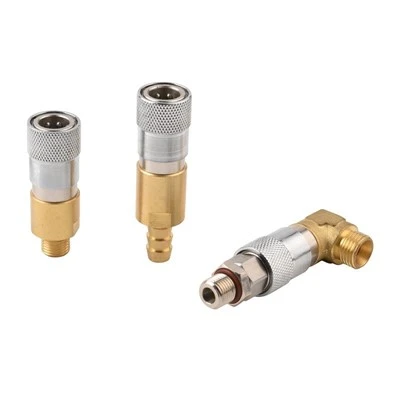
If you’re not sure which type is right for your project, don’t guess. Reach out to our team to discuss your requirements, share details about your application, and we’ll help you pick the right rapid fittings that will save you time, money, and headaches down the line. Whether you’re working on agricultural equipment, automotive repair, industrial automation, or any other field that relies on fluid connections, we have the expertise and products to meet your needs.
Agricultural Hydraulic Quick Couplings References:
- ASME B1.20.1, Pipe Threads, General Purpose, (Inch). American Society of Mechanical Engineers.
- Fluid Power Training Institute. (2021). Quick Disconnect Coupling Design and Application Guidelines. National Fluid Power Association.
- ISO 8434-1, Metallic Tube Fittings for Fluid Power Systems and General Applications – Part 1: General Requirements. International Organization for Standardization.
- Construction Industry Institute. (2022). Equipment Maintenance Best Practices for Fluid Transfer Systems. University of Texas at Austin.
Cixi Poolke Hydraulic Pneumatic Co., Ltd.
Cixi Poolke Hydraulic Pneumatic Co., Ltd. is one of the most professional rapid fittings manufacturers and suppliers in China, also supports customized service. Please feel free to wholesale the newest rapid fittings made in China here from our factory. Quality products and reasonable price are available.
Address: #88 Zhengtong Road, Kandun Industrial Park315303, Cixi, Zhejiang, China
E-mail: contact@poolke.com
WebSite: https://www.poolkecouplings.com/
