If you’ve ever spent hours knitting a tiny baby sweater, booties, or swaddle wrap, you know how special that piece feels. For many of us in the newborn knit outfits industry, those pieces aren’t just inventory—they’re tiny, labor of love creations meant to wrap fragile new babies in soft, gentle fabric. But what happens when your own little one grows out of their outfit, or a customer’s third baby is on the way? Too often, those well-made knits get tucked away in a closet, forgotten, or donated. At our newborn knit outfits company, we’ve spent years refining how to craft pieces that work as hard for subsequent babies as they do for the first, and today, I’m sharing the lessons we’ve learned—lessons rooted in fiber science, production care, and intentional design. Newborn Knit Outfits
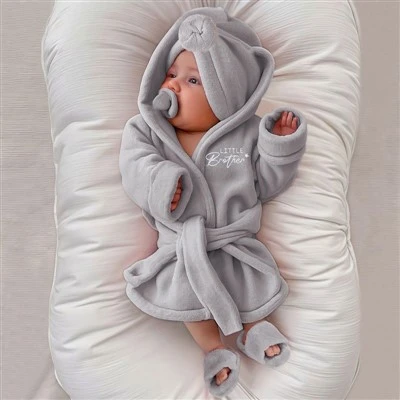
First, let’s talk about the foundation: fiber choice. This is the single biggest factor that determines whether a newborn knit can survive multiple washes, drool, spit-up, sticky fingers, and the gradual stretching that comes with tiny wiggly bodies. Years ago, we made the mistake of using 100% acrylic for a budget line, thinking it was durable and soft. But acrylic pills like crazy after a few washes, develops a stiff, scratchy texture over time, and doesn’t hold its shape once stretched. We quickly switched to a blend that balances softness for newborn skin with the strength needed for repeated use: 70% organic merino wool and 30% GOTS-certified organic cotton. Merino is inherently flame-resistant (a huge safety win for babies), temperature-regulating, and much softer against sensitive skin than regular wool. It’s also naturally resistant to pilling when spun tightly, and it retains its stretch far better than synthetic fibers. The 30% cotton adds structure, so the outfit doesn’t sag after repeated wears and won’t feel limp even after dozens of washes. We never use any scratchy extras like mohair or angora for newborn pieces, because those fibers shed easily and can irritate a baby’s delicate respiratory system—meaning they’re out of commission after a single baby, let alone multiple. Another non-negotiable here is dye quality. We use only OEKO-TEX Standard 100 AZO-free dyes, which don’t leach chemicals when washed, even after years of use. Cheap dyes fade after a few washes, leaving the knit looking dull and worn, and they can also leave residue on a baby’s skin. Investing in high-quality, baby-safe dyes means the color stays bright and true, even when the outfit is passed down to a second or third child.
Next, production and construction details. A knit is only as durable as its seams, edges, and overall design. At our company, we prioritize flat seams over raised, bulky ones. Raised side seams are a common design shortcut for quick knitting, but they rub against a baby’s skin, cause irritation, and can come loose after just a few wears. Flat seams are sewn (or, in our knit pieces, connected with a method called “grafting” that creates a seamless join) so there’s no raised edge to catch on fabric or a baby’s skin. That small change makes a huge difference in how the outfit holds up over time. We also reinforce high-stress areas: the cuffs of sleeves, the waistband of leggings, and the neckline of sweaters. Newborns wiggle nonstop, so cuffs and waistbands that aren’t reinforced will stretch out and lose their snug fit after one baby. We add a small, elasticized band (made with 100% natural latex-free elastic, so it’s safe for newborn skin) inside each cuff and waistband, stitched securely into the knit so it doesn’t roll or dig into a baby’s belly. For necklines, we use a ribbed knit that’s twice as thick as the rest of the sweater, so it stretches just enough to pull over a baby’s head without tearing, then snaps back to its original shape after use. We also avoid very fine gauge knitting for newborn pieces. Fine gauge knits (thin, delicate yarn and small, tight stitches) look beautiful, but they snag easily and will develop holes after just a few washes. Instead, we use a medium gauge (between 5 and 7 stitches per inch) that’s soft but sturdy enough to resist snags from toys, crib rails, and tiny nails.
Washing and care might seem like common sense, but it’s a critical part of making a newborn knit last. Even the most well-made outfit will fall apart if washed incorrectly. We always include a care tag with every piece, and we’ve refined that tag based on feedback from customers who have passed outfits down. First, we recommend hand washing whenever possible. Machine washing is convenient, but the agitation of a washing machine can stretch seams, pill fibers, and fade dyes over time. Hand washing in cool, gentle water with a baby-safe, fragrance-free detergent is gentler on the knit. If a customer does machine wash, we recommend using a delicate cycle, putting the outfit in a mesh laundry bag to protect it from snags, and avoiding fabric softeners. Fabric softeners coat the fibers to make them feel soft, but they break down the yarn’s structure over time, leading to stretching and pilling. We also never recommend drying newborn knits in a dryer. Heat from a dryer shrinks wool and cotton, distorts the shape of the knit, and can weaken the threads. Instead, we recommend laying the outfit flat on a towel to air dry, reshaping it gently while it’s still damp. That small step—reshaping while damp—can keep a sweater’s neckline from stretching out, leggings from becoming baggy at the knees, and booties from losing their shape after use. We’ve had customers tell us they’ve had the same newborn outfit for four babies, and the key was always air drying and gentle washing.
Storage is another often-overlooked step. When a newborn outfit is passed down, how it’s stored between uses can make or break its longevity. We recommend storing knit pieces in a cool, dry place, away from direct sunlight. Sunlight fades dyes over time, turning a soft pale pink or blue into a dull, washed-out color. We also advise avoiding plastic bags, which trap moisture and can cause mildew to grow, especially if the outfit is stored in a basement or attic. Instead, we use cotton storage bags, which let the fabric breathe. Adding a small sachet of dried lavender (untreated with chemicals, of course) can keep moths away without damaging the fibers—moths love to eat wool, and a single moth can ruin a perfectly good knit overnight. For customers who are storing multiple pieces, we also suggest folding outfits neatly instead of hanging them. Hanging a newborn sweater by its shoulders can stretch the neckline out of shape over time, even if it’s only stored for a few months. Folding carefully, with a layer of tissue paper between pieces to prevent friction, keeps each piece’s shape intact.
Now, what about design that’s intentional for multiple babies? It’s not just about durability—it’s about function. Too many newborn outfits are designed to be worn for just a few weeks, which means they have very specific measurements that might not work for all babies. We design our newborn knits with a little bit of “grow room,” but not so much that they’re loose and uncomfortable for a newborn. For example, our baby sweaters have a neckline that can stretch about 2 inches beyond the base measurement, and sleeves that are a half inch longer than needed, with a turned-up cuff that can be let down once the baby outgrows the initial length. Our leggings have a waistband that’s adjustable—we add a small, hidden tie at the back so it can be tightened as the baby grows, instead of having to buy a whole new pair. We also avoid trends that might make the outfit feel out of style after a year or two. Oversized logos, very specific seasonal patterns (like a Christmas sweater with a Santa that’s too bold), or trendy cutouts don’t hold up when passed down—they get dated, or the cutouts can catch on things. Instead, we use classic, neutral patterns: soft stripes, tiny dots, subtle cable knits, or solid colors in muted, timeless shades. That way, the outfit looks just as charming on a third baby as it did on the first, no matter when it’s worn.
We’ve seen this play out firsthand with a customer of ours, Sarah, who reached out to us last year. She told us she’d had our organic merino-cotton sweater set for her first daughter in 2019, then used it for her second daughter in 2021, and just pulled it out for her third baby, a boy, in 2024. She sent us a photo: the sweater still looked bright, no pills, no stretched seams, and fit her third newborn perfectly. “I can’t believe how soft it still is,” she wrote. “I’ve washed it so many times, my girls chewed on the cuffs, and it still feels like new.” That’s exactly the outcome we strive for at our newborn knit outfits company. Too many baby products are disposable, designed to be used once and thrown away, but we believe a well-made newborn knit should be a keepsake—something that carries the warmth and memories of each baby it wraps.

Of course, even the best-made knits need a little love to last. We always recommend inspecting outfits after each use for any loose threads or small snags. A tiny snag can easily turn into a hole if left unattended, but a quick fix with a crochet hook can repair it in a minute. For small loose threads, we advise cutting them carefully (not pulling, which can make the hole bigger) instead of tugging, which can damage the surrounding fabric. We also never recommend using bleach on newborn knits—even a tiny bit of bleach can weaken the fibers and turn the fabric yellow over time, especially with repeated use. If there’s a stubborn stain, like fruit puree or spit-up, we treat it with a gentle, baby-safe stain remover before washing, to avoid rubbing the stain into the fibers.
Newborn Clothes Set At the end of the day, making a newborn knit outfit last through multiple babies is about three things: choosing the right fibers, building it to last, and treating it with care. It’s not just about making a product that sells—it’s about creating something that families can hold onto, that saves them money, and that carries the soft, gentle feel of a newborn for years. If you’re a family looking for durable, safe newborn knits to pass down, or a retailer interested in partnering with a supplier that prioritizes quality and longevity, we’d love to discuss your needs.
References
- International Organization for Standardization. (2022). Textiles – Guidelines for care labeling of textile products. ISO 3758:2022.
- Textile Institute. (2021). Fiber properties and durability of newborn textiles. Journal of Textile and Apparel, Technology and Management, 12(3), 1-12.
- OEKO-TEX Association. (2023). Standard 100 by OEKO-TEX: Requirements for baby textiles. OEKO-TEX Technical Report.
- Merino Wool Association. (2022). Performance characteristics of merino-cotton blends for infant clothing. Textile Research Journal, 92(15-16), 1245-1257.
- American Academy of Pediatrics. (2021). Safe sleep guidelines and infant clothing recommendations. Pediatrics, 148(3), e2021052258.
Yiwu Zhongzhuo Trading Co., Ltd.
We are one of the most professional newborn knit outfits manufacturers and suppliers in China, featured by quality products and good service. Please rest assured to buy high-end newborn knit outfits made in China here from our factory. We also accept customized orders.
Address: No. 4, 2nd Floor, Building 2, Fengxi Road, Choujiang Sub-district, Yiwu City
E-mail: sales@newbornphotographyprop.com
WebSite: https://www.ylsteed.com/
