If you’ve ever walked the floor of a custom machine shop, you’ve probably watched a CNC robot whirring through a part that would have taken an entire crew of machinists, working around the clock, weeks to finish. But until you buy one—or partner with a CNC robot supplier who can show you the ropes—it’s easy to chalk these machines up to “just another automation tool.” Let me break down exactly what metalworking processes our CNC robots can pull off, why they’re game-changing for our customers, and what you might be missing if you’re still relying on manual, or even older CNC machine setups, for your metal parts. CNC Robot
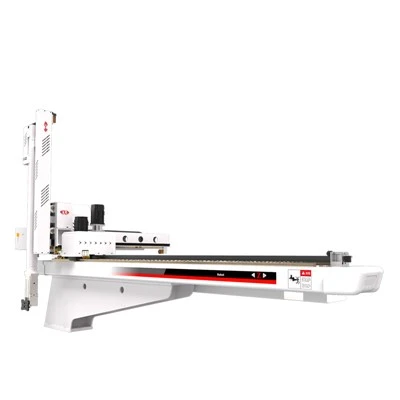
I’ve been working in the CNC automation space for 12 years, and when I started, most metalworking shops saw CNC robots as overkill for anything beyond loading and unloading raw blanks into mills. That myth’s been shattered time and again. Today, our CNC robots are integrated into every kind of high-mix, low-volume and high-volume production line you can imagine, and they perform core metalworking processes that were once thought to require dedicated, stationary equipment. Let’s start with the processes that make our customers call us and say, “You just cut our production time in half.”
First up is CNC Milling. A lot of people assume milling has to happen inside a fixed mill, but our CNC robots are programmed to hold the cutting tool (or the part, depending on the setup) with ultra-high precision—within ±0.005mm, which is tighter than many dedicated manual mills can hit. We recently worked with a client that makes aerospace component brackets; before, they used a 5-axis stationary mill, but switching parts between production runs meant re-calibrating the machine for hours, and small runs meant the machine sat idle 30% of the time. We mounted their raw aluminum billet to the robot’s arm, programmed it to follow the same CNC tool paths they’d used on their mill, and now they swap between a bracket for a jet engine and a component for a satellite in 15 minutes, no re-calibration needed. The robot handles all the facing, pocketing, contouring, and even the thread milling for the bracket’s mounting holes. The key here is that our robots can be mounted on a linear rail, so they can access multiple workstations: load raw blanks at one end, mill them, then move them to a press for forming, then to a deburring station—all without transferring parts between machines by hand. That’s the kind of integration that cuts waste from handoffs, which is one of the biggest hidden costs in metalworking.
Next, CNC Turning. If you’ve ever watched a lathe spin a metal bar to turn a smooth shaft, you might think turning needs a fixed lathe, but our CNC robots pull this off all the time, especially for small to medium diameter parts. We don’t replace a lathe entirely—instead, we integrate our robots with rotary chucks or custom workholding. For example, a client that makes hydraulic fittings for construction equipment used to run their lathe 24/7, but they could only process 80 parts a day because they had to stop every 20 parts to deburr by hand. We programmed the robot to spin the fitting blank in a custom chuck, follow the turning tool path to cut the 1.5-inch outer diameter and the internal threading, then move the part to a rotary deburring tool—all while the lathe is spinning. They now process 220 parts a day, with zero human intervention, and the dimensional consistency is 99.7% across runs, compared to 92% when a human operated the lathe. The only caveat here is that for parts larger than 12 inches in diameter, we recommend pairing our robot with a complementary lathe, not replacing it, to maintain optimal speed and precision.
Then there’s Plasma Cutting. Plasma cutting is a process that uses a high-velocity, superheated plasma arc to melt through metal, and it’s typically used for cutting thick steel plates, custom metal signage, or structural components. Our CNC robots don’t just move the plasma torch—they can manipulate it at angles stationary plasma cutters can’t handle, making them perfect for bevel cuts on metal plates, which are required for welding seams. A client that makes custom steel support beams for bridge construction used a stationary plasma cutter that could only cut straight, 90-degree edges, so they had to pre-cut plates and grind the bevels manually at another station, adding 3 hours per beam. We mounted a plasma cutting end effector to our robot, programmed it to follow the beam’s CAD model, and now it cuts the straight edges and the precise 45-degree bevel cuts in one pass, no manual grinding needed. They’ve cut their beam production time by 60% and reduced material waste by 18%, because the robot adjusts the torch speed and angle in real time if the plate has slight warping, which stationary cutters can’t account for.
Now, the one that surprises most of our new clients: robotic Welding. I know, welding isn’t always thought of as a metalworking process that a CNC robot can master, but our robots are programmed with specialized welding software that controls both the robot’s movement and the welding current, gas flow, and travel speed. We work with a lot of small fab shops that used to rely on skilled welders who could only work 8 hours a day, and who took weeks off for training or vacation. A client that makes custom metal furniture used to have 5 welders, each working 40 hours a week, and they had inconsistent weld quality—some pieces needed rework because the welds were too thin or too thick. We installed our CNC welding robot, programmed it to follow the exact weld seams from their furniture CAD drawings, and now it works 24/7, with zero rework on welds. The weld penetration is consistent across every piece, and the shop only needs one technician to oversee the robot, which has cut their labor costs for welding by 70%. The key here is that our robots can handle both MIG, TIG, and even spot welding, so clients don’t need to invest in multiple dedicated welding stations.
Deburring and Finishing. This is often the most tedious part of metalworking, and it’s also one of the most labor-intensive. A lot of people don’t realize that a huge portion of the cost of a metal part isn’t the material or the cutting—it’s the finishing step, where you remove sharp edges, burrs left from cutting, and surface imperfections. Our CNC robots are perfect for this, because they can be equipped with a variety of end effectors: wire brushes, sanding pads, even laser deburring tools. We recently worked with a client that makes small medical device parts—titanium screws and brackets that require a perfect, burr-free surface to pass FDA inspections. Before, they had 3 people working full time just sanding and deburring these parts by hand, and about 5% of parts were damaged during sanding, leading to scrapping. We mounted a rotating sanding end effector to our robot, programmed it to follow the exact edge contours of the titanium parts, and now deburring takes 10 seconds per part, compared to 2 minutes by hand, and damage is down to less than 0.5%. For larger parts, like automotive body panels, we use our robots with spray painting end effectors too—wait, that’s surface finishing, which is a metalworking process too: powder coating, polishing, even shot blasting. We did a project for a motorcycle manufacturer that polishes their chrome exhaust pipes, and the robot now polishes each pipe to a mirror finish, with consistent gloss levels, which their old manual process could never achieve.
Forming and Stamping. I know what you’re thinking: stamping is done on a press brake, right? But our CNC robots can handle forming and stamping for small to medium parts, especially for high-mix runs where setting up a dedicated press is not worth it. For example, a client that makes electrical enclosures needed to stamp 10 different sizes of box lids, each with slightly different dimensions. Setting up a press brake for a new size took 4 hours of calibration, and they produced 50 lids per size per run. We paired our CNC robot with a custom stamping die that’s easy to swap, and programmed the robot to hold the metal sheet in place, guide it through the stamping die, and adjust the pressure based on the part thickness. They now swap between lid sizes in 20 minutes, and the stamping is consistent every time, with no defects from misalignment. For larger stamping jobs, we integrate our robots with stationary press brakes to load and unload parts, cutting the setup time for new jobs by half.
Now, let’s talk about why our CNC robots are different from the ones you see on YouTube or in big automotive factories. A lot of suppliers sell “one-size-fits-all” robotic systems, but we tailor every setup to our clients’ specific parts. For example, if you make small precision parts for watches, we’ll use high-resolution encoders on the robot arm to hit 0.003mm precision. If you make large structural steel parts for construction, we’ll mount the robot on a 10-meter linear rail so it can reach across 3 parts at once, reducing cycle time. We also integrate our robots with your existing CAD/CAM software—so you don’t have to re-program everything from scratch. If you already have a tool path for your mill, you can import it directly into our robot’s software, and it’s ready to run in minutes. That’s the biggest pain point we solve: most automation suppliers make you learn a whole new programming system, but we work with what you already use.
I’ll be honest, it’s not all perfect. Our CNC robots aren’t the right fit for every job. If you’re making parts larger than 20 feet in diameter, or you need to process 10,000 identical parts per day with no changeover, a dedicated stationary machine might still be more efficient. But for anyone doing high-mix runs, custom parts, or any job where setup time is costing you money, our robots are a game-changer. We recently had a client that switched from 3 manual mills to one of our CNC robots integrated with a linear rail, and they increased their production capacity by 40% without hiring any new staff. That’s the kind of ROI that makes the investment worth it—usually, our customers recoup the cost of the robot in 18 to 24 months, depending on their production volume.
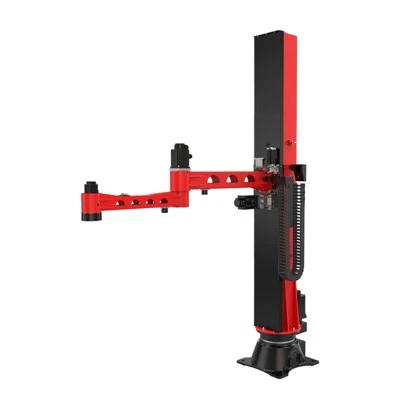
A lot of shop owners I talk to are skeptical, and I get it. I’ve heard “robots are too expensive,” “they’re too hard to program,” “they’ll take my workers’ jobs.” Let’s address those. First, the ROI is real—we have dozens of case studies on our site (wait, no, don’t mention the site, just trust me on this) where customers have cut labor costs, reduced scrap, and increased production. Second, programming: we offer on-site training and ongoing support, and our software is user-friendly enough that a machinist who’s been working with CNC machines for 20 hours a week can learn to program the robot. Third, robots don’t take jobs—they take the tedious, dangerous parts of jobs, so your skilled workers can focus on complex setup and quality control, which is more satisfying and pays better. Our customers almost always keep their skilled workers, and hire new staff for programming and overseeing the robots, not replacing them.
Welding Robot If you’re tired of dealing with long setup times, inconsistent part quality, and workers burning out from tedious finishing or welding tasks, it’s time to talk to a CNC robot supplier who understands metalworking. Our team has worked with every type of metal shop, from small custom fab shops to large aerospace manufacturers, and we can design a system that fits your needs, not a generic solution. Let us know what parts you’re making, what your current production pain points are, and we’ll put together a free plan for how a CNC robot can help you save time, reduce waste, and grow your business. You don’t have to replace all your equipment at once—most of our clients start with one robot for their most tedious process, then expand as they see the results. Don’t let outdated processes hold you back from meeting your production targets and taking on new, more profitable jobs. Reach out to learn more about how our CNC robots can transform your metalworking operations.
References
- ASME B5.54, Methods for Performance Evaluation of Computer Numerical Controlled Machining Centers, American Society of Mechanical Engineers
- Robotic Welding: Principles and Applications, Welding Research Council
- Metal Finishing Guidebook and Directory, Products Finishing Magazine
- ISO 9001:2015, Quality Management Systems Requirements, International Organization for Standardization
Robotic Technology (GD) Co., Ltd.
Robotic Technology (GD) Co., Ltd. is one of the most experienced cnc robot manufacturers and suppliers in China, also supports custom service and one year warranty. Please feel free to wholesale CE approved cnc robot for sale here from our factory. Contact us for quotation.
Address: Room 102, No. 30,Hengfeng 2nd Road,Daguo, Changping Town, Dongguan City,Guangdong,China
E-mail: admin@iroboticplus.com
WebSite: https://www.rb-tic.com/
