Hey there! If you’ve ever stood next to a big HVAC unit in an office building and thought, “What even makes that thing work right?” – you’re not alone. For years, I just saw that box sitting on the roof or in the basement, blowing air around and figuring it was just… doing its job. Then I started working in the AHU game, and now I know the real magic isn’t in the unit itself – it’s in the AHU control system behind it. Let me break this down like I would over a coffee with a new client, no fancy jargon overload. AHU
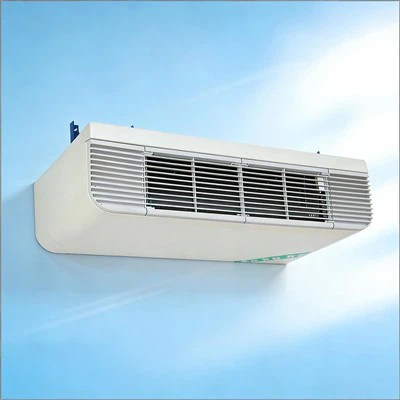
First off, what the heck is an AHU anyway? Short for Air Handling Unit – it’s that big metal box that conditions air for buildings: heats it, cools it, filters it, blows it where it needs to go. Now, the AHU itself is just a hunk of metal, fans, coils, filters, and maybe a humidifier. It can’t do any of that stuff on its own. That’s where the AHU control system comes in. Think of it as the AHU’s brain, its boss, its “make sure we don’t waste energy or make people too hot/cold” co-pilot. No control system? Your AHU is just a noisy, energy-hungry paperweight that’s either blasting freezing air in the middle of summer or leaving everyone sweating because it never turns the AC on.
Let me walk you through what this control system actually does, step by step. I’ve seen too many people mix up basic thermostat stuff with AHU controls, and that’s a mistake. A regular wall thermostat is like a light switch – you set a temp, it turns the AC or heat on/off when needed. An AHU control system is way more complex. It’s monitoring 10+ variables at once, not just room temp. Let’s list the big ones: supply air temp, return air temp, outdoor air temp, humidity levels, filter pressure (yeah, filters get dirty over time, and the system needs to know when to change them), air flow rates, and even CO2 levels in the building.
Wait, CO2 is a big one these days, right? Post-pandemic, every building manager I talk to is obsessed with fresh air. The AHU control system is what brings in the right amount of outdoor air, mixes it with return air, and adjusts based on how many people are in the space. If a conference room has 20 people crammed in, CO2 spikes, so the system opens the outdoor air damper wider – no more stuffy rooms or wasteful energy from bringing in way more fresh air than needed when the space is empty. That’s the sweet spot: comfort AND efficiency.
Let’s talk about how it actually works, super simply (I promise no robot talk). Most modern AHU control systems use what’s called a direct digital control (DDC) setup. No, that’s not a new music player. It’s a computerized system where sensors on the AHU send real-time data to a controller – basically a small computer box. That controller runs pre-programmed logic, like: “If supply air temp is 72°F and I need to keep it there, and outdoor air is 90°F, crank the chilled water valve open by 30%.” Then it sends signals to the actuators on the AHU – those are the little parts that do the actual adjusting: open/close dampers, turn chilled water valves, adjust fan speeds.
Oh, fan speeds! Old AHUs just ran fans at full speed 24/7, which is such a waste. A good control system uses variable frequency drives (VFDs) to slow the fan down when the building doesn’t need full air flow. Like, at night, when everyone’s gone, the system drops the air flow from 100% to 30% just to maintain basic ventilation. That cuts energy costs by a ton – I’m talking 30-40% sometimes, based on the building size. Clients always get pumped when they see those numbers, not gonna lie.
Let’s get real about common pain points I see clients run into. A lot of older buildings have AHUs with super outdated control systems – like, the ones that use analog switches or basic timers. Those are a nightmare. They don’t adjust for outdoor temp, they can’t track filter life, and they waste so much energy. I had a client last year with a 10-year-old office building who was paying $12k a month extra on energy because their old AHU controls were stuck running full blast even on mild spring days. Swapping those old analog controls for a modern DDC system fixed that in two weeks.
Another big one: why does this matter for comfort? If you’ve ever walked into a building and one room is freezing and the next is stuffy, 9 times out of 10 the AHU control system is broken or not tuned right. It’s not the AHU’s fault – it’s the brain. A good control system balances the air flow to each zone. Wait, zone control is another thing – if a building has multiple offices, meeting rooms, break rooms, a smart AHU control system can set different temps for each zone, no more fighting over the thermostat. The conference room can be 70°F during meetings, the quiet 3rd floor can be 74°F for people working, and the lobby can adjust when events are happening there.
Now, let’s bust a myth I hear all the time: “AHU control systems are only for big skyscrapers or huge factories.” Nope. We work with small retail centers, 10,000 sq ft office spaces, even restaurants – all need good AHU controls. A restaurant’s kitchen gets way hotter during lunch and dinner rushes, and has higher grease and CO2 levels, so the AHU control system adjusts the ventilation and cooling specifically for the kitchen area, not the dining room. That keeps staff happy, reduces fire risk from bad ventilation, and saves energy when the kitchen’s not busy.
What are the key features to look for in a modern AHU control system? Let’s make this practical, since I’m a supplier, not just a blogger. First, real-time monitoring and alerts. The system should send you a text or email if there’s an issue – like a clogged filter that’s making air flow drop, or a fan that’s about to fail. No more getting a 3 AM call from a building manager because the AHU stopped working and everyone’s hot. Second, energy reporting. You get a dashboard that shows exactly how much energy the AHU is using, where it can cut waste, and compare it to past months. That’s huge for LEED certification or just hitting sustainability goals. Third, integration with other building systems. It should talk to your lighting control system, security system, even your smart watch if you want – so if you’re the building manager and you’re on vacation, you can adjust temps from your phone. Fourth, ease of use. The best control systems don’t require a degree in engineering to operate. We train our clients’ staff in an hour or two, no fancy training classes needed.
Wait, let’s talk about why choosing the right AHU control system matters for long-term costs. When a building manager comes to us, they often focus on the upfront cost of the AHU itself. But I always tell them: the control system is the thing that will pay for itself in 1-2 years, then save you money for the next 10+ years. A bad control system can waste 50% of the AHU’s energy – that’s like buying a brand new $50k car and never changing the oil, so it gets 5 miles per gallon. A good control system keeps that AHU running efficiently, extends its lifespan, and keeps your occupants happy.
I also want to mention air quality, which is non-negotiable now. Post-2020, every client asks about IAQ (indoor air quality), and AHU controls are the backbone of that. The system monitors filter pressure to make sure filters aren’t dirty (dirty filters let in dust, allergens, even pathogens), adjusts humidity so it’s not too dry (causes static, sore throats) or too humid (mold growth), and tracks CO2 to keep it below the recommended 1000ppm. A good control system doesn’t just blow air – it blows clean, healthy air.
Let me share a quick success story to make this real. Last year, we worked with a 50,000 sq ft multi-tenant office building in downtown [redacted]. Their old AHUs had 15-year-old control systems, and tenants were complaining about inconsistent temps, energy bills were through the roof, and they failed their IAQ audit for high CO2 levels. We swapped out their outdated controls for our smart DDC AHU system, tuned it to their specific building layout, and set up the monitoring dashboard. Six months later, their energy bills dropped 38%, tenant complaints about HVAC went down 90%, and they passed their next IAQ audit with flying colors. The building owner said the control system paid for itself in 18 months – that’s the kind of ROI no one can ignore.
Now, let’s address a common mistake: overcomplicating things. Some clients come in asking for the fanciest, most high-tech control system out there, but they don’t need it. If it’s a small retail space with one AHU, you don’t need a $10k system with 100 data points. We tailor the control system to your building size, your needs, your budget. No one-size-fits-all garbage, that’s not how we work. We take the time to walk through your space, listen to your pain points (are you fighting temp complaints? Wasting energy? Having trouble keeping up with air quality?), and build a control system that solves those specific problems.
So, to circle back to the original question: what is an AHU control system? It’s the brain that makes your building’s air handling unit work for you – not against you. It’s the balance of comfort, efficiency, air quality, and cost savings that turns a noisy metal box into a system that keeps your occupants happy, your energy bills low, and your building running smoothly. It’s not just a piece of hardware – it’s the part that makes the AHU actually do its job right.

If you’re reading this and thinking, “Hey, my building’s HVAC is a hot mess,” or “I’m looking to upgrade my AHUs and their controls,” I’m here to help. We’ve worked with all kinds of spaces – small offices, big retail, warehouses, restaurants, you name it. We don’t do pushy sales, we don’t use jargon, we just want to find a control system that fits your needs and your budget. Shoot us a message to set up a quick chat, no pressure, just a conversation about how we can make your AHU work better for you.
AHU References:
- ASHRAE Handbook: HVAC Systems and Equipment, American Society of Heating, Refrigerating and Air-Conditioning Engineers, 2021.
- Direct Digital Control (DDC) for HVAC Systems, U.S. Department of Energy, 2019.
- Indoor Air Quality Guidelines for Commercial Buildings, World Health Organization, 2022.
- Variable Air Volume (VAV) System Control Best Practices, Air Conditioning Contractors of America, 2020.
Shandong Kasuo Air Conditioning Equipment Co., Ltd.
Shandong Kasuo Air Conditioning Equipment Co., Ltd. is one of the most professional ahu manufacturers and suppliers in China, featured by quality products and good price. Please rest assured to wholesale high-grade ahu for sale here from our factory. We also accept customized orders.
Address: Luquantun Industrial Park, Wucheng District, Dezhou City, Shandong Province
E-mail: ksair@kasuoac.com
WebSite: https://www.kasuoac.com/
