Hey there, let’s cut to the chase—if you’re running a shop, you know a semi-automatic band saw isn’t just a machine; it’s your workhorse. But I’ve seen way too many shops drop the ball on maintenance, and then they’re stuck with a saw that’s slacking, breaking down mid-job, or costing them a fortune in replacement parts. As someone who sells these bad boys (yep, that’s me, the semi-automatic band saw supplier side of things), I can tell you: proper maintenance doesn’t just extend your saw’s life—it makes your cuts cleaner, faster, and way less stressful. I’ve worked with thousands of operators, from small fabrication shops to big manufacturing lines, and the ones that stick to a solid maintenance routine are the ones that stay on schedule and hit their quotas. So let’s break this down, no fancy jargon, just real, actionable stuff that actually works. Semi-Automatic Band Saw
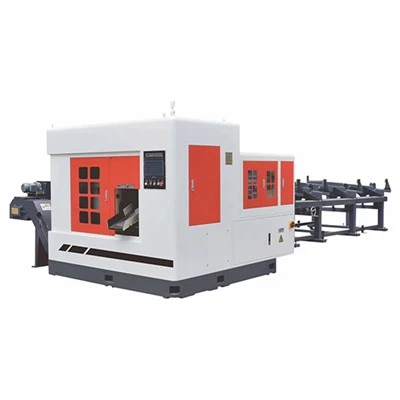
First, let’s get one thing straight: semi-automatic band saws are different from manual or full-automatic ones. Your saw does the heavy lifting on the blade feed and clamp pressure, right? So neglecting the parts that make that happen is a quick way to turn a $5k machine into a $5k paperweight. I’ve had customers come to me after skipping oil changes for 6 months, and their blade guides were so gummed up they were ruining every cut. Don’t be that person. Let’s start with the daily stuff—this is non-negotiable, and it takes like 5 minutes, max.
Every single day before you hit the power, do a quick walkaround. First, check the blade tension. Wait, not just “is it tight”—semi-autos rely on consistent tension to get a straight cut. Too loose, and the blade will wander, bend, or even snap mid-cut. Too tight, and you’re warping the blade prematurely. A good rule of thumb: if your saw has a tension gauge (all modern ones do), it should be within the manufacturer’s sweet spot—usually between 15,000 and 25,000 psi, depending on the blade size. If you don’t have a gauge, give the top of the blade a light tap with a wrench; it should ring like a bell, not a dull thud. Next, check the blade itself. Look for any missing teeth, cracks, or burrs on the back. Even a single missing tooth can turn a straight cut into a jagged mess, and it’ll put extra stress on the motor. Also, make sure the blade is tracking correctly—this means it’s sitting dead center on both wheels, not rubbing against the sides of the wheel guards. If it’s off, adjusting the tracking is a 2-second tweak, and ignoring it will wear out your wheels way faster.
Then, after every day’s work, clean the saw. Chips, oil, and coolant love to build up in the blade channel, around the clamps, and under the wheel guards. I’ve seen coolant turn into a sticky, gunky paste that gets caught between the blade and guides, causing the blade to wear out 3x faster. Grab a stiff brush (not a metal one, that’ll scratch the guides) and a rag, scrub those areas down, and blow out the channel with compressed air if you have it. Pro tip: don’t skip the base of the saw—chips there can get into the hydraulic lines (yep, semi-autos have hydraulics) and cause clogs. Also, wipe down the clamps—if metal shavings get into the clamp jaws, they’ll not only leave marks on your workpiece but also wear out the clamp mechanism faster.
Now, the weekly maintenance stuff—this is where you prevent bigger problems down the line. Let’s talk about lubrication, because this is the biggest mistake I see operators make. Semi-automatic band saws have a few key parts that need regular lubrication: the blade guides, the hydraulic system, and the blade wheels. First, the blade guides—those are the little bearings that hold the blade steady, right? They’re exposed to chips and coolant, so they need a shot of lubricant every week. Use a high-temperature grease (not regular motor oil) and give each guide bearing a quick spray. If your guides are adjustable, make sure they’re not too tight—they should have a tiny bit of play so the blade can move as it cuts, but not enough to wobble.
Next, the hydraulic system. Your semi-auto relies on hydraulics for clamping, feed rate, and down pressure. If the hydraulic fluid is low, or it’s dirty, you’ll get inconsistent cuts—sometimes too fast, sometimes too slow. Every week, check the fluid level using the dipstick on the hydraulic reservoir (it’s usually labeled). If it’s low, top it up with the exact fluid the manufacturer recommends—using the wrong fluid can ruin the seals. Also, check for leaks around the hoses and connections. A tiny leak might seem harmless, but over time it can lead to pressure drops that make your saw useless. If you spot a leak, don’t put it off—replace the hose or seal right away, because a sudden hydraulic failure mid-cut can snap your blade and damage the machine.
Another weekly task: check the blade wheels. Those big wheels that the blade rides on—they have bearings inside, and if they’re not lubricated, they’ll make a loud grinding noise and wear out the blade quickly. Spin each wheel by hand; they should rotate smoothly, no squeaking or sticking. If they do, grab your grease gun and lubricate the wheel bearings. Also, inspect the wheel tires—the rubber or polyurethane layer on the wheels that grips the blade. If they’re cracked, worn smooth, or have chunks missing, they won’t grip the blade properly, causing it to slip and wander. Replace the tires if they’re more than 50% worn—this is a cheap fix that makes a huge difference in cut quality.
Now, monthly maintenance—this is the deep dive that keeps your saw running like new. Let’s start with the blade tension calibration. Even if you check it daily, calibrating it once a month ensures your gauge is accurate. Most saws have a tension release valve; follow the manufacturer’s steps to zero the gauge, then set it to the correct tension for your blade size. This is especially important if you switch blade sizes often—blades for 1-inch steel need different tension than blades for 4-inch aluminum.
Next, check the saw’s alignment. A misaligned saw will never cut straight, no matter how good your blade is. To check alignment, grab a straight edge and place it against the front of the saw’s vise and the back of the frame. If there’s a gap between the straight edge and the frame, you need to adjust the alignment. Most semi-autos have alignment bolts on the frame; loosen them, tap the frame into place, and retighten. If you’re not comfortable doing this, I always tell customers it’s worth a $100 service call—better than ruining a $100 blade or a $1,000 workpiece because of a misaligned saw.
Also, monthly, you should replace the hydraulic fluid and filter. Old, dirty hydraulic fluid is the #1 cause of hydraulic failures in semi-autos. Draining the old fluid, replacing the filter, and adding new fluid (the right type, remember) takes about an hour, and it will make your saw’s operation way smoother. Pro tip: when you drain the fluid, check for metal shavings in the old fluid. If there are any, that means there’s internal wear in the hydraulic pump or motor—don’t ignore that, because it can lead to a costly breakdown later.
Wait, let’s talk about something that’s super important but often overlooked: the feed rate. A lot of operators crank the feed rate up to 11 to get cuts done faster, but that’s a quick way to wear out your blade and your saw. For different materials, you need different feed rates: for steel, it’s usually 0.02 to 0.05 inches per tooth; for aluminum, it’s higher, like 0.05 to 0.1 inches per tooth. Follow the blade manufacturer’s recommendations, and don’t push it. I see so many customers ruin a $50 blade because they ran it too fast—save that money, slow down, it cuts cleaner and lasts longer.
Also, let’s cover some common mistakes I see all the time. First, using the wrong blade. If you’re cutting steel, use a bi-metal blade; if you’re cutting wood, use a carbon blade. Using a wood blade on steel will snap in two seconds, and vice versa. Second, not replacing the blade when it’s worn. A dull blade doesn’t just make bad cuts—it puts extra stress on the motor and the hydraulic system, leading to more wear over time. If your cuts are jagged, your blade is making a loud noise, or it’s taking twice as long to cut, replace the blade. Third, storing the saw properly if you’re not using it for a while. If you’re shutting down for the weekend or longer, clean it thoroughly, lubricate all moving parts, and cover it with a dust cover. Don’t leave chips sitting on it, because they’ll rust and cause corrosion on the frame.
Now, why does this matter? As a semi-automatic band saw supplier, I’ve seen the difference. A customer who does daily, weekly, and monthly maintenance gets 10+ years out of their saw, and they replace blades 20% less often than a customer who skips maintenance. That adds up—thousands of dollars in savings on parts and repairs. Also, a well-maintained saw is safer. A loose blade or misaligned frame can cause the workpiece to shift, leading to accidents. Safety’s not a afterthought, right? It’s non-negotiable.

Here’s the thing: I’m not here to sell you a new saw if yours is falling apart because of neglect. But if you’re in the market for a new semi-automatic band saw, or you need parts to keep your current one running, we’ve got you. Our team knows these machines inside and out, and we can help you pick the right saw for your shop, or get you the parts you need to keep your existing one going. Whether you’re a small fab shop or a big manufacturing line, we’re here to answer your questions, walk you through maintenance steps, and make sure you’ve got the tools to keep your workhorse running strong. Don’t wait until your saw breaks down mid-job—reach out, and let’s get you set up for success.
High Speed Circular Saw Machine References
- Machine Tool Maintenance: A Practical Guide for Operators (National Association of Fabrication Industries, 2022)
- Semi-Automatic Band Saw Operation and Maintenance Best Practices (Industrial Machinery & Maintenance Magazine, 2021)
- Hydraulic System Care for Metalworking Equipment (American Society of Mechanical Engineers, 2020)
- Blade Selection and Care for Band Saws (Tooling & Production Association, 2023)
Shanghai Loginfly Sawing Technology Co., Ltd.
As one of the most professional semi-automatic band saw manufacturers and suppliers in China, our products have good reputation in the market. We warmly welcome you to wholesale premium semi-automatic band saw from our factory. If you have any enquiry about cooperation, please feel free to email us.
Address: Room 506 NO.655 Yinxiang Road,Nanxiangtown,Jiading District, Shanghai.China
E-mail: sales01@loginfly.com
WebSite: https://www.loginflysaws.com/
