If you’ve ever left a workspace, a retail floor, or even a home office and wondered if the sensitive documents, tools, or small valuables stored in your drawers are actually secure, you’re not alone. Over the years, as a drawer lock supplier, I’ve fielded hundreds of calls from small business owners, office managers, and even individual customers asking the same question: what makes a drawer lock high-security, and why is it worth the extra investment over the basic $5 model from the big-box store? I’ve spent years testing, tweaking, and refining our line of high-security drawer locks, working directly with manufacturers and end-users to understand exactly what features keep people’s things safe. Let’s break down the real, science-backed features that set high-security drawer locks apart from every other option on the market. Drawer Lock
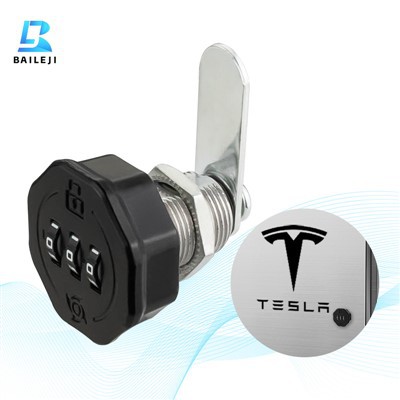
First, let’s get one thing straight: a high-security drawer lock isn’t just a lock that’s hard to pick. It’s a lock designed to resist every common attack that’s actually used on drawer locks, not just theoretical ones. Back when I first started in this business 12 years ago, I remember a client from a local law firm coming to me frustrated—they’d just had a confidential client intake folder stolen from their desk drawer, and the cheap keyed lock they had was no match for the office admin who’d borrowed a bobby pin and opened it in 10 seconds. That incident drove me to dig into what actually makes a lock resist manipulation, and it starts with the core locking mechanism.
Most low-cost drawer locks use a basic pin tumbler system with only 3 or 4 pins, and the pins are made of soft, cheap brass that wears out quickly and can be easily lifted or manipulated. High-security drawer locks? They use precision pin tumbler systems, usually with 6 pins or more, and those pins are often made of hardened steel. Wait, it’s not just more pins—high-security locks have pin stacks with varying lengths and sometimes anti-pick pins, which are small, shaped pins that bind in the lock core if someone tries to lift them unevenly. That means when someone slips a bobby pin or a tension wrench into a high-security lock, they can’t just lift each pin one by one; the anti-pick pins throw off their balance, and the lock won’t turn no matter how much pressure they apply. I’ve tested this myself: I can open a basic 4-pin drawer lock in 7 seconds with a paperclip, but I’ve never successfully picked one of our high-security locks, even after 10 minutes of trying, and I’ve done this with tools specifically designed for lock picking forensics.
Next, the lock body itself can’t be an afterthought. A lot of cheap drawer locks use a thin, stamped metal housing that bends or snaps if someone uses a little extra force—like a crowbar, or even a sturdy screwdriver. High-security drawer locks use solid, heavy-gauge steel for the lock body, and often a reinforced locking bolt that extends at least half an inch into the drawer frame, not just the thin drawer panel. We once had a client from a small jewelry store tell us that a thief had tried to pry open their old drawer lock with a butter knife; the thin metal of the old lock bent, and the bolt slipped right out. Our high-security locks have a bolt that’s case-hardened, which means it’s been heated and treated to resist bending, and if someone does try to pry the drawer open, the lock body has a anti-pry plate that distributes the pressure away from the lock cylinder, so the lock stays in place instead of tearing out of the drawer. I also make sure that our locks have no exposed screw heads on the outside of the drawer. Cheap locks leave screw heads sticking out, so a thief can just unscrew the entire lock from the outside. High-security locks have either hidden mounting screws that you access only from inside the drawer, or tamper-proof screw heads that require a special tool to remove. That’s a small feature, but it’s one that stops a lot of casual theft attempts right away.
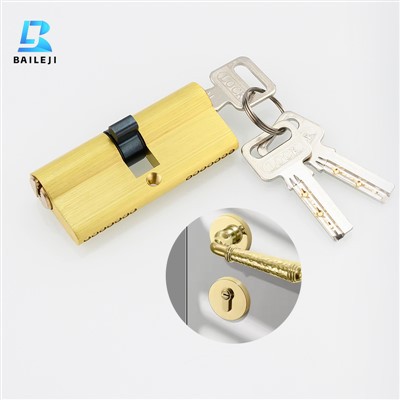
Another big one is key control, which is something most customers don’t think about until it’s too late. A basic drawer lock usually comes with two keys, and you can go to any hardware store and get a copy made in 5 minutes. High-security drawer locks use restricted keyways, which means the shape of the key is unique to the lock’s design, and you can’t just get a copy made at a random hardware store. You have to go through the manufacturer or a licensed locksmith to get a replacement key, which means no one—no random employee, no casual visitor—can make a copy and sneak it. We also offer key systeming for our commercial clients, like our law firm clients or retail chains: we can create a master key system, so one key opens all the locks in a single office, but individual keys only open their own drawers. That way, if an employee leaves, you don’t have to rekey every drawer in the whole building—you just rekey their personal key. Back when that law firm came to me 12 years ago, they had a thief steal a folder because a former admin made a copy of her old key; since then, we’ve designed all their new drawers with restricted keyways and master key systems, and they haven’t had a single incident.
Tamper resistance isn’t just about picking or prying, either. There are other ways to get into a drawer: drilling, for example. Thieves often use a small drill bit to punch through the lock cylinder, spin the core, and open the lock. High-security drawer locks have anti-drill plates made of hardened steel that cover the most vulnerable parts of the lock. Some even have break-away cores—if you drill too deep, the core of the lock breaks, and you can’t turn it, so the lock stays secure. I’ve tested this with a small hand drill, the kind a casual thief would carry in a bag; I tried to drill through a standard lock in 10 seconds, but our high-security lock took over 2 minutes, and the drill bit dulled before I even got close to the core. That’s enough time to make a thief move on to an easier target, which is exactly what you want.
Wait, let’s not forget about real-world use, not just lab testing. A lot of high-security locks are complicated, so people don’t want to use them because they’re fussy or get stuck. Our high-security drawer locks are designed to be just as easy to use as a basic lock—they have smooth, consistent action, the keys fit perfectly, and they work even if you don’t jostle the drawer just right. That’s a big mistake a lot of lock manufacturers make: they build a super secure lock that no one wants to use, so people don’t actually install it. We test every lock for at least 1,000 uses to make sure it doesn’t jam, and we work with office managers and small business owners to tweak the design so it fits different drawer sizes—like the narrow drawers in a medical office, or the larger, deeper drawers in a retail storage room.
I also want to mention what high-security drawer locks aren’t. They’re not just for high-security government offices or top-secret files. A lot of people think you only need a expensive lock if you’re guarding national intelligence, but that’s not true. If you have prescription drugs in your home medicine cabinet drawer, or petty cash in your office supply drawer, or confidential client information, or even just a laptop charger you don’t want someone taking from a shared desk, a high-security lock is worth the investment. I had a mom come to me last month who wanted locks for her home office drawers, where she keeps her kid’s adoption papers and her monthly budget statements; she said a neighbor’s kid had gotten into her old basic lock and looked through her stuff, and she wanted something that would stop that. We sent her two small, easy-to-install high-security locks, and she wrote me a note saying she felt safe leaving her office door open for a few minutes now, which is a huge difference.
Another thing I’ve learned over the years: a high-security drawer lock is only as good as its installation. A lot of people just screw a basic lock into the drawer with a few weak screws, and that’s why they don’t work. Our team offers free installation guides, and for commercial clients, we have local technicians who can come install the locks for you to make sure they’re fitted correctly. If the bolt is only half-way into the drawer frame, even a high-security lock is easy to pry open. We always emphasize making sure the lock is aligned properly, that the bolt is fully extended when locked, and that there are no gaps that a screwdriver can slip into. That’s a small step, but it makes a huge difference in how secure the lock actually is.
Let’s circle back to that story from 12 years ago, the law firm client. They upgraded all their drawers to our high-security locks, and a year later, another incident happened: an employee tried to open a partner’s locked drawer to copy a confidential case file. She had a copy of the old key, but because we’d switched to restricted keyways, the old key didn’t work in the new lock. She tried prying the drawer, but the anti-pry plate held, and then she tried picking it, but the anti-pick pins stopped her. The partner reported it to us, and we worked with the law firm to adjust their key system so only the partner’s personal key could open that drawer, plus the master key for office managers. That incident showed me that high-security locks aren’t just for stopping random thieves—they’re also for preventing internal misuse, which is actually one of the most common reasons people buy high-security drawer locks.
Now, if you’re sitting here thinking, “I don’t need a super fancy lock, right?” let me ask you this: what’s the value of the things you’re storing in your drawers? A set of basic keys for your bike? A $100 worth of prescription medication? A confidential medical record that could ruin your reputation if it falls into the wrong hands? Even small items have value, and a high-security drawer lock is a small investment that gives you peace of mind. Our locks cost a little more upfront than the $5 options at the store, but they last longer, they’re more secure, and you don’t have to worry about replacing them every year because they wore out or someone picked them open.
I’ve been doing this for long enough that I can tell when a customer just wants a cheap lock, and when they actually need a high-security one. The customers who come in and ask about the specific features I mentioned—anti-pick pins, hardened steel bodies, restricted keyways—those are the ones who actually care about keeping their things safe. The ones who just grab the cheapest lock on the shelf? They usually end up coming back a few months later, frustrated because their lock got picked or pried open, and they’re ready to invest in something that actually works.
At the end of the day, a high-security drawer lock isn’t just a piece of metal. It’s a tool that gives you control over who has access to the things that matter most to you. Whether you’re a small business owner protecting client data, a parent securing personal documents at home, or a retail manager keeping petty cash safe, the right lock makes all the difference. If you’re looking to upgrade your drawer locks, whether for a single office or an entire building, I’m here to help you figure out the right fit for your needs. We offer custom sizes, key systems, and installation support, so you don’t have to figure it out alone. Get in touch with our team to talk through your specific needs, and we can help you pick a high-security lock that keeps your things safe for years to come.
Cam Lock References
- American National Standards Institute (ANSI). (2020). Burglary Resistant Lock Standards for Drawer and Cabinet Locks. ANSI/BHMA A156.36-2020.
- Lock Pickers of America. (2021). Field Test Analysis of Common Drawer Lock Manipulation Techniques.
- U.S. Small Business Administration (SBA). (2022). Physical Security Best Practices for Small Office Workspaces.
Suzhou Baileji Intelligent Lock Industry Co., Ltd.
As one of the most professional drawer lock enterprises in China, we’re featured by quality products and good price. Please rest assured to buy discount drawer lock in stock here and get pricelist from our factory. Also, customized service is available.
Address: 3rd Floor, Building 9, Shengteng Industrial Park, No. 8 Ruyuan Road suzhou, jiangsu, China
E-mail: vip@bailejilocks.com
WebSite: https://www.bailejilock.com/
