Hey there, if you’ve ever ordered zinc die casting parts for your project and wondered why some batches hit different (like, no flash, tight tolerances, or zero weird porosity), it probably boils down to one thing: certification. As a zinc die casting supplier, I get hit with this question every single week—usually in the middle of a 9AM back-and-forth about a last-minute prototype shipment. People assume certification’s just a fancy sticker, but it’s actually the only proof that your parts won’t fall apart mid-assembly. Let’s break this down like we’re geeking out over a cool die cast mold, no stuffy jargon allowed. Zinc Die Casting
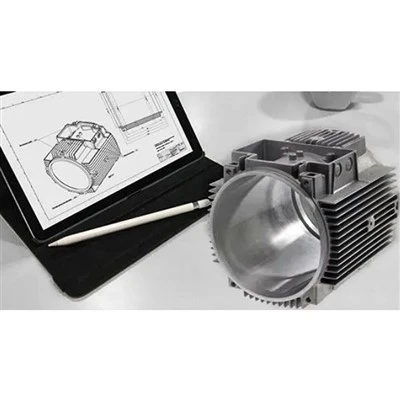
First off, let’s ground this: zinc die casting is not the same as, say, aluminum casting or plastic injection molding. Zinc’s low melting point (like, super low compared to most metals) makes it great for intricate, tight-tolerance parts—think door hinges, electronic hardware, toy components, even plumbing fixtures. But that also means small mistakes (like bad alloy mix or uneven cooling) blow up fast. So the certifications aren’t one-size-fits-all—they’re tailored to what you’re using the parts for. I’ve had a guy from a medical device startup ask for ISO 13485, then the next week a construction hardware rep just needs ISO 9001. Total different use cases, total different checks.
Let’s start with the big foundational one: ISO 9001. If you’ve ever heard “ISO quality system,” that’s this. For zinc die casting, this isn’t just a random checkbox. It means every step—from alloy melting to die lubrication to final inspection—has documented processes, and we track every batch like it’s a lost cat. Wait, let’s make that specific: when we pour zinc ingots, we log the batch number, the chemistry (like % zinc, aluminum, copper, lead—lead’s a big one, right? Too much ruins corrosion resistance), and the die temperature. Then, when we press the metal into the mold, we have pressure and cooling time logged. ISO 9001 isn’t just about having forms; it’s that if a part fails inspection, we can trace it back to every step that made it. I’ve had a customer catch a tiny porosity issue on a batch, and we pulled the log, found one die was slightly misaligned, fixed it, and sent a new batch same day—ISO 9001’s structure made that seamless, no guessing.
Next, if you’re shipping parts to something that touches people’s bodies or is used in healthcare, there’s ISO 13485. I only add this to my zinc die casting offerings when the customer says “medical grade.” Zinc parts for, say, a surgical tool handle or a diagnostic device’s casing can’t have any hidden contaminants, and every process is audited twice as hard. We test for biocompatibility (wait, no, we work with a third-party lab for that, but we control our input materials so the tests pass 99% of the time) and have to keep records for decades. A lot of small suppliers skip this because it’s extra work, but I don’t—last year a medtech firm switched to me because their old vendor’s ISO 13485 paperwork was outdated, and they almost got hit with a FDA warning letter. Ouch.
Then there’s industry-specific stuff, which is where it gets interesting. If you’re making auto parts (like a car’s door lock mechanism or a transmission bracket), you need IATF 16949. That’s the automotive gold standard. For zinc die casting, this means extra checks like dimensional tolerance verification (down to thousandths of an inch—no room for error when a lock’s parts have to mesh perfectly), salt spray testing (to make sure the part doesn’t rust in 100 hours of exposure—critical for cars in snowy or coastal areas), and traceability all the way to the raw zinc ingot. I had a Ford supplier’s rep visit my shop last quarter and walked out because our IATF docs were organized, not just sitting in a binder gathering dust. That’s the stuff that wins contracts.
Wait, what about if you’re into consumer goods? Like toys, or electronics casings? There’s RoHS and REACH, and sometimes even CPSIA for US-based toy makers. RoHS restricts hazardous substances—lead, mercury, cadmium. Zinc’s natural purity helps here, but you still have to test every batch for those limits. Last year, a toy brand almost got a recall because their old zinc parts had 2x the allowed lead, and their supplier didn’t test. For me, I send every production batch to a third-party lab for RoHS testing before it ships—so my customers don’t have that panic. REACH is EU-specific, same vibe, just different substance limits. And CPSIA? That’s US kid stuff—super strict on lead and phthalates, so I make sure all my zinc alloys are 100% compliant there too, no cutting corners.
Oh, and let’s not forget the fun, hands-on certifications that aren’t just paperwork. Third-party testing audits, like salt spray testing, tensile strength testing (to make sure the part doesn’t break when you pull it), or X-ray inspection for hidden porosity. Wait, I do X-rays on 10% of every batch now—costs a little more, but saves me from sending bad parts. Some vendors skip this, but I’ve had a customer whose old vendor didn’t X-ray, so parts failed during assembly and they had to scrap $50k worth of work. I tell that story to every new customer—gets their attention.
Wait, let’s get real: a lot of small zinc die casting suppliers act like certifications are a hassle, like “we make good parts, so who needs the papers?” But here’s the thing: when you’re a supplier, the papers are your credibility. I remember when I started out 8 years ago—no certifications, just a old die cast machine in a rented garage. I lost every big contract because clients couldn’t verify my parts were reliable. So I spent $12k on audits and testing that first year, and it was the best investment I ever made. Now, when a customer asks “what’s your certification for zinc die casting products?” I don’t list 10 random letters— I tell them exactly which ones apply to their project, and show them the actual reports, not just a certificate framed on my wall.
Like, last month a client from a home goods brand came to me. They needed zinc die casting for cabinet hinges—so they didn’t need ISO 13485 or IATF, but they did need ISO 9001, RoHS, and salt spray testing. I sent them the docs, did a small test batch, and they placed a 100k unit order within a week. They said it was because I could prove the parts wouldn’t corrode in a bathroom (salt spray test simulates that) and didn’t have lead that would leach into the air. That’s certification in action.
Wait, let’s clear up a common myth: people think certifications are just for big companies. No way—even if you’re ordering 1,000 parts for a side project, asking about certifications is smart. Because if your parts have hidden porosity, they’ll crack when you machine them, or rust in a year, and you’re out that money. As a supplier, I don’t mind walking you through this—don’t be scared to ask. I’ve had guys come in with a sketch on a napkin and ask “can you make this, and what do I need for it to pass Amazon’s inspection?” (Amazon has their own stuff too, by the way—product safety requirements for zinc parts sold on their platform, which ties back to RoHS and CPSIA).
Here’s what I always tell new prospects: don’t fall for “we’re certified” without asking which ones. A lot of vendors hang a generic ISO 9001 certificate but don’t actually follow it for zinc die casting—they skip the batch logging, skip the testing. When you talk to a supplier, ask for recent test reports, not just a framed paper. As for me, I keep all my reports in a shared drive so customers can access them anytime, no waiting for me to email a copy. That’s how I do it.
At the end of the day, zinc die casting certification isn’t about hoops—it’s about making sure the part you get is exactly what you asked for. No surprises, no failures, no lost time or money. If you’re looking for a reliable zinc die casting supplier that’s transparent about all their certifications, or you just have questions about which ones you need for your project, hit me up. We can chat through your specs, send over sample test reports, and figure out the best way to get you the parts that work.
Wait, let’s make sure I covered the scientific side a little—zinc’s eutectic point is around 382°C, which is why it flows so well into die mold details, but that also means if you don’t control the alloy composition (specifically, the amount of aluminum to prevent hot shortness), certification tests will catch it. That’s why the batch logging is part of the certification process—we’re not just checking the final part, we’re controlling the input and process. No fancy talk, that’s just how it works.
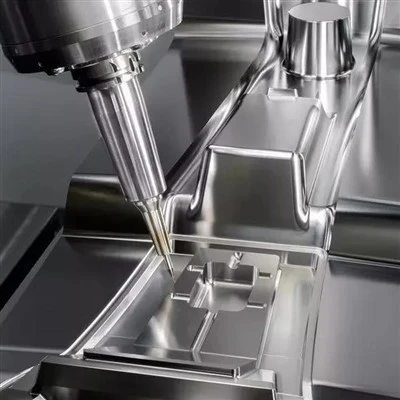
I should also mention that some certifications require internal audits too, not just third-party. We do monthly internal checks on die temperature, alloy chemistry, and inspection logs. That’s part of maintaining certification—if you let that slide, your certificate gets revoked. I take that seriously, because my reputation rides on it.
Zinc Die Casting So yeah, if you’ve ever stared at a list of letters like ISO, IATF, RoHS and thought “what even is this for zinc die casting parts?” now you know. It’s not just paperwork—it’s the safety net that keeps your projects running smooth. Need to talk through your specific needs? Reach out anytime.
References
- International Organization for Standardization (ISO). ISO 9001:2015 Quality Management Systems Requirements.
- International Automotive Task Force (IATF). IATF 16949:2016 Automotive Quality Management System Requirements.
- European Union. Restriction of Hazardous Substances (RoHS) Directive 2011/65/EU.
- U.S. Consumer Product Safety Commission (CPSC). CPSIA Section 101 Lead Limits for Children’s Products.
Shenzhen Shunhaoda Technology Co., Ltd.
With abundant experience, we are one of the most professional zinc die casting manufacturers and suppliers in China. If you’re going to buy bulk high quality zinc die casting made in China, welcome to get free sample from our factory. Also, custom service is available.
Address: 902, Building A3, Tianrui Industrial Park, No. 35 Fuyuan 1st Road, Zhancheng Community, Fuhai Street, Bao’an District, Shenzhen
E-mail: sales@shdindustry.com
WebSite: https://www.shd-industry.com/
