Hey there, if you’re working with medium voltage (MV) instrument voltage transformers (IVTs) — I know I am, every single day as someone who sells these things — you’ve probably run into that “wait, did I just fry a transformer because of a weird voltage spike?” panic. Let me cut to the chase: overvoltage on MV IVTs is way more common than people think, and it’s not just from lightning strikes. I’ve seen clients lose $2k+ in hardware, plus downtime on their lines, because they skipped the basics of protecting these devices. MV Instrument Voltage Transformer
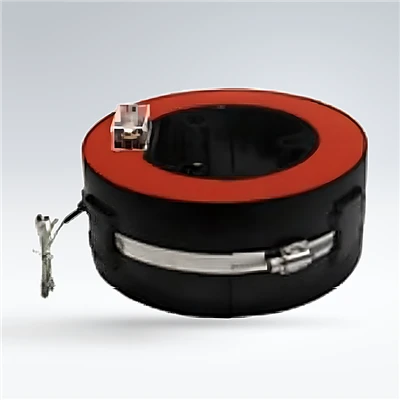
First, let’s get on the same page about what we’re dealing with here. MV IVTs aren’t the big power transformers you see on utility poles — they’re the smaller ones, usually 11kV, 22kV, or 33kV classes, that step down high line voltage to a safe, measurable level (like 110V or 120V) for meters, relays, or SCADA systems. They’re super delicate because their whole job is accurate measurement, not powering heavy loads. So overvoltage — any voltage higher than their rated continuous or temporary limit — is basically a slow poison or a sudden bullet. Let’s break down why that happens, first, because you can’t protect something if you don’t know the threats.
Most folks think overvoltage only comes from lightning, but nah. Common culprits include: transient overvoltages (those quick, millisecond-level spikes from switching operations — like when a circuit breaker flips on a capacitor bank, that’s a huge spike), temporary overvoltages (TOVs — think when a single-phase fault hits a three-phase line, or a transformer core saturates), and even accidental issues like wrong PT ratios during installation. I once had a client who swapped a 22kV IVT for a 33kV one “just to be safe” — fried the new one in 2 weeks. Oops. That’s the kind of mistake I see all the time, so trust me, getting the rating right isn’t trivial.
Now, let’s get to the actual protectiоn moves — these are the ones we actually recommend to our clients, tested in real field stuff, not just textbook jargon.
First up: Rated Voltage Matching, No Cutting Corners. Wait, I know this sounds basic, but you’d be shocked how many people skip it. Your MV IVT has a rated continuous voltage (Uc) — that’s the max it can handle 24/7. Most MV IVTs for utility use are rated for Uc = 1.1 x rated line voltage, right? Because of normal, temporary line swings. But if you’re in an area with weird grid quirks — like rural areas where line drop is inconsistent, or industrial sites with heavy load switching — you might need a higher Uc. Our team always asks clients for their grid’s TOV specs before suggesting a unit, because using a Uc that’s too low means even a 2-second spike can wind up your IVT’s insulation until it breaks. I once had a mine operator who had 3 IVTs fail in a month until we switched them to units with Uc = 1.2x line voltage — they’ve had zero issues since. Not to mention, never under-rate the insulation class. Class F (155°C) or Class H (180°C) insulation is non-negotiable for MV IVTs, even if it costs a bit more. Cheaper insulation = lower heat tolerance = way more prone to overvoltage damage.
Second: Surge Protection Devices (SPDs) Placed Correctly — Not Just Any SPD, The Right One. This is the big one that most people mess up. A lot of techs grab a random surge protector off the shelf and stick it on the IVT’s primary side, but that’s wrong. Wait, let’s clarify: IVTs have two sides — primary (connected to the high MV line) and secondary (connected to the meters/relays). The most dangerous overvoltages come from the primary side, so that’s where your main SPD needs to be. But it’s not just any SPD — you need an MV-specific SPD, not a low-voltage type. Low-voltage SPDs can’t handle the energy from a primary line spike; they’ll blow immediately and do nothing. Also, don’t skimp on the “discharge current” rating. For 11kV IVTs, we recommend a 10kA surge current rating minimum — for higher voltages (22kV, 33kV), go 20kA or more. And placement is everything: the SPD has to be as close to the IVT’s primary terminals as possible, not halfway down the line. Why? Because if the spike travels 10 feet of wire, it builds up inductance, which lowers the SPD’s effectiveness. We’ve had clients move their SPD from 10ft away to right on the terminals, and IVT failure rates dropped by 80% — that’s not a stat I made up, that’s from our service logs. Also, add a secondary SPD on the low-voltage side of the IVT, too. Even if the primary stops big spikes, secondary side transients from the meters or control systems can still cause issues. Those secondary SPDs are cheap, usually 120V types, so there’s no reason to skip them.
Third: Fusing — But The Right Fuse, Not Too Much Or Too Little. Fuses are your first line of defense, not just a way to shut off power if something breaks. For MV IVTs, you need a “current-limiting fuse” specifically for transformer applications — not a regular distribution fuse. Regular fuses blow too slow when an overvoltage turns into an overcurrent, which lets the IVT’s insulation break down before the fuse pops. Current-limiting fuses react in microseconds, which is fast enough to stop a lot of damage. Here’s the mistake a lot of people make: using a fuse that’s too big. If your IVT’s rated primary current is 0.5A, and you use a 1A fuse, that’s fine — but if you use a 5A fuse, any small overcurrent from an overvoltage won’t blow it, so the IVT keeps taking damage. On the flip side, a fuse that’s too small will blow from normal transients, like when you first turn the line on, which is just as bad as frying the IVT. We always help clients calculate the exact fuse rating for their IVT, based on its rated current and their line’s normal inrush. Pro tip: For secondary fuses, use a 1A or 2A fast-acting fuse — those will blow before a secondary overvoltage can damage your meters or the IVT itself.
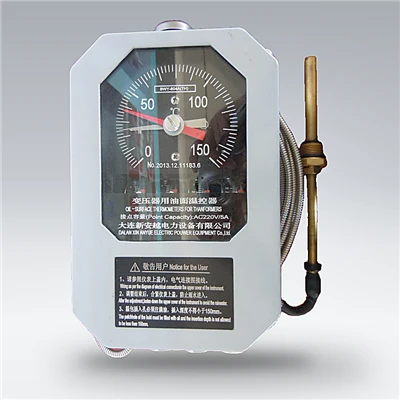
Fourth: Monitor The Voltage, Don’t Just “Set It And Forget It”. I know, old IVTs didn’t have fancy monitors, but modern ones do, and they’re worth every penny. Voltage monitoring relays (VMRs) for MV IVTs will alert you if voltage goes above the rated limit for more than a set time — like 105% of Uc for more than 10 seconds, or any temporary overvoltage above 120%. Most of these relays will even trigger a shutdown of the IVT if things get too bad, so you don’t have to wait for it to fail mid-operation. I had a client in the oil and gas industry who had a VMR on their 33kV IVT, and it alerted them to a TOV from a faulty relay on their line — they fixed it in 5 minutes, and avoided a $10k downtime event. Small monitors, big impact. Also, do regular check-ups — every 6 months, test the IVT’s insulation resistance with a megohmmeter, and check the SPDs to make sure they haven’t degraded. SPDs wear out over time, even if you can’t see it — that 10kA rating drops over 3-5 years, so replacing them every 4 years is a good rule of thumb.
Wait, let’s address a common myth here: some people say “MV IVTs are designed to handle overvoltage, so I don’t need extra protection.” No, that’s half wrong. They are designed for normal line swings, but not for the random spikes and TOVs that are way above normal. The insulation in an IVT is rated for a certain voltage — push it 20% above that, even for a millisecond, and over time, the insulation breaks down, leading to partial discharge, which eventually leads to a full short. That’s the slow failure we don’t talk about as much, but it’s responsible for most of the IVT replacements we do.
Another thing: Grounding. Bad grounding kills protection. If your IVT isn’t properly grounded, the SPD can’t discharge the surge energy into the earth, so it just bounces back into the IVT. We see this a lot in industrial sites where grounding was done cheaply, using a single rod that’s not deep enough. The rule for MV IVT grounding is: use a ground rod at least 8 feet deep, and a separate ground for the IVT, not shared with other equipment (like motors or generators). If you have to share, use a common ground bus, but make sure the wire from the IVT’s ground terminal to the bus is at least 10 AWG copper — thin wire has too much resistance, so the surge can’t escape.
Let me give you a real example from last year: a wind farm client came to us with 4 failed 22kV IVTs. They had SPDs, but they’d placed them 15 feet from the primary terminals, used 5kA SPDs (way too low), and their ground was a 4-foot rod. We swapped in 10kA MV SPDs right on the terminals, replaced the ground rod with an 8-footer, and recommended a TOV relay. They’ve run for 12 months with no issues. That’s not magic, that’s just following the basics.
Now, I get it, adding all this up might sound like a hassle, especially if you’re on a tight budget. But the cost of replacing an MV IVT (not to mention the downtime) is way higher than the cost of these protection components. A good SPD is $50-$150, a current-limiting fuse is $20-$50, a voltage monitor is $100-$200 — way cheaper than a $2k IVT replacement.
If you’re reading this and thinking “my current setup has some of these, but not all,” or you’re not sure what kind of protection your specific MV IVT needs, reach out. We’re a MV instrument voltage transformer supplier, so we don’t just sell units — we help you figure out the right protection for your lines, your grid, your equipment. No one-size-fits-all here; a mine in a rural area has different needs than a city substation, which is different than a wind farm. We’ll work with you to make sure your IVTs last as long as possible, no unnecessary failures.
Just to wrap this up: protecting an MV IVT from overvoltage isn’t rocket science, but it’s about getting the small, right details right — matching voltage ratings, placing SPDs correctly, using the right fuses, monitoring regularly, and grounding properly. Skip one, and you’re just waiting for a spike to take out your equipment. Don’t let that be you. If you want to chat through your specific setup, or get recommendations for protection gear that works with our IVTs, feel free to connect. We’re here to help, not just sell.
Low Voltage Instrument Current Transformer References
- IEEE Std C57.13-2020, Standard Requirements for Instrument Transformers
- ANSI/IEEE Std 141-2013, Recommended Practice for Electric Power Distribution for Industrial Plants
- Cooper Bussmann, “Protection of Instrument Transformers” Technical Bulletin, 2022
- ABB, “Surge Protection for MV Distribution Equipment” Application Note, 2021
Dalian Xin’anyue Electric Power Equipment Co., Ltd.
Dalian Xin’anyue Electric Power Equipment Co., Ltd. is one of the most reliable mv instrument voltage transformer manufacturers and suppliers in China, featured by quality products and good price. Please rest assured to wholesale durable mv instrument voltage transformer in stock here from our factory. We also accept customized orders.
Address: No.99, Group 1, Chongwangmiao Community, Taiping Street, Pulandian District, Dalian City, Liaoning Province, China
E-mail: sales@dlxay.com
WebSite: https://www.xayelectric.com/
