If you’re in the market for a 3D laser welding machine, you’ve probably noticed that one of the most confusing (and overlooked) parts of the buying process is figuring out what the actual warranty covers. As a 3D laser welding machine supplier who’s been in this game for over a decade, I’ve seen too many customers fall into the trap of focusing only on price, only to regret it when a sensor fails or a laser source dies a few months later and they’re stuck with a massive repair bill. Today, I want to cut through the jargon and break down exactly what a 3D laser welding machine warranty typically includes, what it doesn’t, and how you can make sure the warranty from your supplier actually works when you need it. 3D Laser Welding Machine
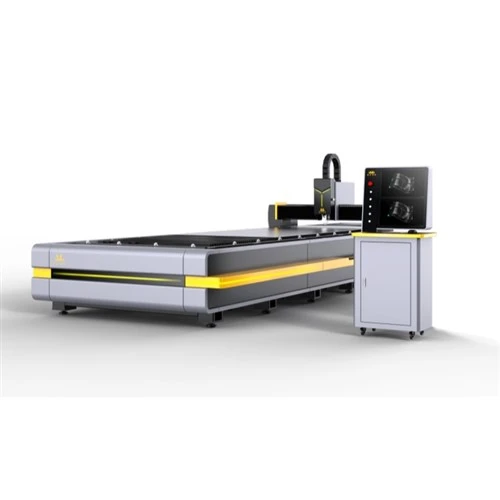
First, let’s start with the basics: a 3D laser welding machine is not a single part—it’s a system made up of several critical components, each with its own expected lifespan and wear characteristics. That’s why warranties for these machines aren’t one-size-fits-all. The core components are the laser source (this is the “heart” of the machine), the motion control system (the gantries, axes, and motors that move the laser head), the optical delivery system (the cables, lenses, and mirrors that carry the laser beam), the control unit (the computer that runs the machine’s programming), and auxiliary parts like chiller units, gas regulators, and safety sensors. Each of these has separate coverage, and that’s something most buyers don’t ask about upfront.
Let’s talk about the laser source first, because it’s the most expensive and high-stakes part of the system. For reputable 3D fiber laser sources (which are the most common type used in industrial welding today), the standard warranty ranges from 12 to 24 months, with many premium suppliers offering up to 36 months on industrial-grade sources. Wait—why the range? Because not all laser sources are made equal. A cheap, off-the-shelf laser source from a generic manufacturer might only last 12,000 hours (that’s about 18 months of 8-hour shifts, 5 days a week) and come with a 12-month warranty. A high-quality, industrial-grade laser source built for continuous, heavy-duty use might last 50,000+ hours and come with a 24 or 36 month warranty. As a supplier, I always make sure to disclose this difference to my customers: the longer laser warranty isn’t just a perk—it’s a sign that the manufacturer stands behind the component’s build quality. But even that laser warranty has fine print: it only covers defects in materials or workmanship, not damage from improper use, poor maintenance, or operating the machine beyond its rated power or duty cycle.
Next, the motion control and mechanical parts. These are the workhorses of the 3D laser welding machine, moving the precision head to weld complex, curved parts (think automotive components, medical devices, or aerospace parts). The warranty for these parts is almost always 12 months, and for good reason: while they’re built to last, they’re subject to wear from regular operation. Ball screws, linear guides, and motors can wear out over time, especially if the machine is run 24/7 for high-volume production. That said, not all motion parts are covered equally. Some suppliers offer extended warranties on wear parts, like linear guide rails, if you sign up for a scheduled maintenance plan through their service team. I recommend this to my customers, because it’s far cheaper than paying for replacements out of pocket, and it ensures your machine is calibrated correctly every quarter to keep welds accurate.
The optical delivery system is another area where warranties vary wildly. This includes the lenses, mirrors, and fiber cables that carry the laser beam from the source to the welding head. These parts are delicate—even a tiny speck of dust on a lens can cause a defective weld, and accidental misalignment can burn out a mirror. Most suppliers offer a 6 to 12 month warranty on optical parts, but here’s the catch: this coverage only applies if the machine was installed correctly and cleaned per the supplier’s guidelines. If a technician from your team tries to clean a lens with the wrong cloth or solvent and scratches it, that’s not a manufacturer defect—it’s operator error, and you’ll be paying for a new lens. That’s why I always train my customers’ teams on basic optical maintenance during the onboarding process; it’s a small step that saves everyone a lot of headache later.
Control units and auxiliary parts are usually the most straightforward, but that doesn’t mean you can ignore their warranties. The industrial control computer that runs your machine’s programming typically comes with a 12 month warranty, covering defects like motherboard failures or software glitches caused by the manufacturer. Auxiliary parts—chillers, gas sensors, emergency stop buttons—have warranties ranging from 3 to 12 months, depending on the part. The chiller is especially important: if it fails, it can overheat the laser source and cause permanent damage, so many suppliers will actually extend chiller warranty coverage if you follow their recommended maintenance schedule for replacing coolant and filters.
Now, let’s talk about the parts of a warranty that almost always exclude coverage, because this is where most customers get surprised. First, operator error or improper use. If you run a 2,000 watt laser welding machine on a material that’s rated for only 1,000 watts, or you bypass safety sensors to speed up production, that’s not a manufacturer defect. Second, wear and tear parts that are meant to be replaced regularly, like nozzles, filters, and wear plates on the welding head. Most suppliers don’t cover these at all, or only offer them at a discounted rate if you buy in bulk. Third, damage from environmental factors. If you run your machine in a dusty, unventilated shop without proper air filtration, that dust can clog filters, damage motion parts, and even scratch optical lenses. That’s not covered, because it’s an installation or maintenance issue on your end. Fourth, any modifications you make to the machine without the supplier’s approval. If you add a third-party camera system or change the programming without our engineering team signing off, that voids almost all warranty coverage.
Here’s the biggest mistake I see: buying a machine based on a low upfront price and a seemingly long warranty, only to find out the warranty has “time starts on shipment” instead of “time starts on installation.” Wait—what’s the difference? If your machine takes 8 weeks to ship from the factory to your shop, and the warranty starts when it leaves the dock, you’ve already lost 8 weeks of coverage before you even turn the machine on. That adds up to almost 2 months of coverage gone for no reason. As a supplier, I always structure warranties to start on the date of final installation and acceptance at the customer’s facility, because that’s when the machine is actually put to use. I’ve even had to push back on industry peers who use the “ship date” trick, because it’s a dishonest way to make a warranty look better than it actually is.
Another key point: what does the warranty process look like? A warranty is only as good as the supplier’s ability to honor it quickly. I’ve heard horror stories of customers waiting 4 weeks for a replacement part because the supplier is overseas and has no local service team. When you’re running a production line, a 4 week wait for a broken machine means lost revenue—especially in industries like automotive or medical devices where deadlines are non-negotiable. That’s why my team keeps a full stock of common replacement parts (laser source modules, motion parts, optical lenses) in local warehouses across North America and Europe, and we offer on-site service within 48 hours for urgent issues. If a customer’s laser source fails, we can ship a replacement within 24 hours, and our local technician can install it the next day, so their line is back up in 48 hours max. No waiting around for parts to come from overseas, no weeks of downtime.
So, what should you look for when reviewing a 3D laser welding machine warranty? First, confirm the start date: it should be installation date, not ship date. Second, get clear, specific coverage for each component in writing. Don’t settle for vague terms like “all parts” — ask for a document that lists the exact duration and coverage for laser source, motion system, optics, controls, and auxiliary parts. Third, ask about extended warranties. Most reputable suppliers offer extended coverage plans that add 12 or 24 months to the standard warranty, which is a smart investment for machines that run 24/7. Fourth, check for local service and parts availability. If your supplier is based in another country and has no local support, their warranty is basically useless. Fifth, read the fine print on exclusions, and ask your supplier to explain anything you don’t understand. A good supplier will take the time to walk through every part of the warranty, not just send you a 50-page document and tell you to read it.
As a supplier, I take warranty seriously because my customers’ success is my success. If a machine breaks down on their production line, that’s lost business for them, and in turn, lost trust in my company. That’s why I build my machines with high-quality components, test every system before it ships, and stand behind my coverage long after the sale is done. I also offer training for my customers’ teams on maintenance and operation, because preventing issues before they happen is way better than fixing them after.
If you’re in the market for a 3D laser welding machine, don’t let warranty be an afterthought. It’s one of the most important factors in your total cost of ownership over the life of the machine. A $50,000 machine with a 12-month, overseas-supported warranty might seem like a good deal at first, but if you have to pay $10,000 for a laser source replacement 13 months later, you’ve actually spent more than you would have on a slightly more expensive machine with a 24-month, local-supported warranty.
If you have questions about the warranty for 3D laser welding machines, or you want to learn more about our machines and coverage plans, feel free to reach out to start a conversation. We can walk through our warranty terms, answer any questions you have about components and coverage, and help you find the right machine for your production needs.
Complete Production Lines References:
- American Welding Society. (2022). Industrial Laser Welding Equipment Maintenance and Warranty Standards. AWS Press.
- Global Laser Industry Association. (2023). Warranty and Reliability Guidelines for Fiber Laser Systems. GLIA Technical Report.
- International Organization for Standardization. (2021). ISO 11146: Lasers and laser-related equipment – Test methods for laser beam widths, divergence angles and beam propagation ratios. ISO.
- Manufacturing Extension Partnership. (2022). Total Cost of Ownership Analysis for Industrial Laser Equipment. NIST MEP.
Yongkang City Bohong Intelligent Equipment Co., Ltd.
As one of the most reliable 3d laser welding machine manufacturers and suppliers in China, we also support customized service. With abundant experience, we warmly welcome you to buy advanced 3d laser welding machine from our factory. If you have any enquiry about quotation, please feel free to email us.
Address: No. 176 Yinggui North Road, Chengxi New Area, Yongkang City, Zhejiang Province
E-mail: bohonglasertech@Outlook.com
WebSite: https://www.bohonglasertech.com/
